Navigating ABA Therapy Together

The guidance and support your family deserves
Navigating ABA Therapy Together
A young boy wearing a blue shirt and grey shorts practices kicking a soccer ball between two orange cones under the guidance of a female coach kneeling and pointing. A woman watches smiling from the side, and other children wait in line in the background. A banner reads 'Community Adaptive Sports Day'. The setting is a grassy field with trees.
5/25/2026
Finding the Right Team: Best Sports and Activities for Autistic Children
Every autistic child has a unique sensory profile, communication style, and comfort level with group activities. Strategies and sports recommendations should be adapted to the child’s individual strengths, support needs, and safety considerations. Families seeking guidance about physical activities, adaptive sports, or community participation should consult qualified healthcare providers, therapists, coaches, or Board Certified Behavior Analysts (BCBAs) familiar with the child’s needs.
Read More
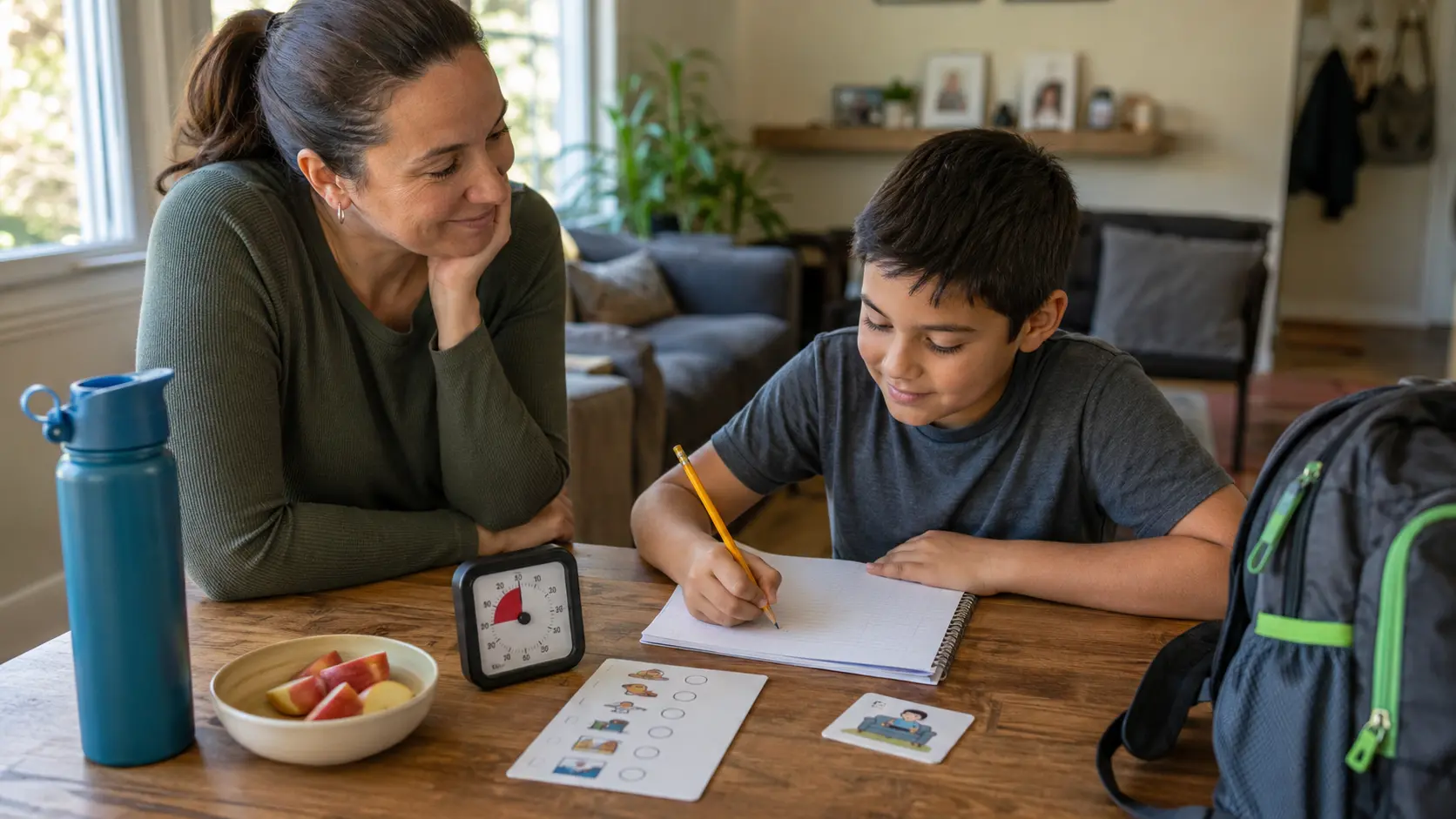
 School-age child doing homework at a kitchen table with visual schedules, fidget tools, headphones, folders, and a calm parent offering support nearby.
5/21/2026
ADHD and Autism: Navigating a Dual Diagnosis in 2026
This article explores the growing recognition of co-occurring ADHD and autism, sometimes referred to as “AuDHD,” and how overlapping traits can affect attention, executive functioning, emotional regulation, and daily routines. It is intended to help caregivers better understand dual diagnosis presentations while emphasizing practical, function-based support strategies rather than relying solely on diagnostic labels. The content reflects current clinical understanding and focuses on realistic support approaches for home, school, and community life.
Read More
 Autistic child wearing headphones during a calm salon haircut while a stylist gently trims hair and a supportive parent stands nearby.
5/21/2026
Haircut Without the Meltdown: 5 Tips for Kids with Sensory Issues
Every child experiences sensory processing and grooming challenges differently, and strategies that help one child may not work the same way for another. Families concerned about severe distress, escalating reactions, or safety during grooming routines should consult a qualified healthcare provider, occupational therapist, or Board Certified Behavior Analyst (BCBA).
Read More
father and son sitting at a wooden patio table in a sunny backyard. The boy, who is wearing noise-canceling headphones, is focused on a "First, Then" visual schedule and token economy board. The father leans in with a supportive smile, pointing to the cards to guide the activity. The background features a green lawn, garden flowers, and a residential house, creating a calm and predictable summer environment.
5/4/2026
Preventing Summer Regression: Why Consistent ABA Therapy Matters in June and July
This article is designed for caregivers navigating the transition from structured school routines to summer break. It focuses on preventing skill loss (“summer regression”) by maintaining consistency in ABA therapy and reinforcing learned behaviors in real-life environments. The content emphasizes practical, realistic strategies that families can apply at home and in community settings, while aligning with evidence-based ABA principles supported by recognized health organizations.
Read More
A mother smiles as she pushes a shopping cart, while her young daughter holds a visual "Shopping List" with colored icons and points to a badge on her shirt, in a bright grocery store produce section. A plush toy sits in the cart.
5/4/2026
Community Outings: A Step-by-Step ABA Plan for Successful Grocery Runs and Dining Out
Community outings can feel overwhelming for families of autistic children, but with the right preparation, they become opportunities for growth. This guide breaks down ABA-based strategies into practical steps to help children build real-world skills in grocery stores and restaurants.
Read More
woman and a young boy sitting on a beige sofa in a calm, neutral-toned room. The woman has a gentle hand on the boy's shoulder, offering reassurance while he looks down at a colorful fidget toy in his hands. The background features supportive elements like a visual "Calm Down Steps" schedule on the wall, noise-canceling headphones on a side table, and a sensory corner with a beanbag chair and plush toys. Soft natural light fills the space, creating a safe and structured atmosphere.
5/4/2026
Aggression Toward Caregivers: Safety and Intervention for High-Intensity Behavior
Aggression toward caregivers is one of the most challenging aspects of raising a child with autism, and it often goes unspoken. This guide focuses on safety-first strategies, understanding behavior through an ABA lens, and helping families move from crisis response to structured, supportive intervention.
Read More
Parent and child sitting in a car watching distant fireworks at night, child wearing noise-canceling headphones and holding a stuffed toy in a calm, safe environment
4/28/2026
Fourth of July Prep: A 30-Day ABA Plan for Fireworks and Crowds
Every child’s needs are unique, and strategies should be adapted based on individual sensitivities and developmental profiles. For personalized guidance, consult a Board Certified Behavior Analyst (BCBA) or your child’s healthcare provider.
Read More
Bilingual ABA Therapy Session Supporting Spanish-Speaking Family in New Mexico
4/27/2026
Bilingual ABA in New Mexico: The Importance of Culturally Responsive Care
Every child’s needs are different, and ABA therapy plans should be developed by a qualified professional based on an individualized assessment. Families are encouraged to consult directly with a Board Certified Behavior Analyst (BCBA) or healthcare provider for guidance specific to their situation.
Read More
Sibling Dynamics Helping Neurotypical Siblings Thrive in an ABA Household
4/27/2026
Sibling Dynamics: Helping Neurotypical Siblings Thrive in an ABA Household
Every family dynamic is unique, and support strategies should be tailored to each child’s needs. If you have concerns about your child’s emotional well-being, consider consulting a licensed mental health professional or your child’s healthcare provider.
Read More