Navigating ABA Therapy Together

The guidance and support your family deserves
Navigating ABA Therapy Together
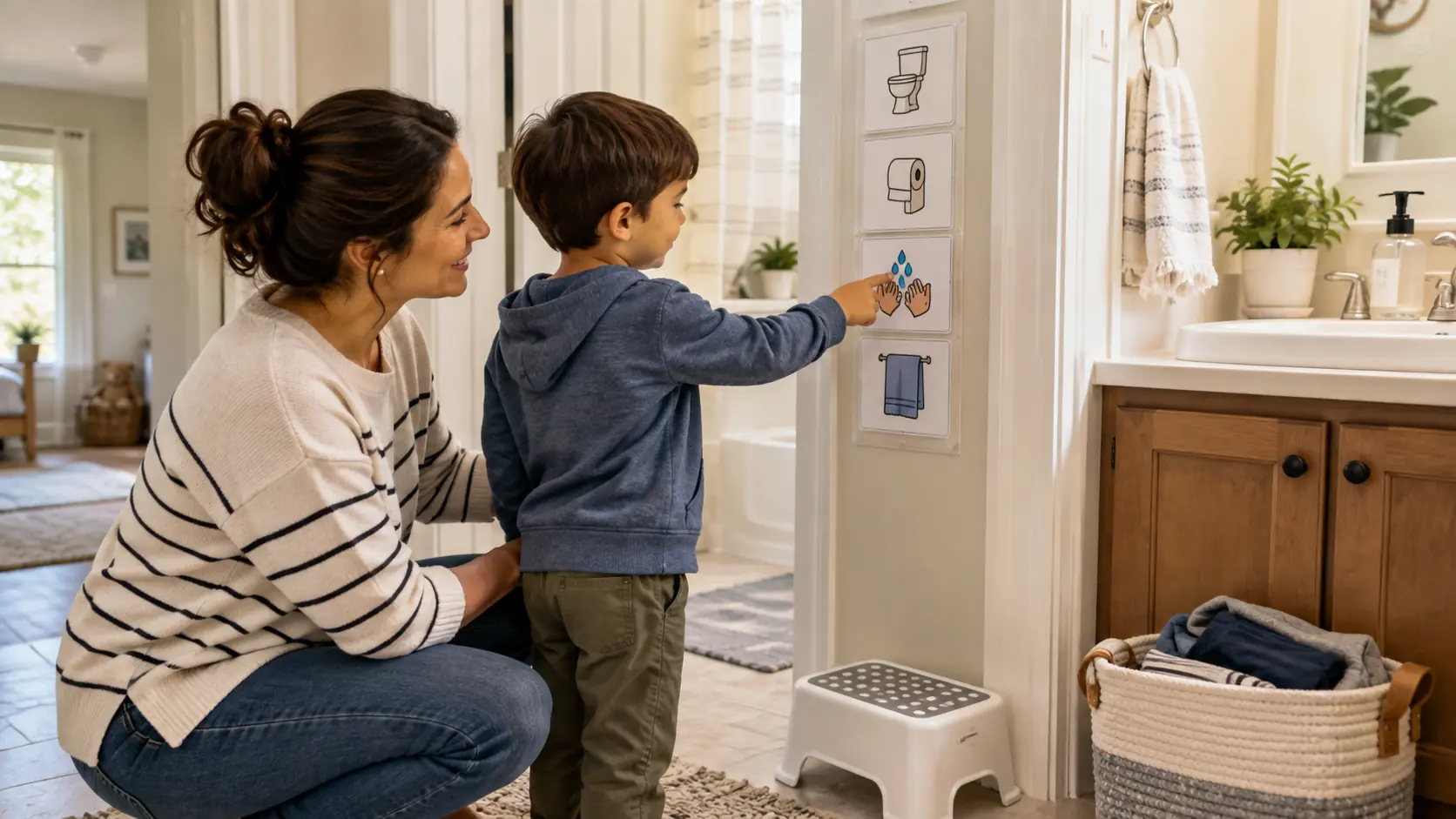
Caregiver and child reviewing a picture-based bathroom routine near a home bathroom, with visual cards, a step stool, handwashing supplies, and a change-of-clothing basket arranged nearby.
AtlasCare ABA Editorial Team
9/17/2026
Autism Toilet Training: Readiness, Small Steps and Home-School Coordination
This article helps families identify toilet-training barriers, build predictable routines, use visual and communication supports, respond to accidents without shame, and coordinate home, school, medical, and ABA support.
Read More
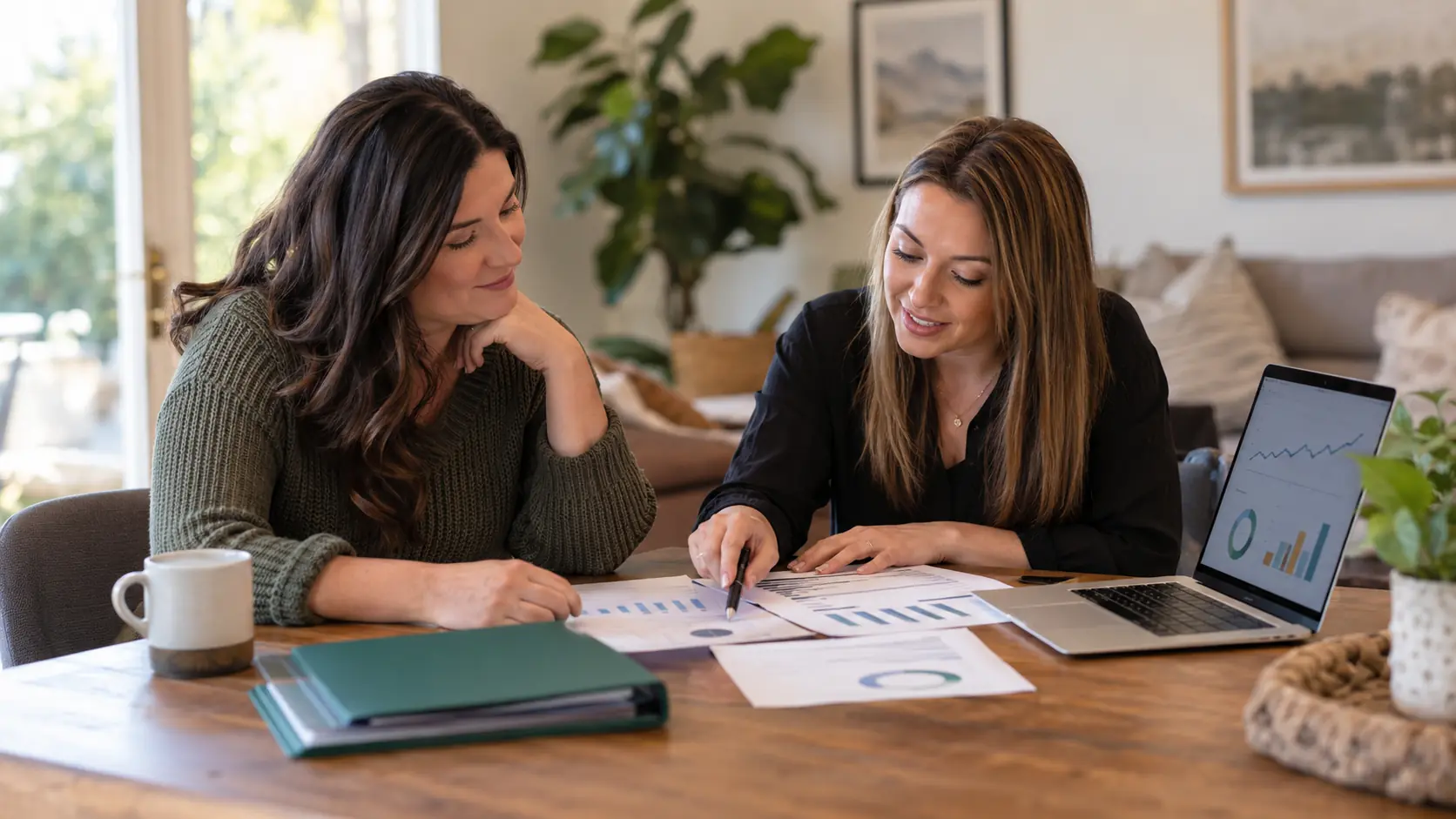
Parent and BCBA sitting together at a table, reviewing a laptop, printed progress charts, and a treatment folder in a calm, supportive consultation setting.
AtlasCare ABA Editorial Team
9/22/2026
How to Read an ABA Progress Report: A Parent's Annotated Guide
This article helps parents understand ABA progress reports, including baseline data, mastery criteria, graphs, generalization, treatment goals, and the questions to ask their BCBA during progress reviews.
Read More
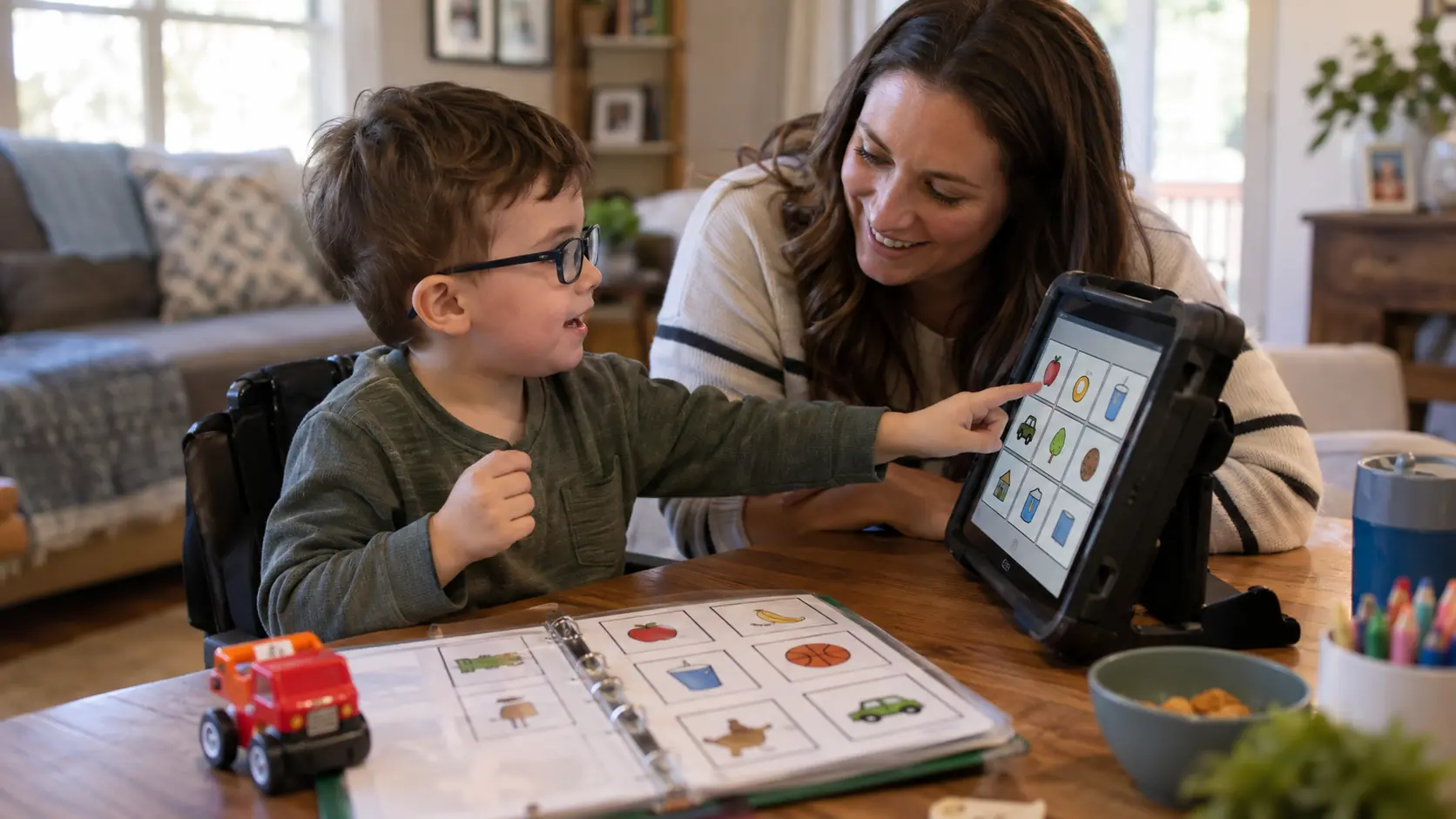
Child using a tablet-based AAC system and a picture communication board with a caregiver during a calm home interaction, showing supportive everyday communication practice.
AtlasCare ABA Editorial Team
9/22/2026
AAC Devices and Autism: What Parents Should Ask Before Choosing a Communication Tool
This article helps families understand AAC options, compare low-tech and high-tech communication tools, ask better questions before choosing a system, and support consistent communication across home, school, and therapy.
Read More
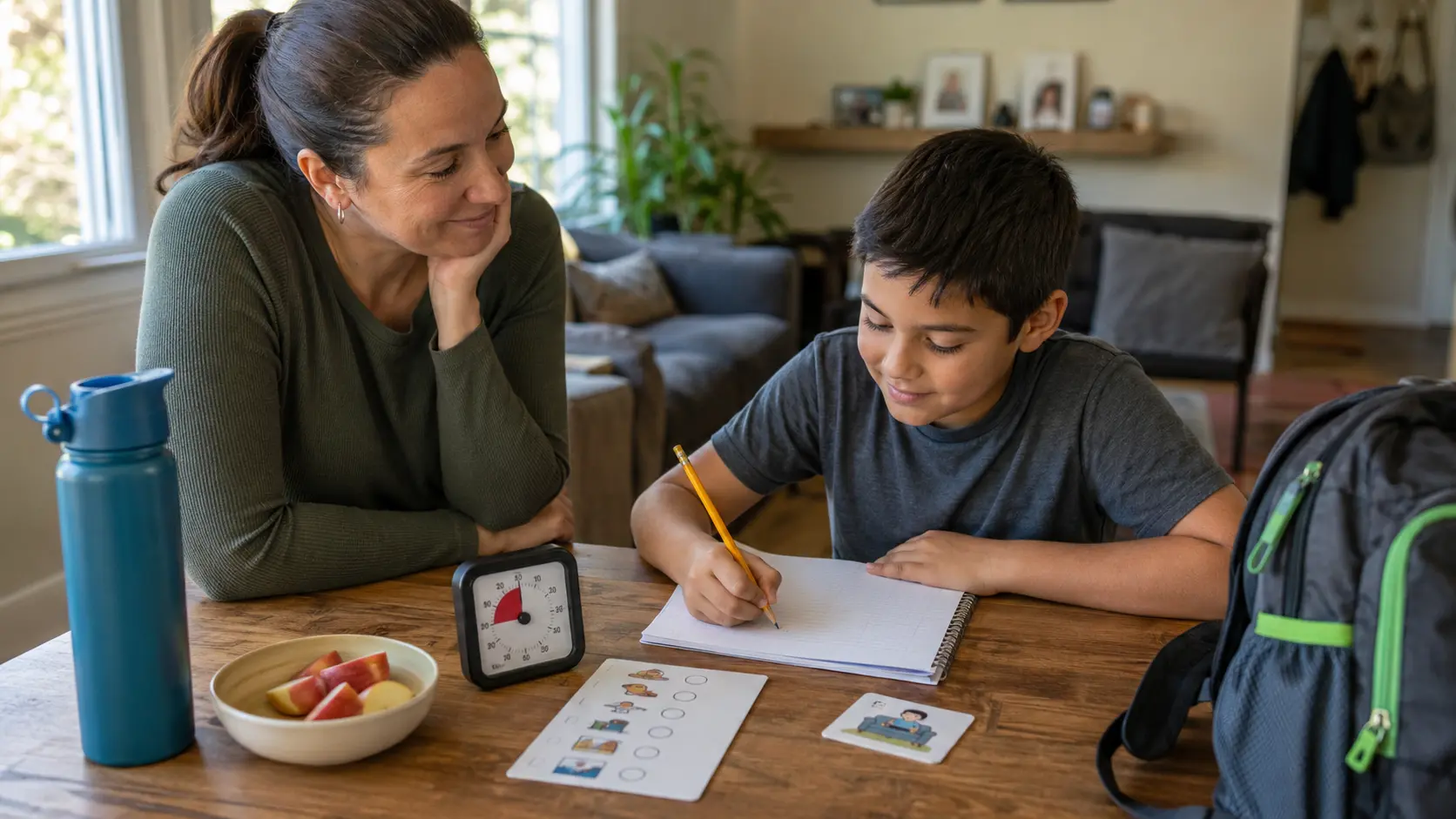
Caregiver gently supporting a school-age child during a calm after-school homework routine at home, with a backpack, snack, water bottle, notebook, pencil, visual checklist, and timer on the table.
AtlasCare ABA Editorial Team
9/23/2026
Autism Homework Refusal: How to Build a Calmer After-School Routine
This article helps families understand why homework refusal happens and build calmer after-school routines using decompression time, smaller tasks, visual supports, planned breaks, and school coordination.
Read More
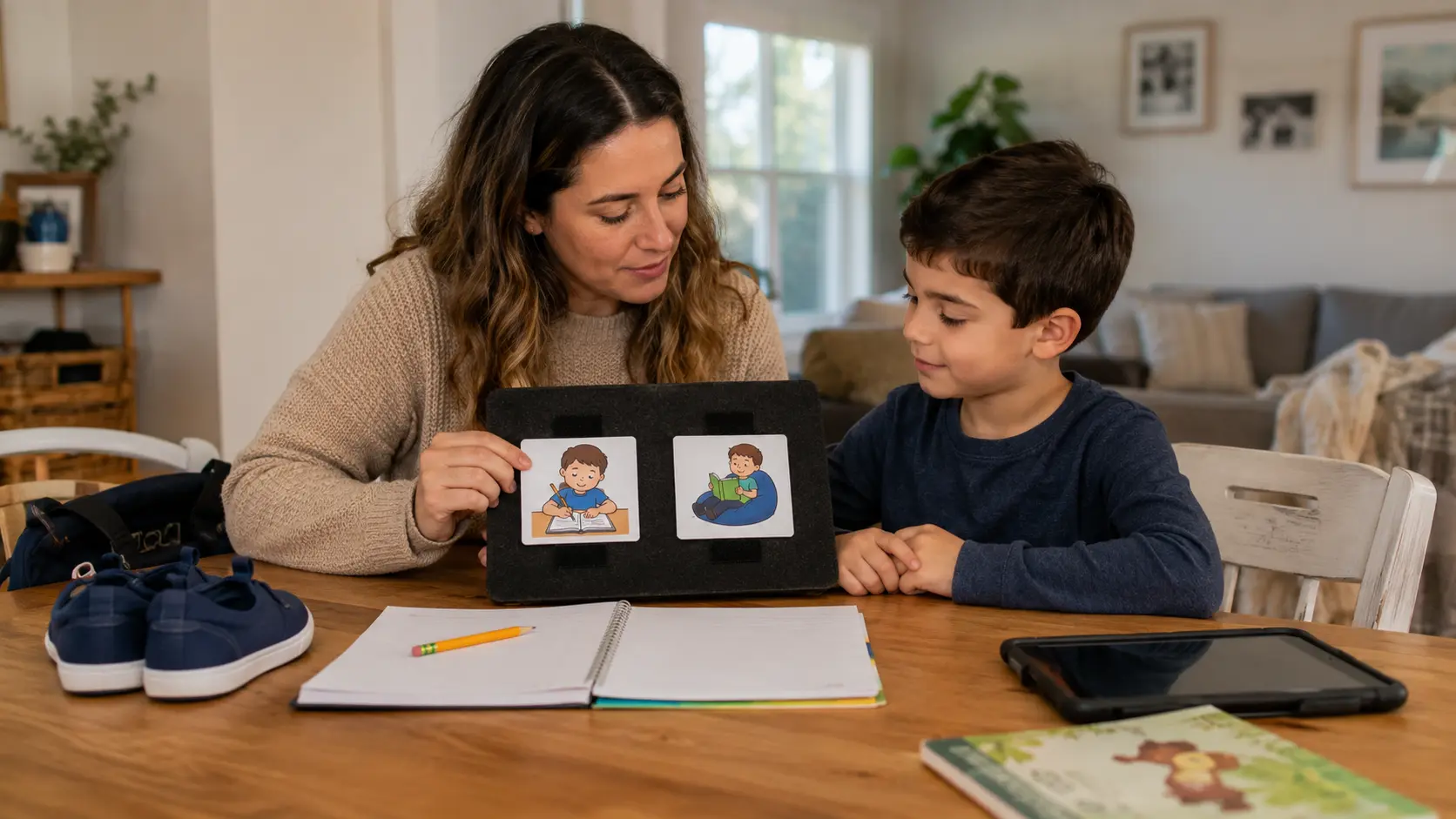
Caregiver and child using a two-panel first-then visual board at a kitchen table, with a homework notebook, shoes, tablet, and bedtime book nearby in a calm home routine setting.
AtlasCare ABA Editorial Team
8/24/2026
First-Then Board for Autism: Practical Examples for Transitions, Homework, and Daily Routines
This article helps families understand how first-then boards work and use them for transitions, homework, hygiene, screen time, and bedtime. It also explains how to choose manageable tasks, motivating next activities, troubleshoot refusal, and build more consistent routines.

Read More
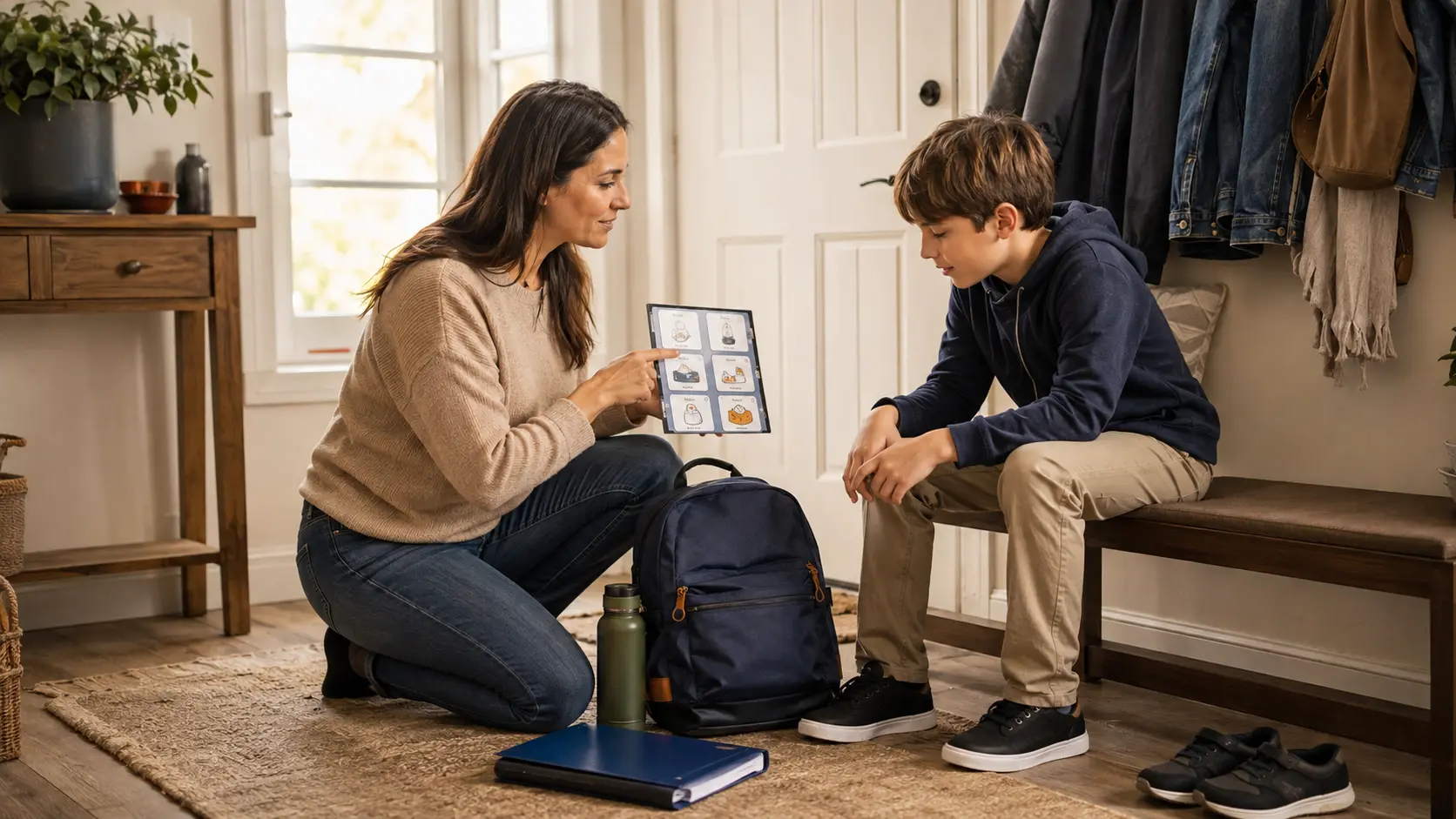
Caregiver calmly reviews a visual morning schedule with a school-age child in a home entryway, with a backpack, shoes, school folder, and water bottle arranged nearby.
AtlasCare ABA Editorial Team
8/24/2026
Autism School Refusal: Understanding the Behavior and Supporting a Return to School
This article helps families understand possible causes of school refusal, identify patterns and triggers, explore IEP accommodations, and build a gradual return-to-school plan. It also explains when medical, mental health, school, or ABA support may be helpful.
Read More
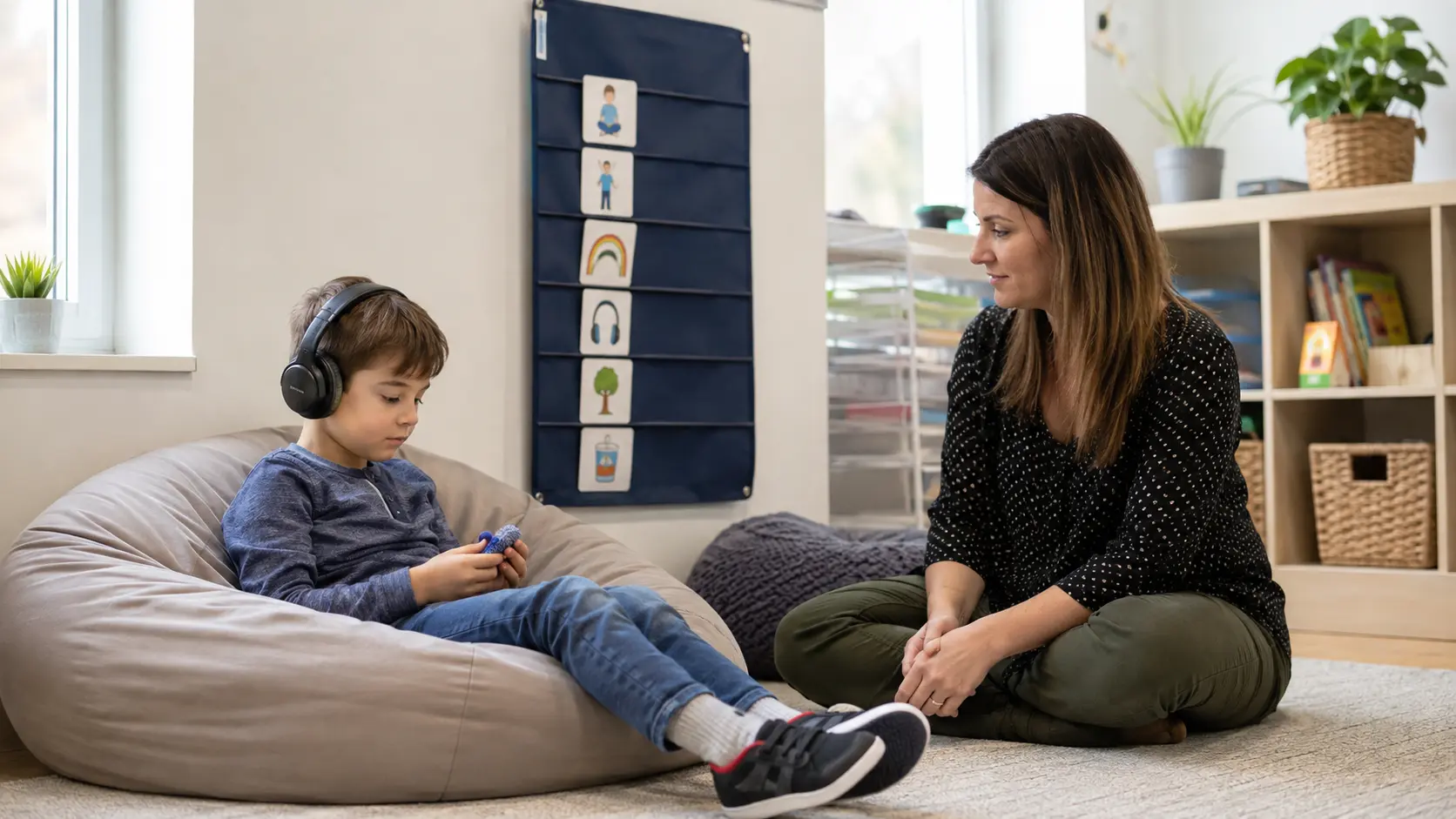
Child wearing noise-reducing headphones while sitting in a quiet classroom sensory area with a supportive teacher nearby, visual schedule cards, soft seating, and a small sensory item.
AtlasCare ABA Editorial Team
8/24/2026
Sensory Overload in Autism at School: Sensory Breaks and Classroom Strategies That Help
This article helps families recognize sensory overload at school, identify common classroom triggers, use sensory breaks and transition supports, and improve communication between parents, teachers, and support providers.
Read More
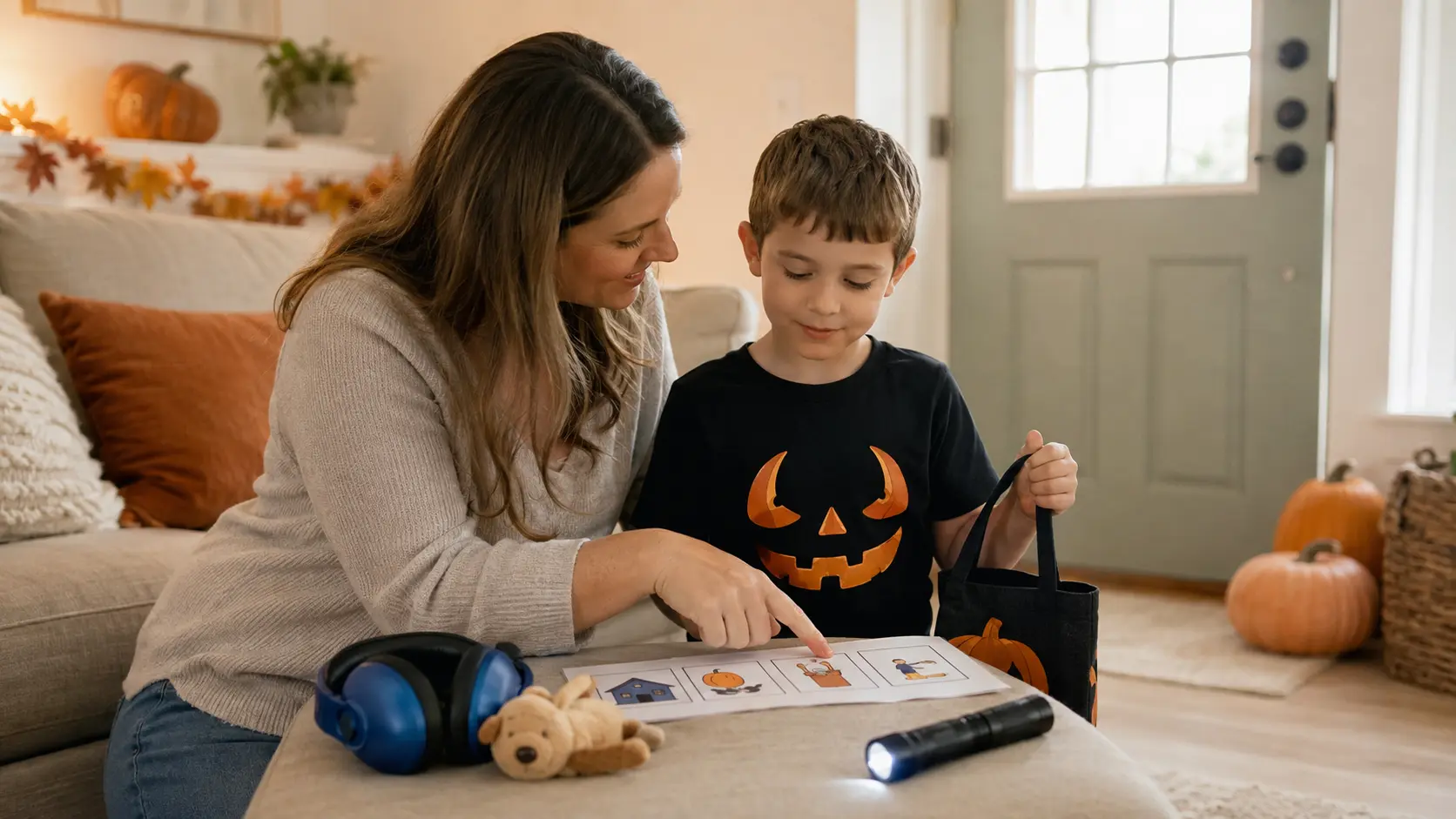
Caregiver and child preparing for a calm Halloween routine at home with a picture schedule, trick-or-treat bag, headphones, comfort item, flashlight, and soft autumn decorations.
AtlasCare ABA Editorial Team
8/19/2026
Halloween and Autism: A Sensory-Friendly Guide to Costumes, Crowds, and Trick-or-Treating
This article helps families plan a more manageable Halloween by addressing costumes, sensory overload, communication needs, visual schedules, trick-or-treating practice, quieter alternatives, and exit strategies.
Read More
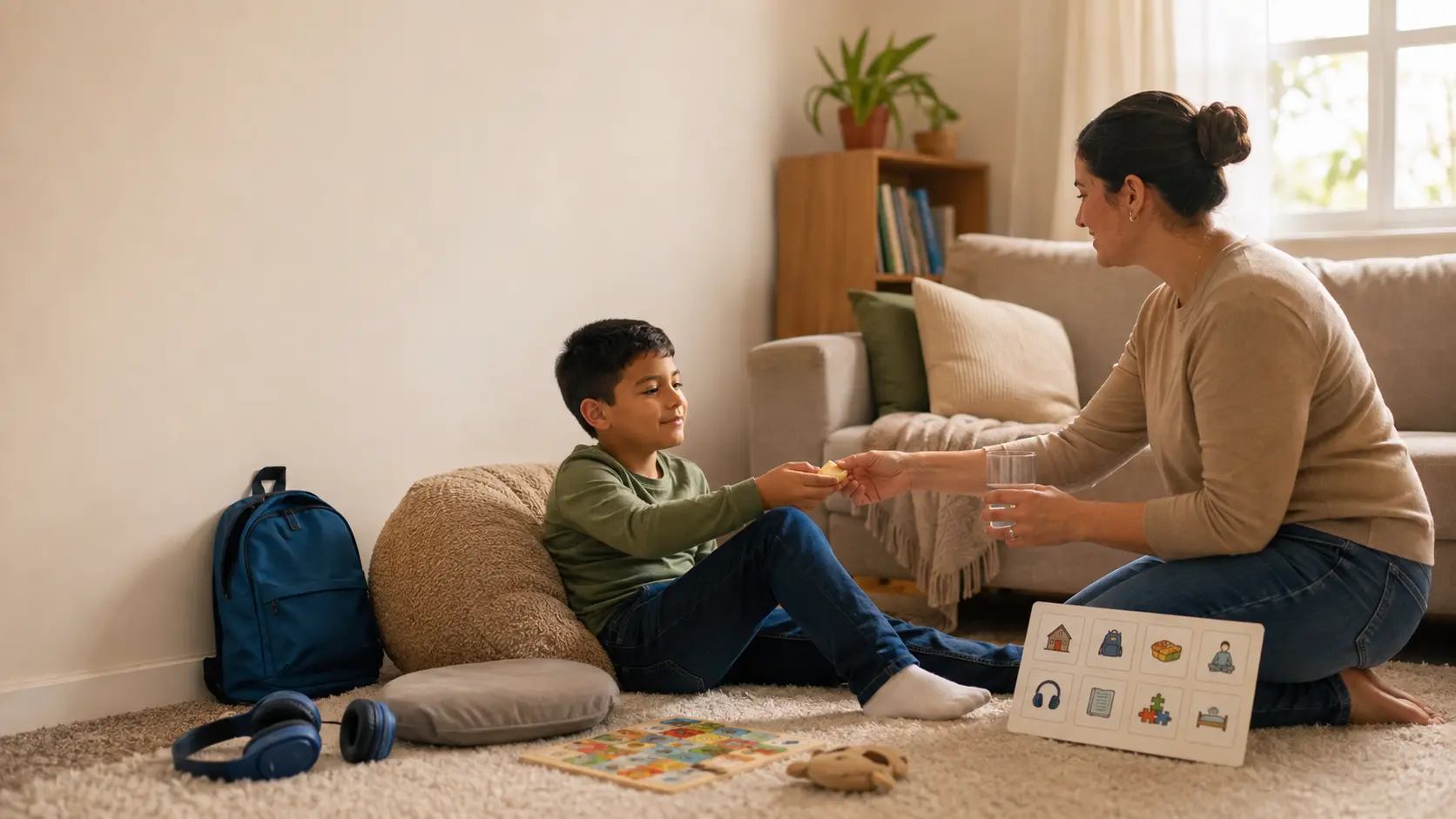
Caregiver gently offers a snack and water to a child relaxing in a quiet home space after school, with a backpack, headphones, cushion, activity board, comfort item, and visual routine card nearby.
AtlasCare ABA Editorial Team
8/19/2026
After-School Restraint Collapse in Autistic Children: Why Meltdowns Happen at Home After School
This article helps families understand why some children experience meltdowns or shutdowns after school and how sensory load, fatigue, hunger, masking, and transitions may contribute. It provides practical decompression routines, transition strategies, and guidance on when additional professional support may help.
Read More