A child may know what comes next and still have difficulty judging how long a task will take. These are different skills.
Time estimation is one practical part of autism and time management. Even when a child follows routines well, it may still be hard to tell whether a task will take two minutes, ten minutes, or longer.
Helping children build a rough sense of task duration can make planning small activities and transitions easier to understand.
Time Estimation Is Different From Knowing the Next Step
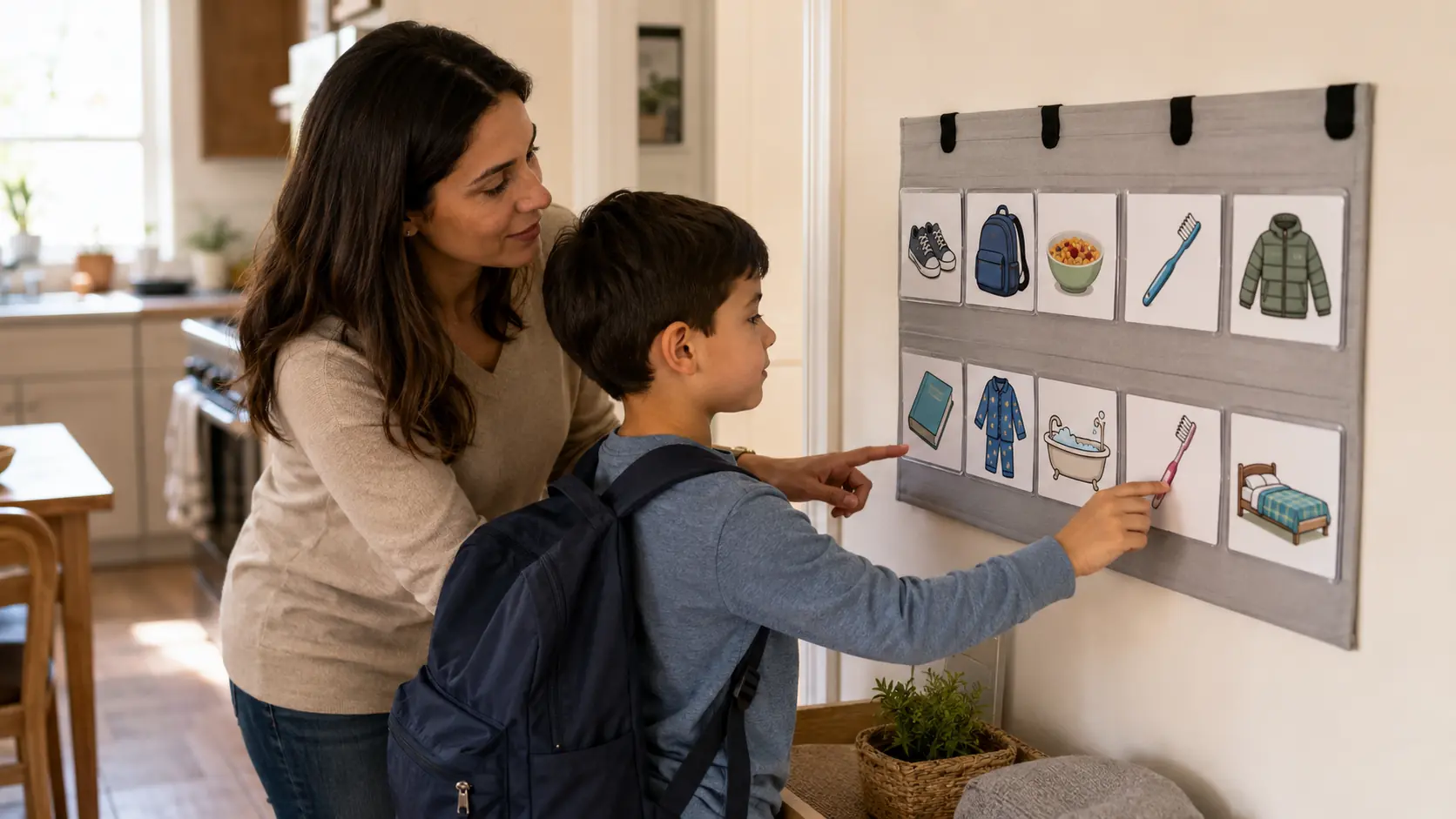
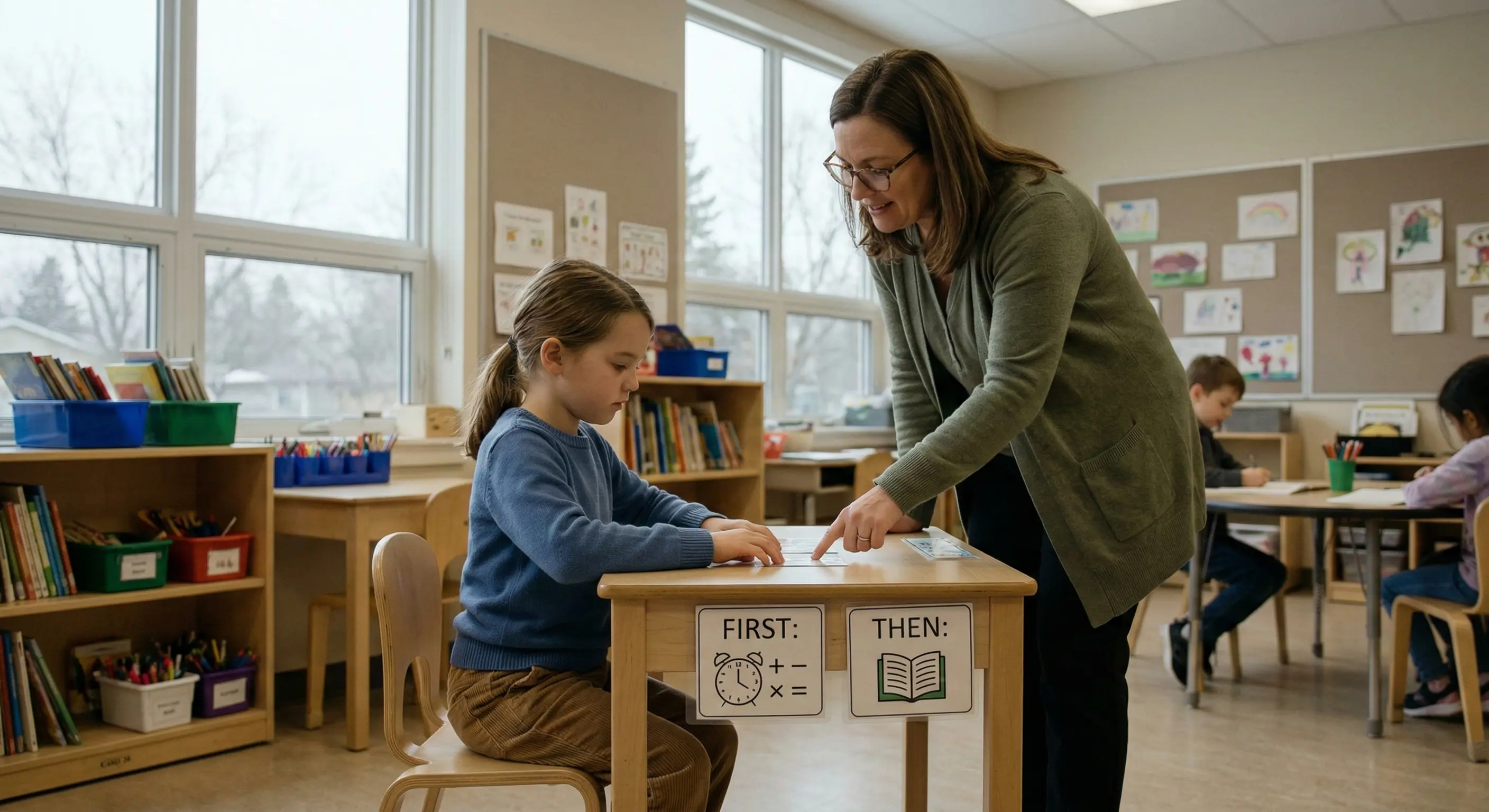
Knowing what comes next is different from knowing how long something may take. A visual schedule or first-then board can help with sequence, while time estimation focuses on duration.
For example, a child may know that putting on shoes comes before leaving the house but still find it difficult to judge whether that task will take two minutes or seven. This does not necessarily reflect poor motivation or attention.
Before estimating time, define a clear start and finish for the task. “Packing the school bag,” for example, may take very different amounts of time depending on where the bag is and what needs to be packed.
A simple structure is:
What is the task? → When does it start? → When is it finished? → About how long might it take?
Choose One Short Task to Explore Together
Start with one short, familiar task that has a clear beginning and end rather than a full routine.
Good options might include:
- Packing a school bag
- Putting away a few toys or dishes
- Putting on shoes and a coat
- Feeding a pet with adult support
- Brushing teeth or washing hands
Choose a task the child can already do. The goal is not to teach a new skill or complete it faster, but simply to notice how long it takes.
If the task still feels too broad, break it into a few clear steps. For example, “pack the school bag” might include gathering the needed items, placing them in the bag, and zipping it closed. Keeping the steps simple can make both planning and estimating duration more manageable.
Avoid starting with tasks that already cause distress, refusal, or conflict. Keep the first attempt neutral and low-pressure, with no pass/fail expectation. The family is gathering information, not testing performance.
Make a Simple Estimate and Compare It With What Happened
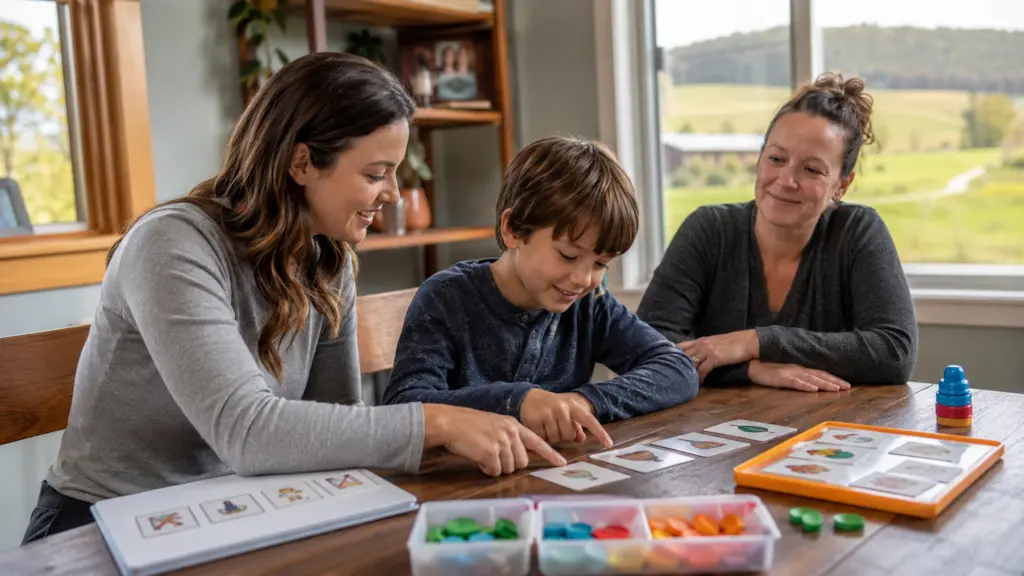
Before starting, ask the child to make a rough estimate of how long the task might take. This can be a number, a range, or a choice between two options, such as:
“Do you think packing your bag will take about 3 minutes or closer to 5?”
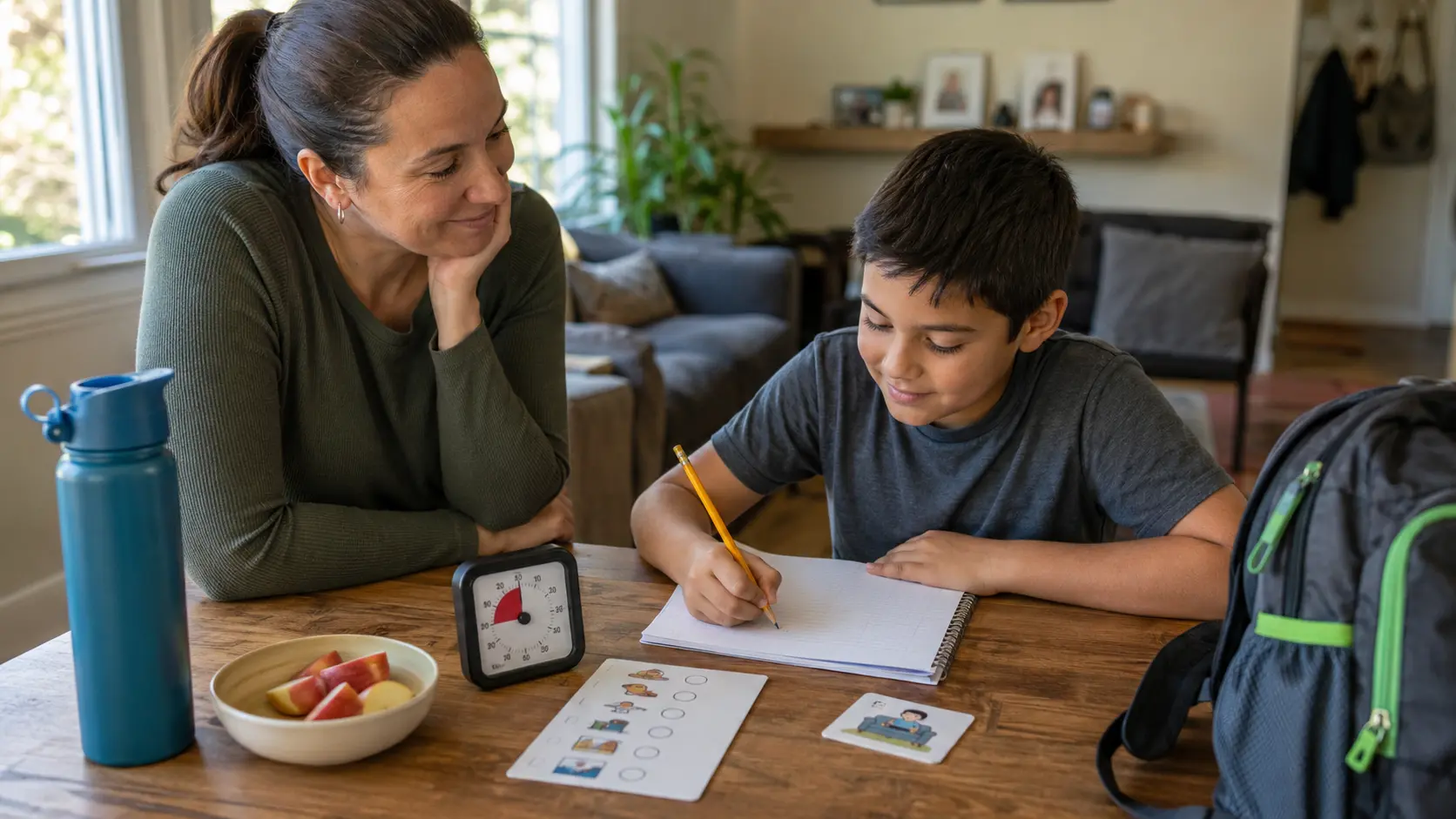
A clock, stopwatch, or visual timer can help show the actual duration. Use it as information, not a deadline. The goal is to notice how long the task takes, not to race against the timer.
Afterward, compare the estimate with what happened using neutral language:
“We guessed 3 minutes, and it took about 6. What made it take longer?”
“That was faster than we expected. What helped?”
“That was close to our estimate. Let’s see what happens next time.”
Repeating the same task a few times can help the child notice that duration may vary from day to day.
Estimate → Do → Compare → Adjust
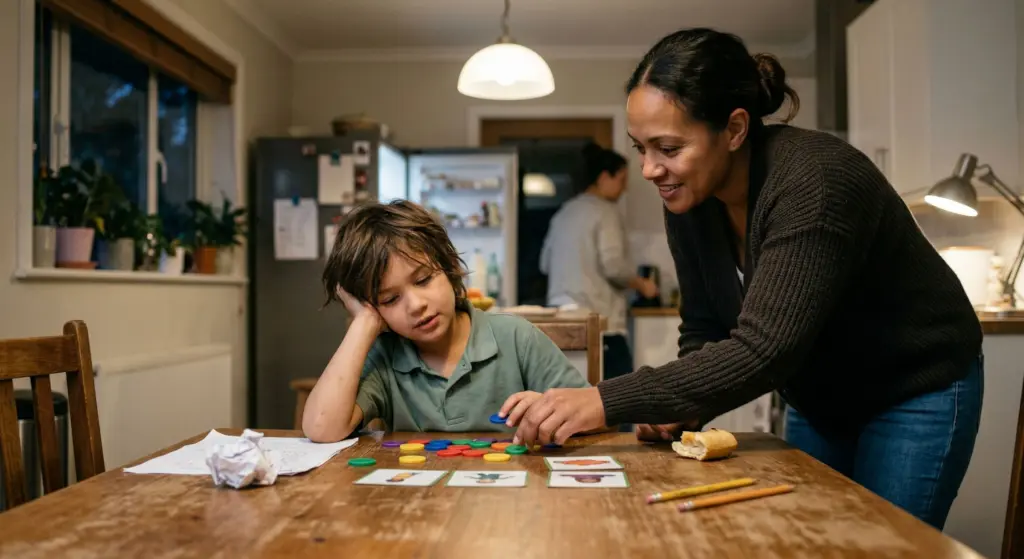
Discuss What Changed Without Pressure or Blame
After comparing the estimate with the actual time, briefly notice what may have affected the task.
For example:
- A missing item took extra time
- An interruption happened
- An unexpected step came up
- Help was needed
- A break was taken
These are not mistakes. They are useful clues that can make the next estimate more realistic.
Keep the conversation neutral and curious. Estimates are predictions, not tests, and it is normal for actual time to vary.
Use Existing Visual Supports Without Rebuilding the Whole Routine
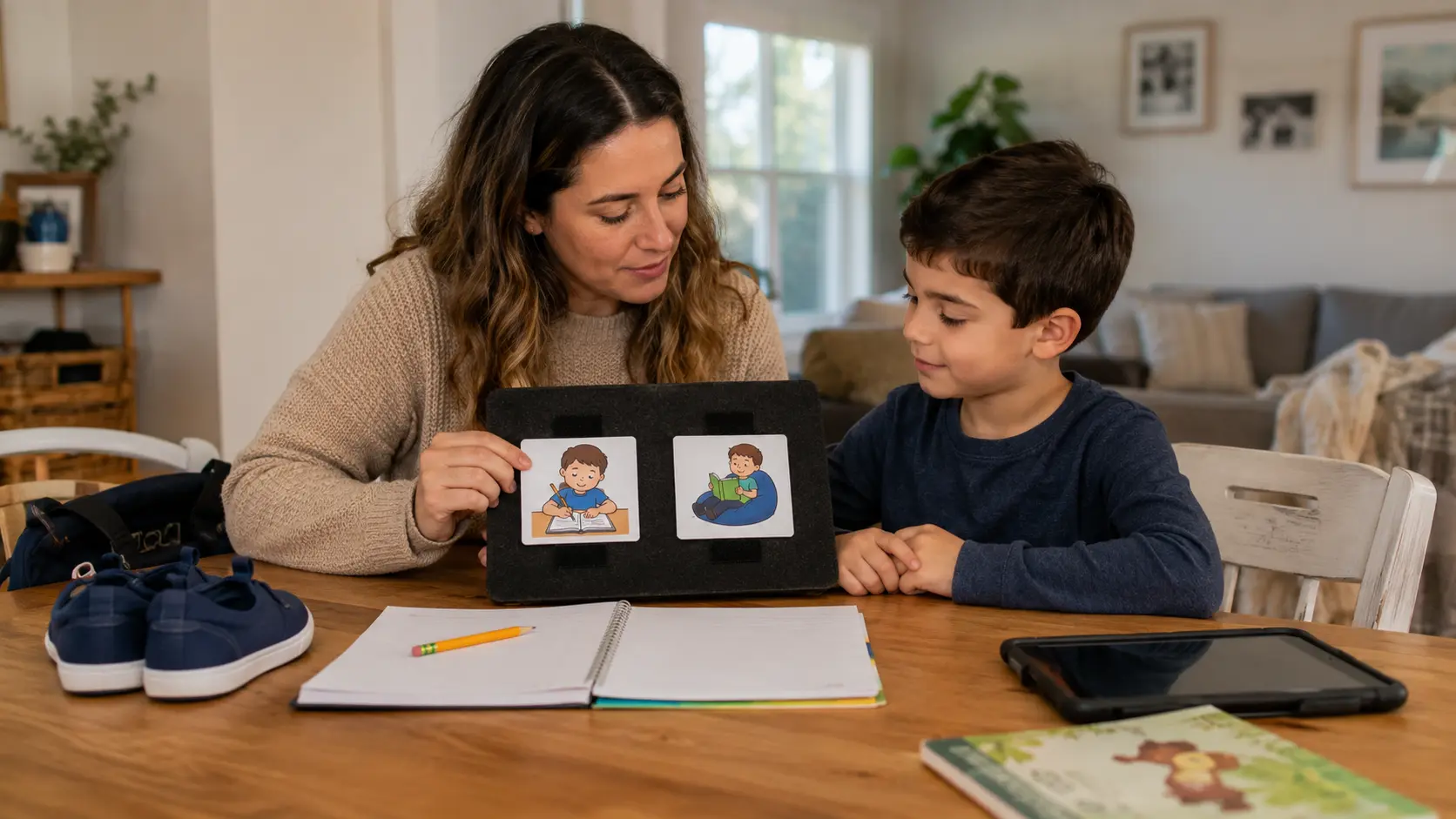
Families who already use a visual schedule or first-then board do not need to replace them. These tools support sequence, while a visual timer or clock can help make duration more concrete.
The simplest approach is to add time estimation to one existing task:
- Choose a familiar activity.
- Make a rough estimate.
- Complete the task as usual.
- Compare the estimate with the actual time.
Not every task needs a timer, and not every child benefits from the same tool. A stopwatch, phone timer, clock, or simple estimate log may all be useful.
When Broader Learning or Clinical Support May Help
For some families, the estimate-and-compare approach may be enough for practicing short tasks. For others, difficulties with time, planning, or transitions may need more individualized support.
If these challenges are consistently affecting daily life at home or school, consider discussing them with the child’s clinical or education team.
Practice Log: Estimate, Do, Compare, Adjust
Families can use a simple log for one or two familiar tasks over several days. The goal is not to make the child faster, but to notice patterns and build a more realistic sense of duration.
After a few attempts, families may start to notice which parts of a task tend to add time. That information can make future estimates more realistic without changing the task itself.
The Goal Is Experience, Not Perfection
A sense of task duration can become more familiar through practice and repeated experience. The goal is not a perfect prediction, but the habit of estimating, completing the task, and noticing what happened.
Keep practice brief, practical, and low-pressure. An estimate that is off by a few minutes is not a failure — it is useful information for the next attempt.
If the main challenge is sequence rather than duration, a visual schedule or first-then board may be more appropriate. If difficulties with planning, transitions, or daily participation continue, consider discussing them with the child’s clinical or education team.
Questions About Your Child’s Routines or Daily Skills?
AtlasCare ABA can support families with individualized guidance around routines, communication, transitions, and daily-living skills where appropriate.
Contact AtlasCare ABA to learn more about services available in your area.