.jpg)
There is no instruction manual for being a caregiver for a child with autism. And even when you’ve done everything right—the visual schedule is on the fridge, the transitions are warned in advance, the sensory kit is ready—some mornings still end in tears. Yours or theirs.
That’s why daily routines matter. The right routines can reduce stress, support communication, and help your child feel safer in their body—without turning your home into a therapy clinic.
What Caregiver Support Looks Like at Home
Caregiver support for autism at home doesn’t mean running a therapy program in your living room. It means creating an environment where your child can feel safe, understood, and capable—and where you have enough tools to navigate the hard moments without losing your footing.
Autism support for parents looks different in every household. For some families, it’s a visual schedule on the wall and a consistent bedtime sequence. For others, it’s a set of scripts they use during transitions. For others still, it’s simply recognizing early warning signs and having a plan before things escalate.
None of this requires professional training. It requires observation, consistency, and a willingness to adjust when something isn’t working. That is something you can do.
Why Routines Help Autistic Children
Predictability is one of the most powerful tools available to caregivers of autistic children. For many autistic children, the world can feel overwhelming—sounds are louder, transitions are jarring, and unexpected changes can feel genuinely distressing, not just inconvenient.
A consistent autism home routine reduces the cognitive and emotional load that comes with not knowing what’s coming next. When a child can predict the sequence of their day, they often have more capacity for learning, connection, and self-regulation.
Meltdowns don’t disappear entirely, but routines can reduce how often they occur and how long they last—especially when routines are paired with visual supports, sensory adjustments, and warm caregiver engagement.
Autism Home Routine Basics: A Caregiver Guide
1. Make the Day Predictable
Predictability doesn’t mean rigidity. It means your child knows the general shape of their day—what comes first, what comes next, and what “done” looks like.
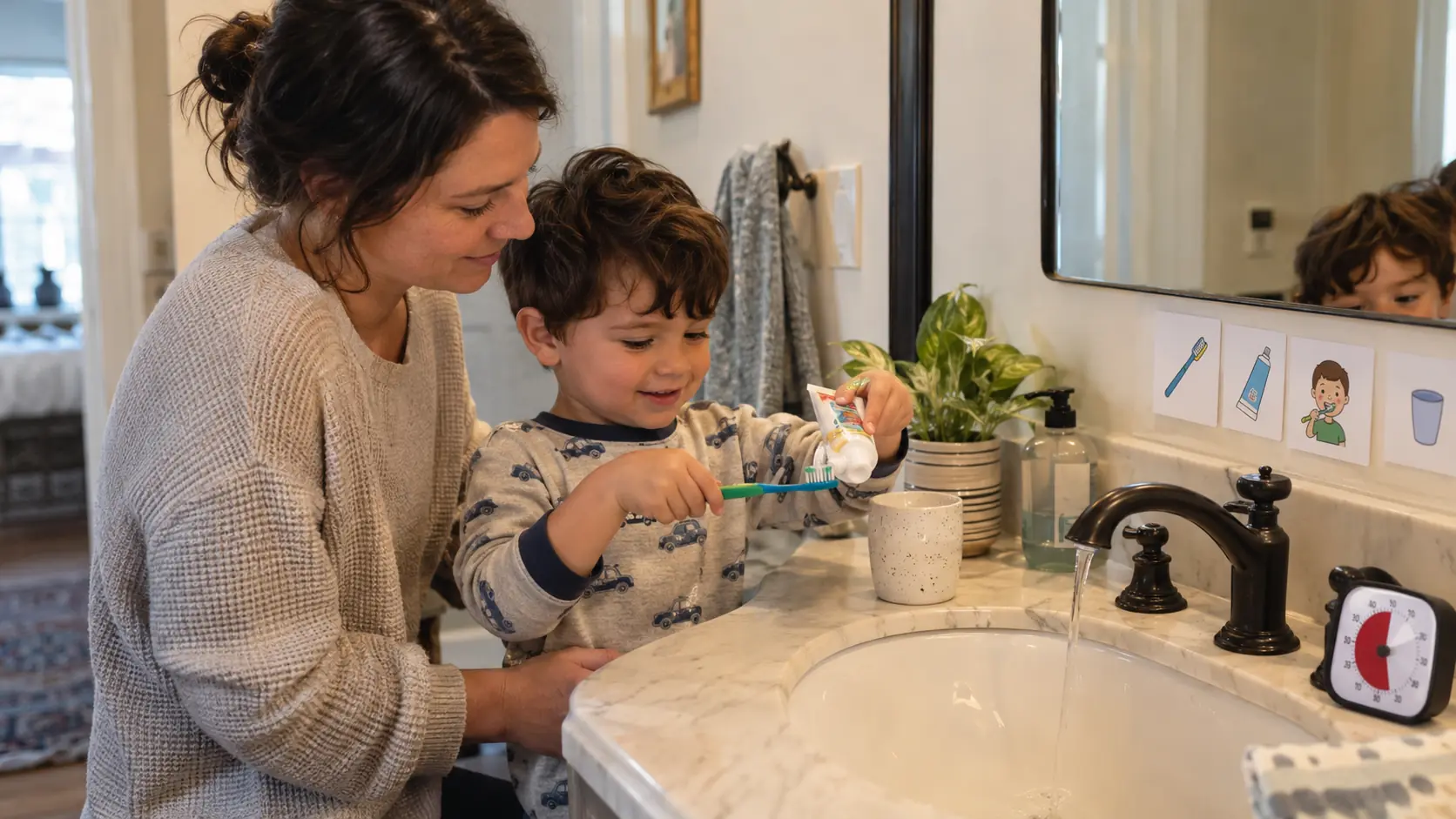
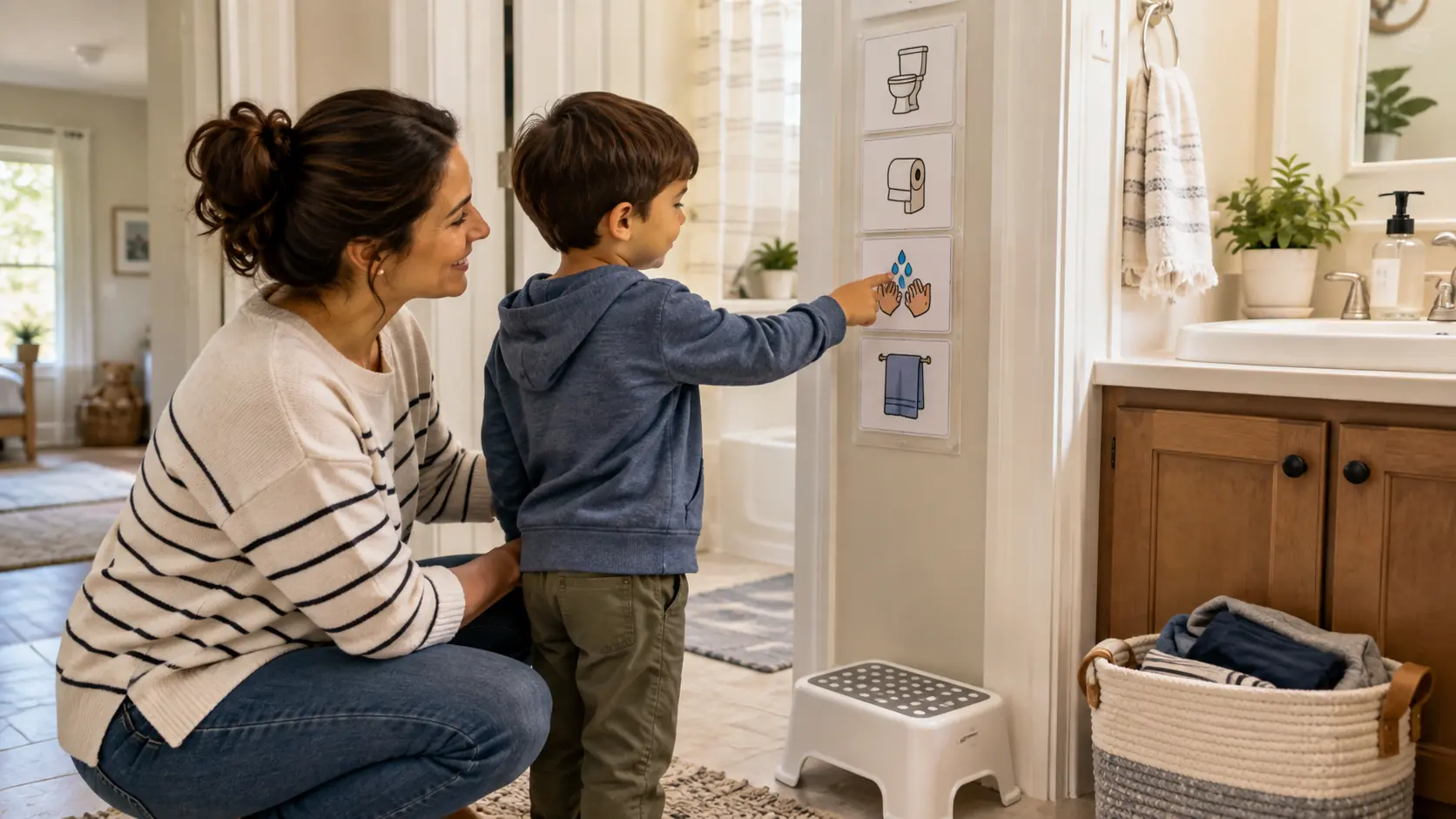
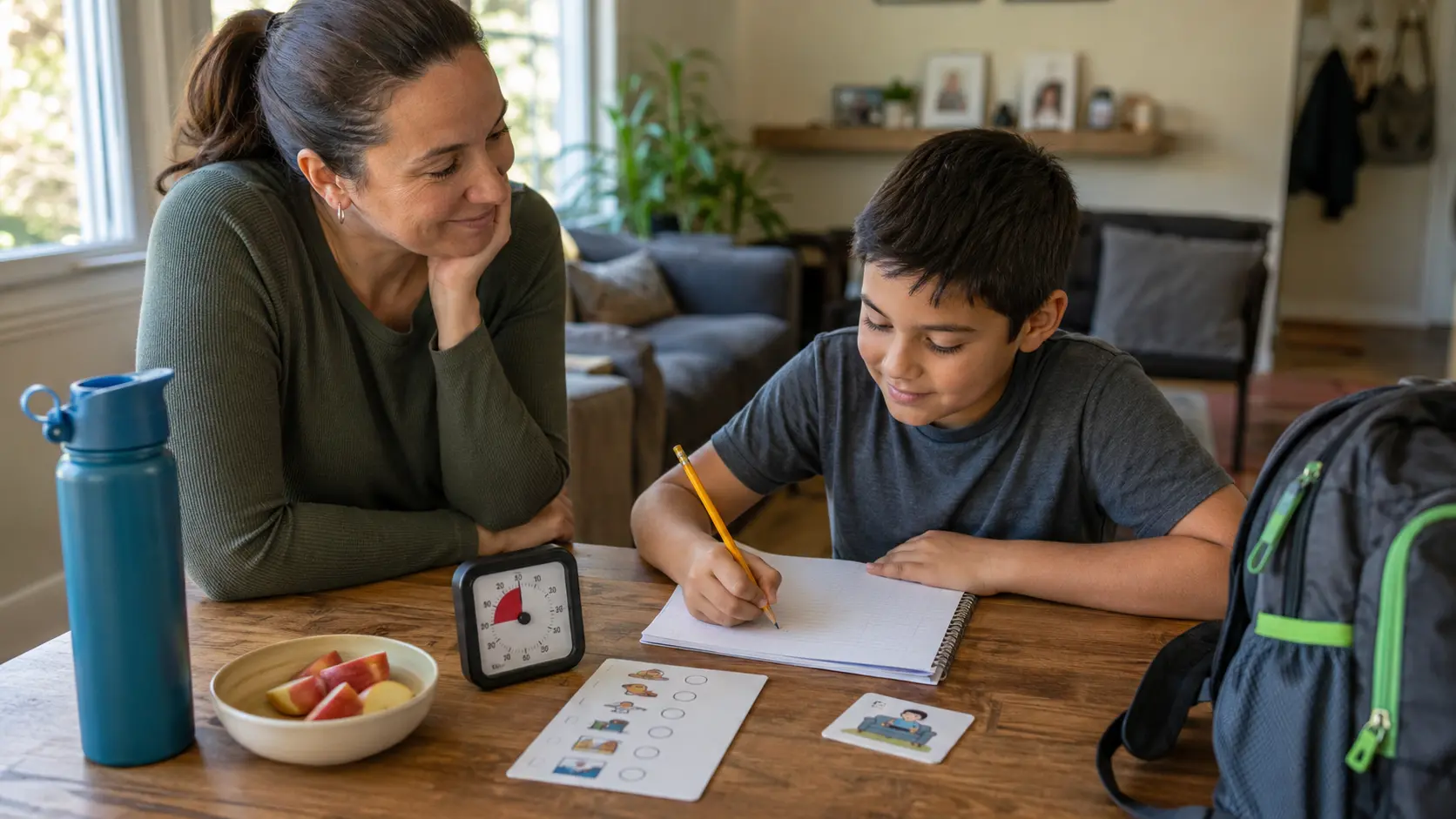
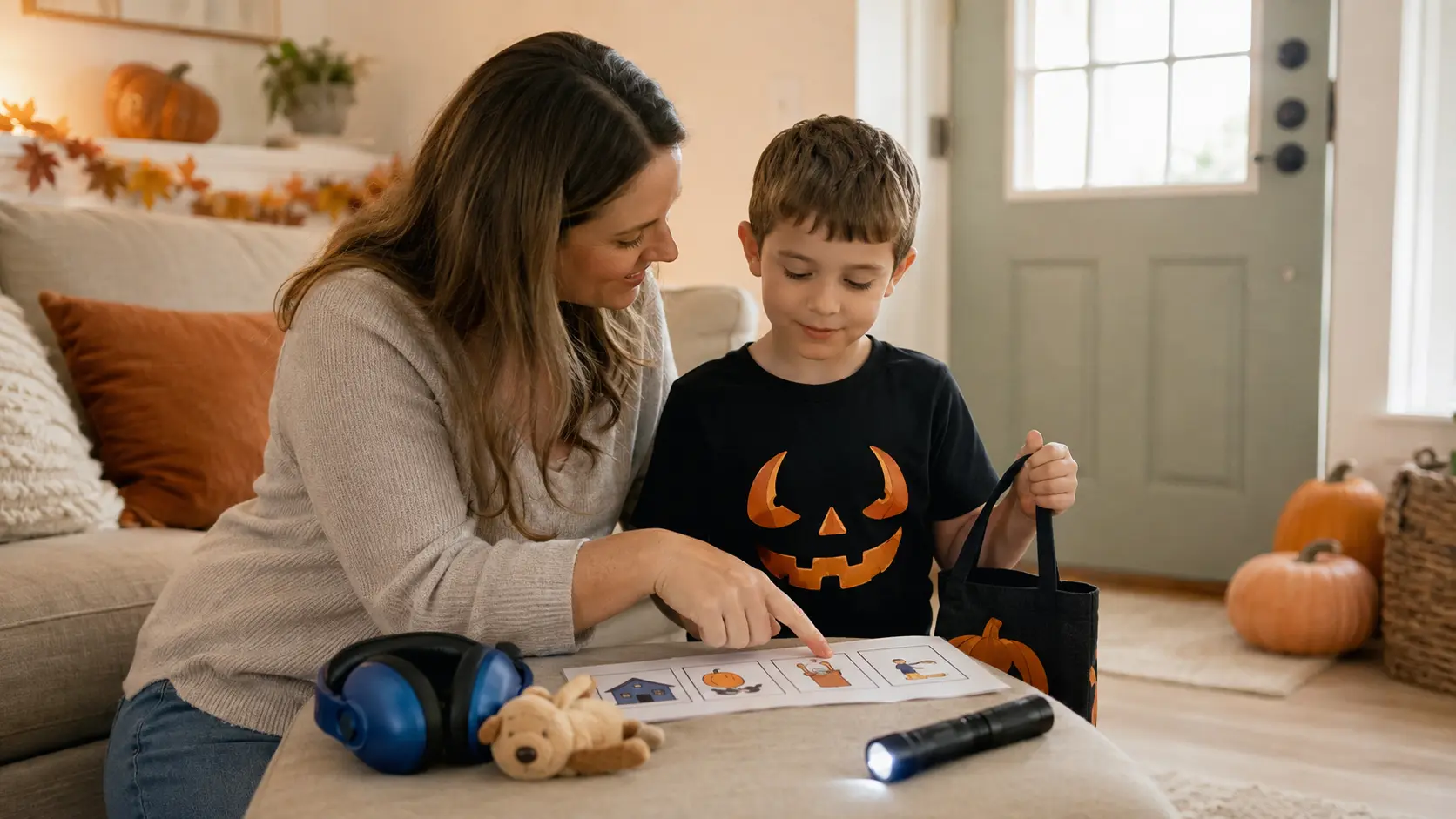
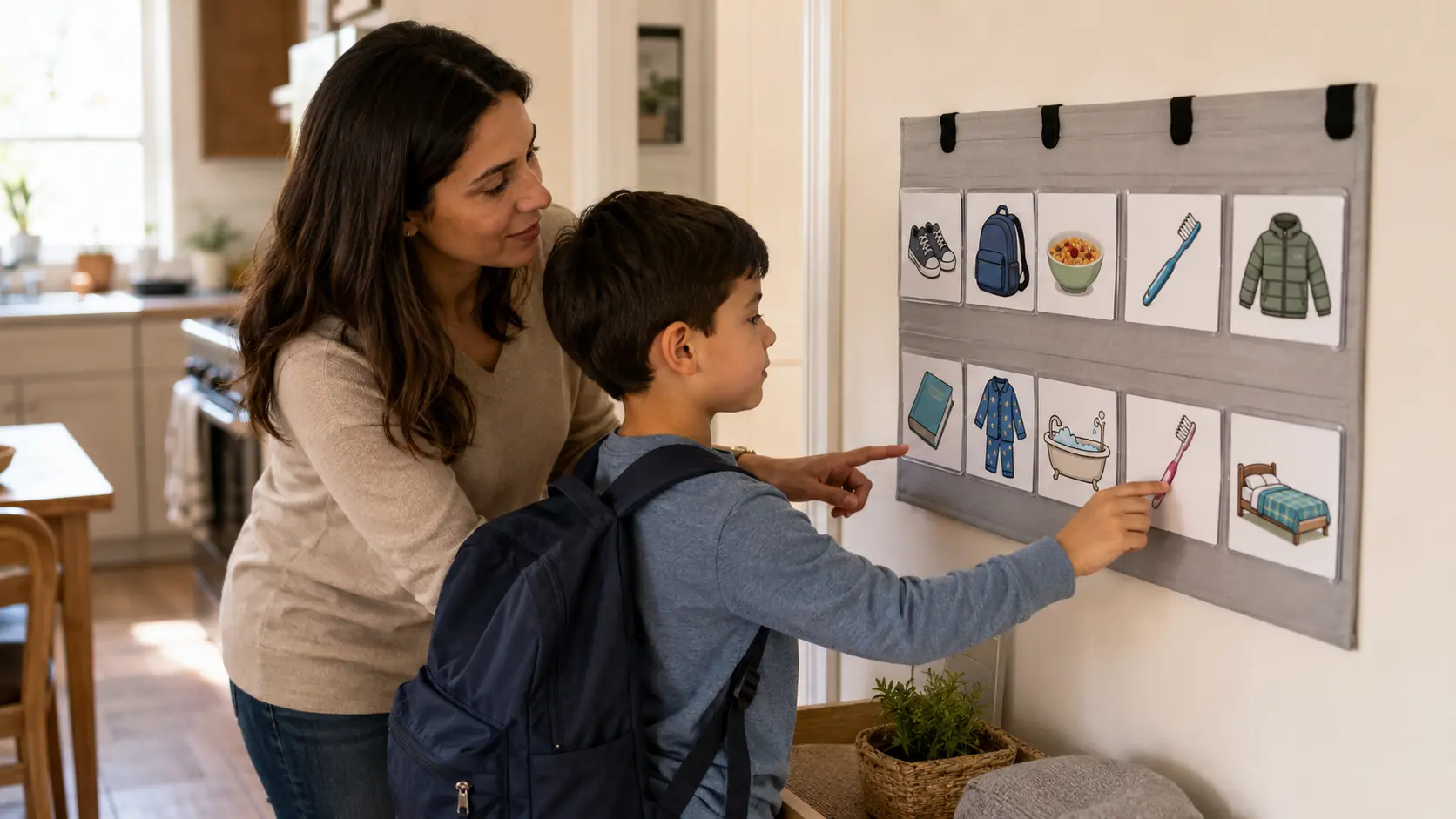
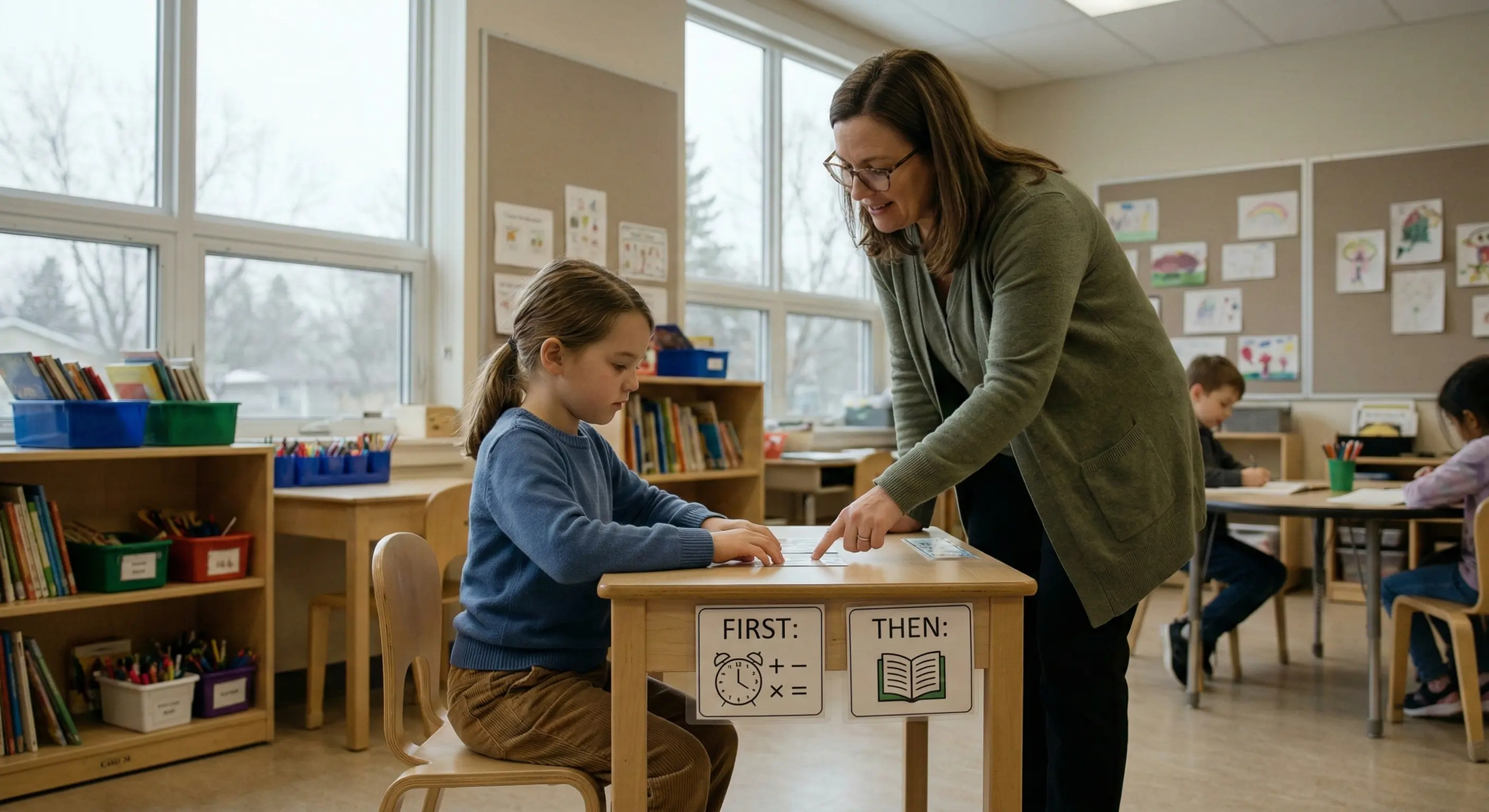
- Visual schedules: A simple sequence of pictures or words showing the main steps.
- Simple scripts: Short, consistent phrases for the same moments every day.
- Warnings before transitions: A 5-minute and 2-minute warning before an activity ends.
2. Reduce Sensory Overload
Sensory overload—when the nervous system is overwhelmed by noise, light, touch, smell, or movement—is a common trigger for distress and behavioral escalation.
- Softer lighting or lamps in key spaces.
- A designated quiet area away from loud TVs or siblings.
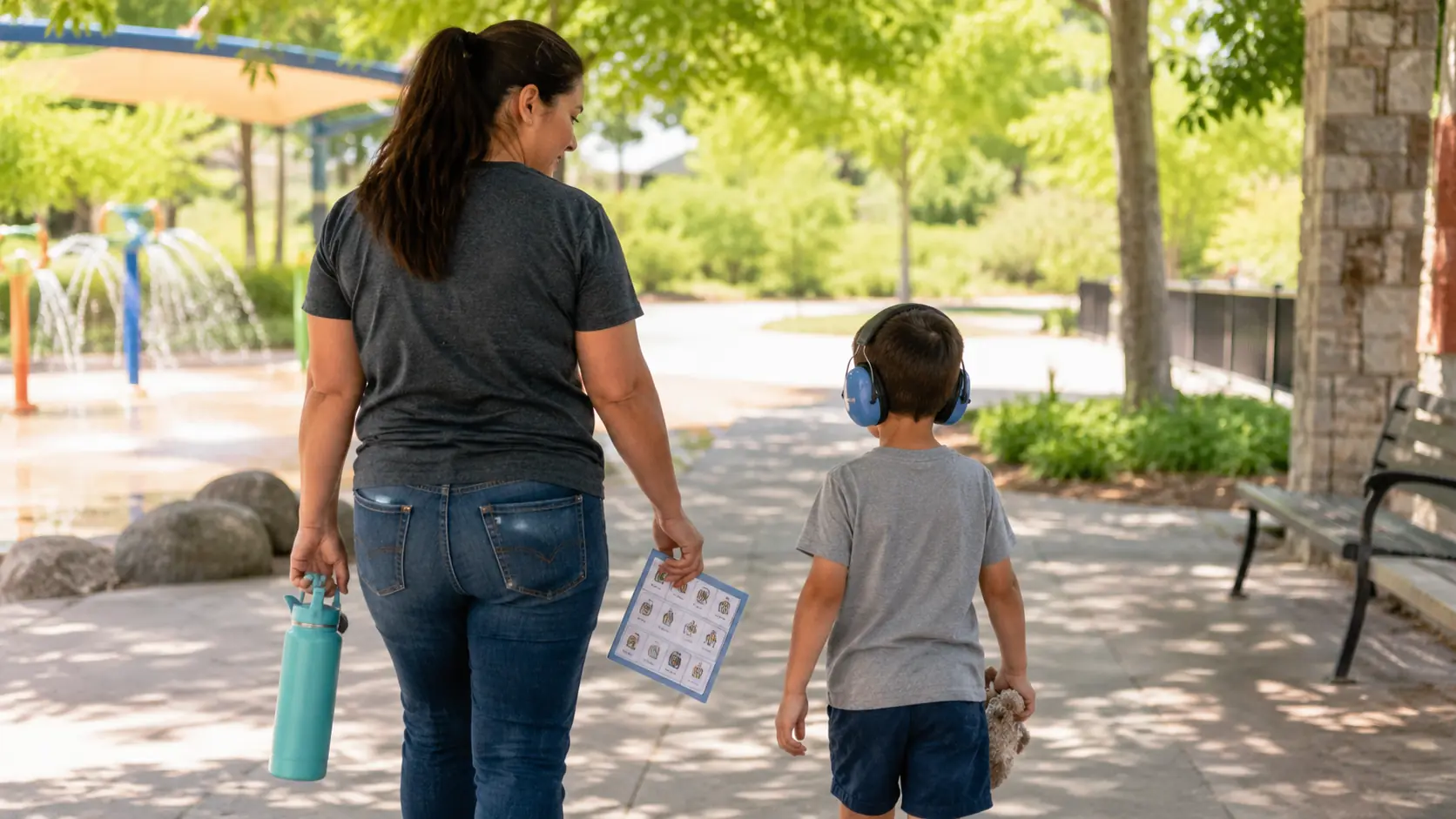
- Noise-canceling headphones accessible in multiple rooms.
- Predictable textures and clothing options (tagless shirts, seam-free socks).
- Warning before physical touch when your child is dysregulated.
3. Build Communication into Routines
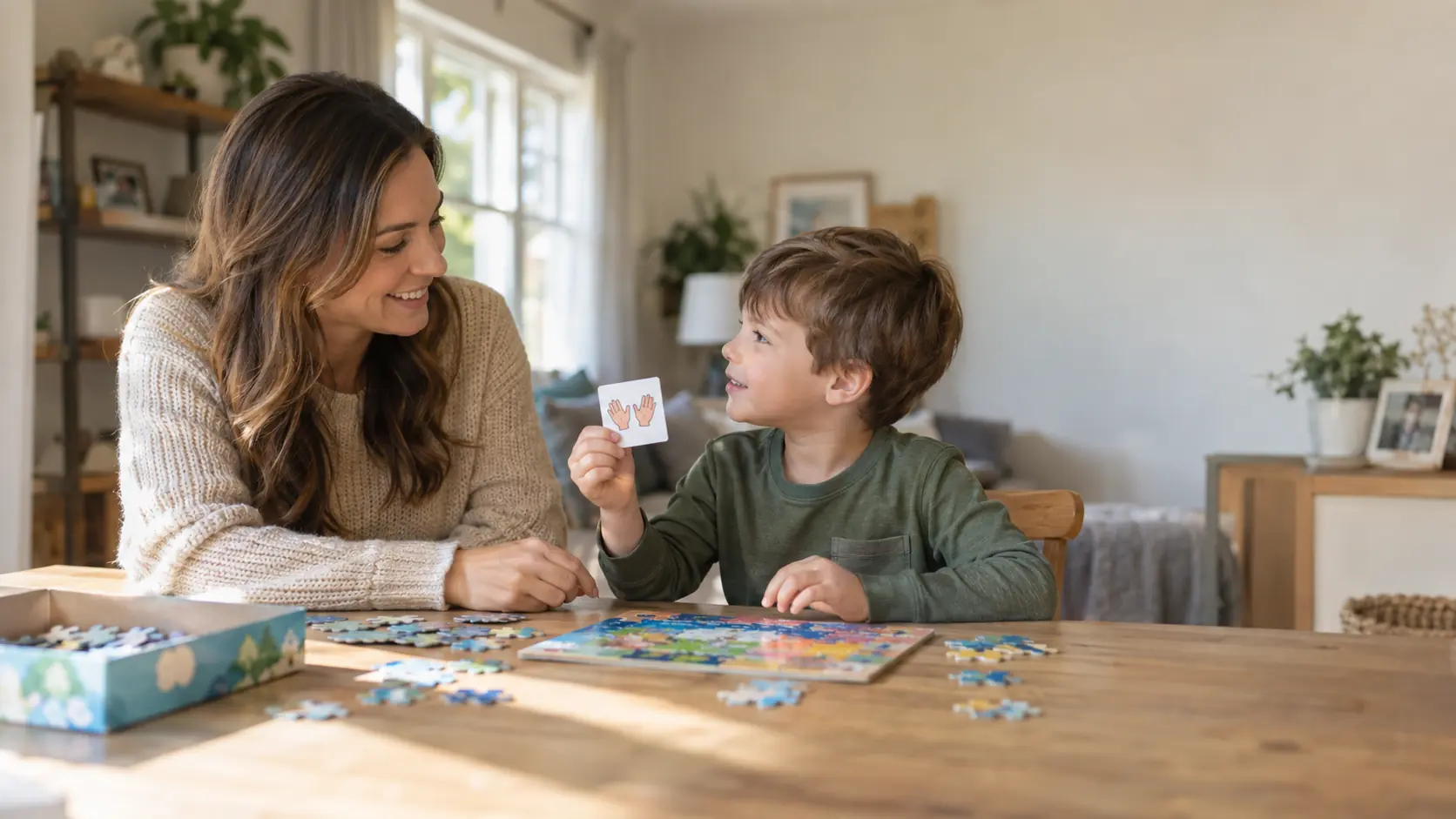
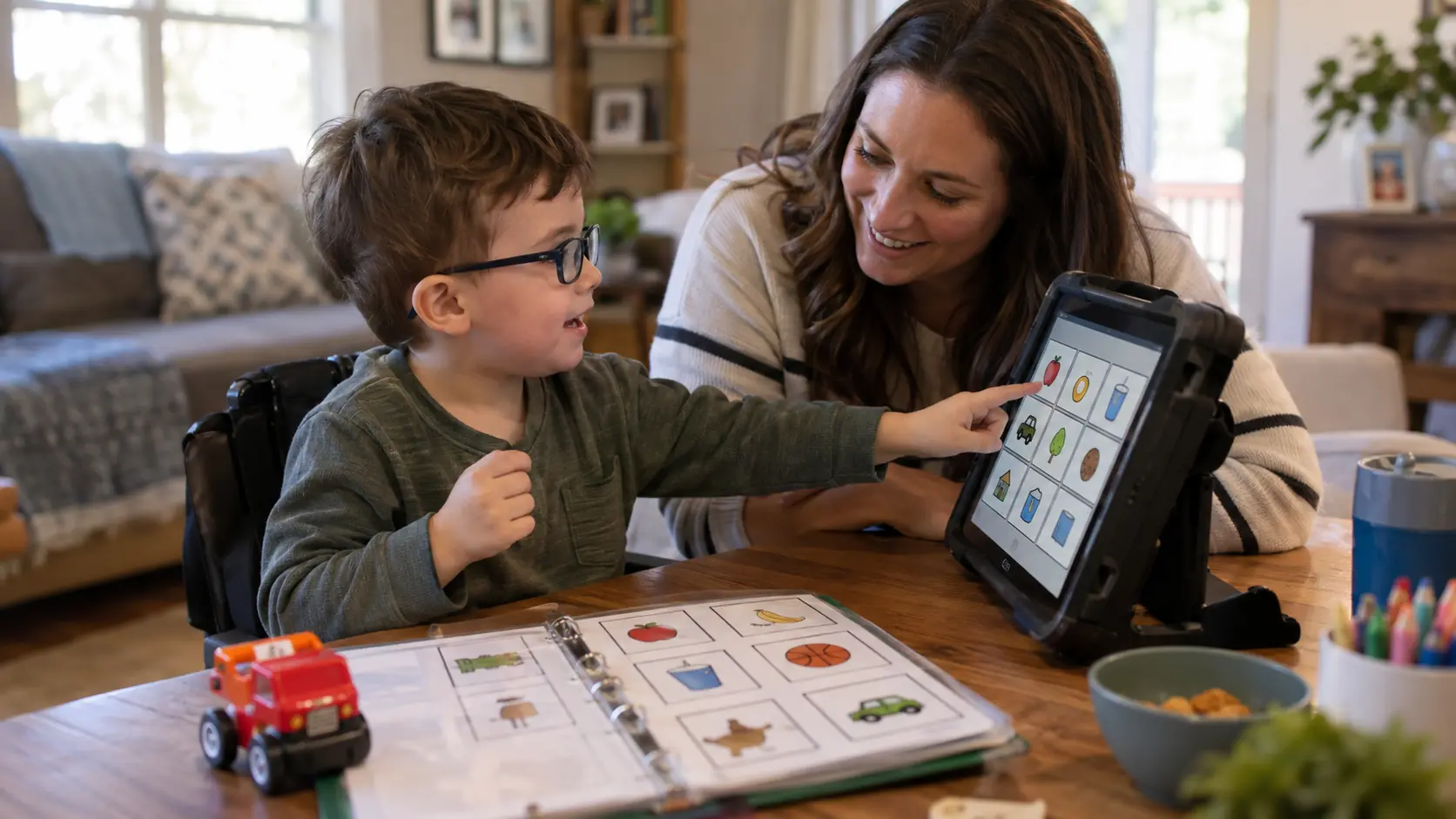
Every routine is a communication opportunity. When you narrate what’s happening in simple language and create moments for choices, you build language and agency.
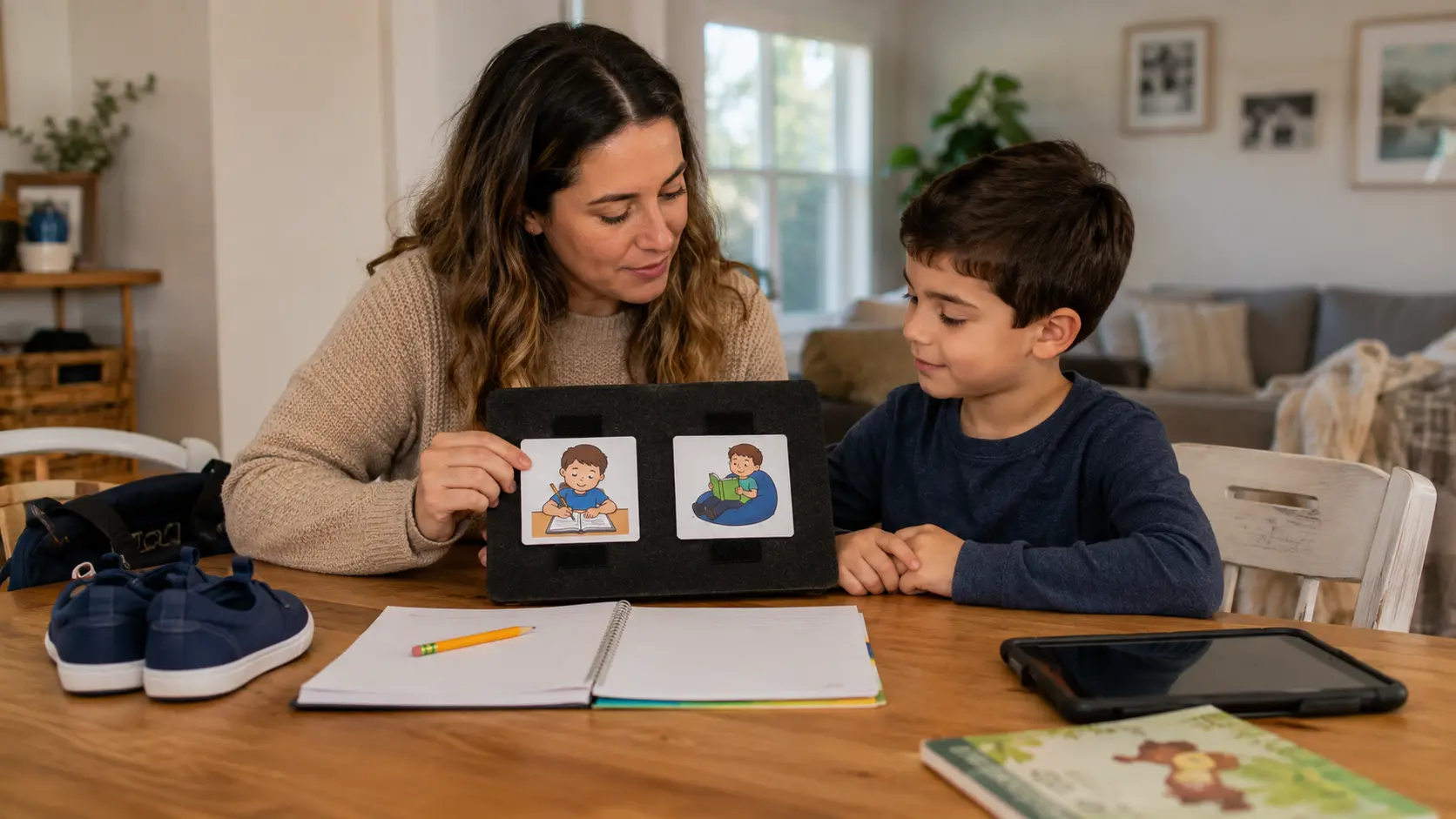
- Offer choices within the routine (“red cup or blue cup?”).
- Use AAC-friendly prompts if your child uses AAC (or may benefit from it).
- Pause and wait to give your child time to respond.
4. Use Reinforcement Ethically
Reinforcement—acknowledging and rewarding effort—can be one of the most effective tools in autism support for parents.
- Be specific: “Great job putting your shoes on.”
- Use natural reinforcers: Praise or access to a preferred activity.
- Keep it genuine.
Reinforcement isn’t bribery. Bribery happens before (“If you stop crying, I’ll give you...”). Reinforcement happens after (“You finished the step—nice work. Now we do the next part.”).
Daily Routines That Work
Morning Routine
Mornings are often the hardest part of the day—transitioning from sleep to alertness and home to school.
- Wake-up: Give a 5-minute warning before expecting your child to get up.
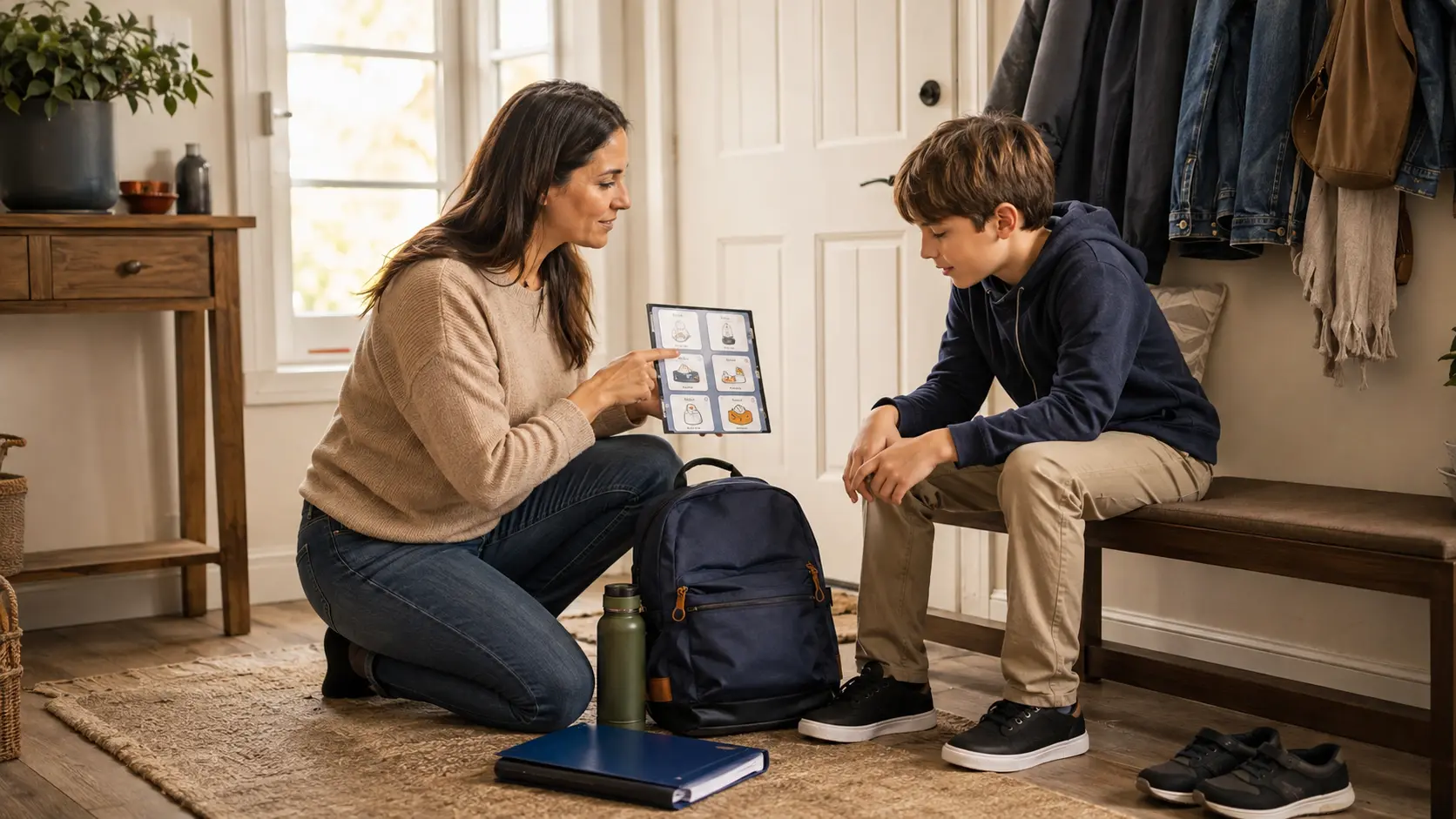
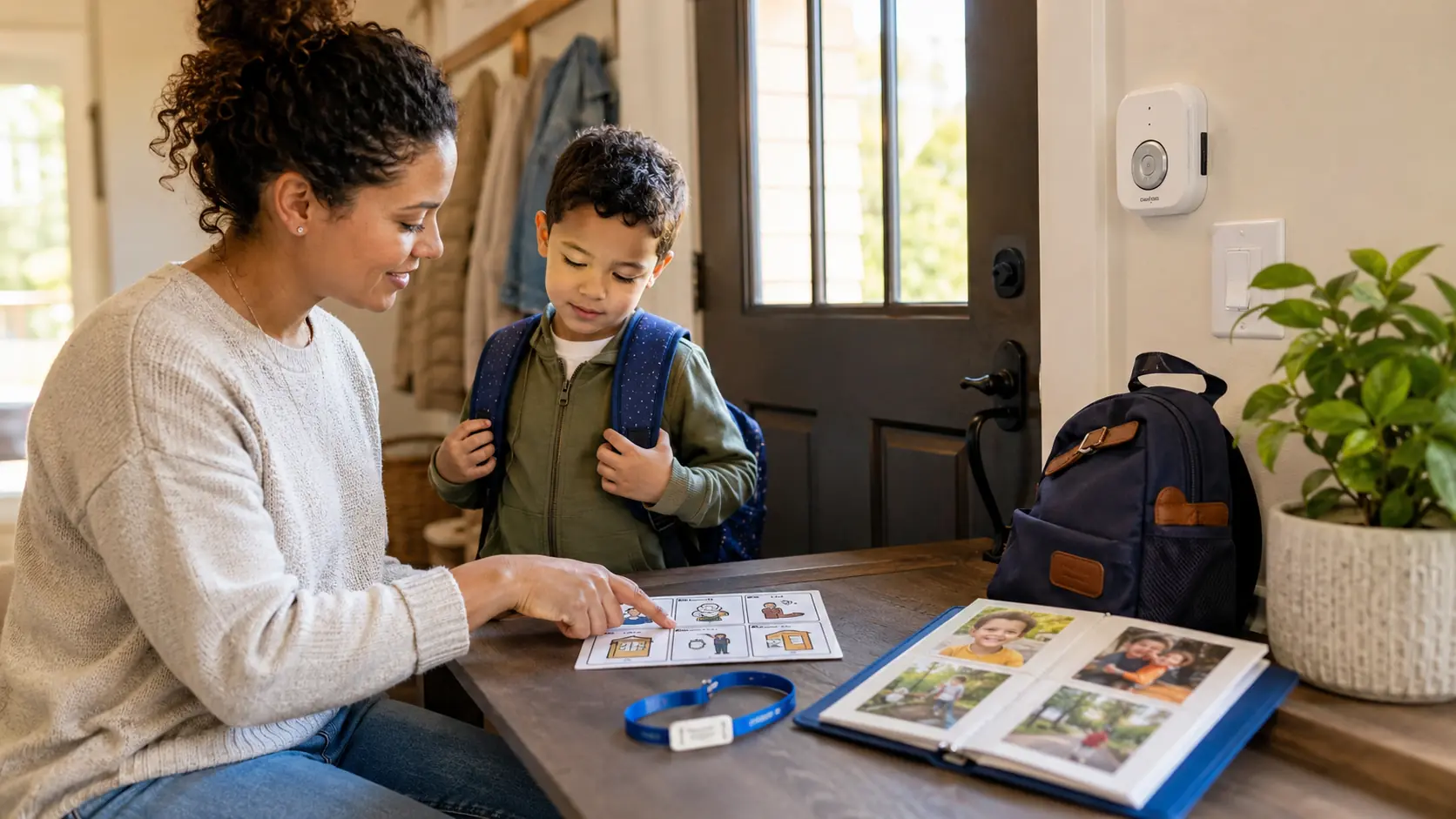
- Visual sequence: Wake → bathroom → dressed → breakfast → shoes → bag → out the door.
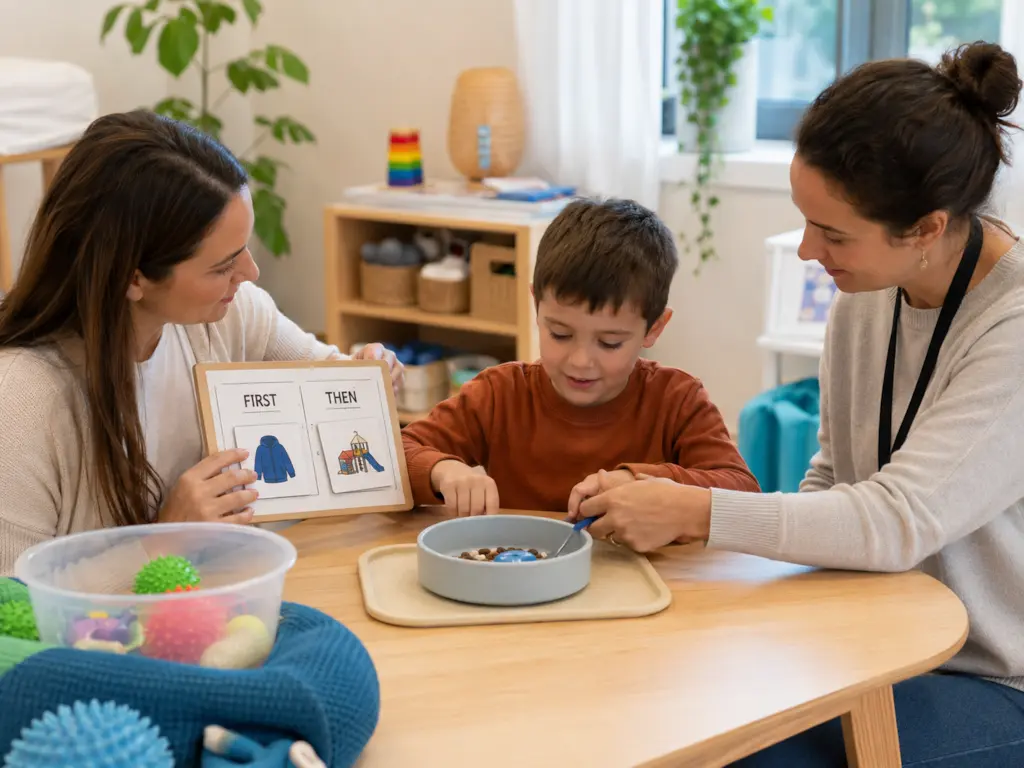
- First/Then language: “First get dressed, then breakfast.”
Meals and Snacks
Sensory sensitivities (texture, temperature, smell) can make meals feel like a battle.
- Keep the sequence predictable (same spot, similar timing, familiar utensils).
- Offer one safe food alongside new options—without pressure.
- Avoid power struggles, as negative associations make it harder over time.
Transitions
Moving from one activity to another is among the hardest moments for autistic children.
- First/Then boards: Show what’s happening now and next.
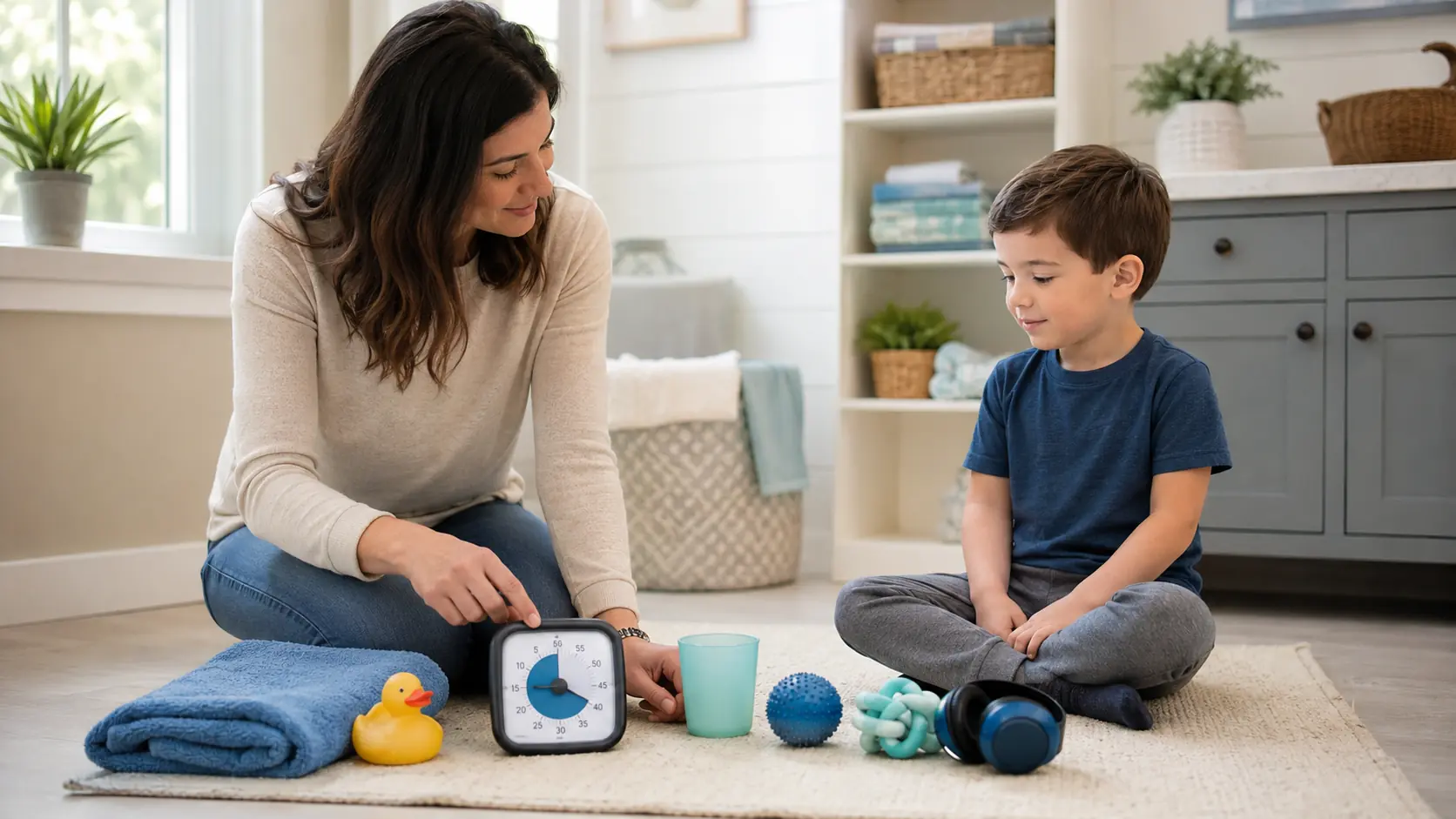
- Visual timers: Make time concrete.
- Transition objects: A small, preferred item carried into the next activity.
Bedtime Routine
Sleep difficulties are common, and a structured wind-down sequence is highly effective.
- Start wind-down 45–60 minutes before target sleep time.
- Dim lights and switch to low-stimulus activities.
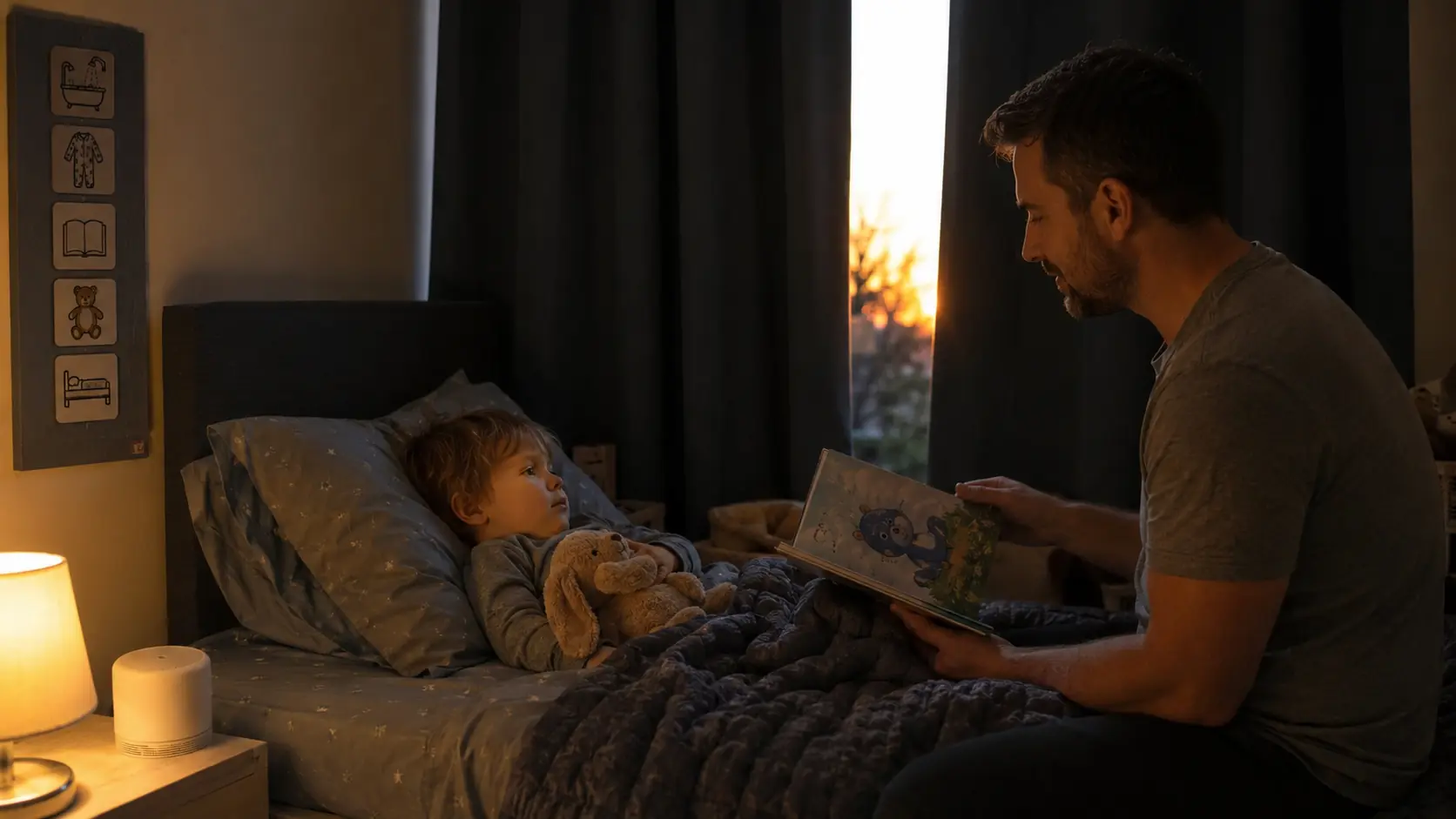
- Keep the sequence consistent: wash → pajamas → teeth → calm activity → lights out.
Regulation Plan for Hard Moments
Early Signs and Co-Regulation Scripts
The best time to intervene is before a meltdown peaks. Common early signs include increased volume, pacing, restlessness, or withdrawing.
Calm Corner and Sensory Toolkit
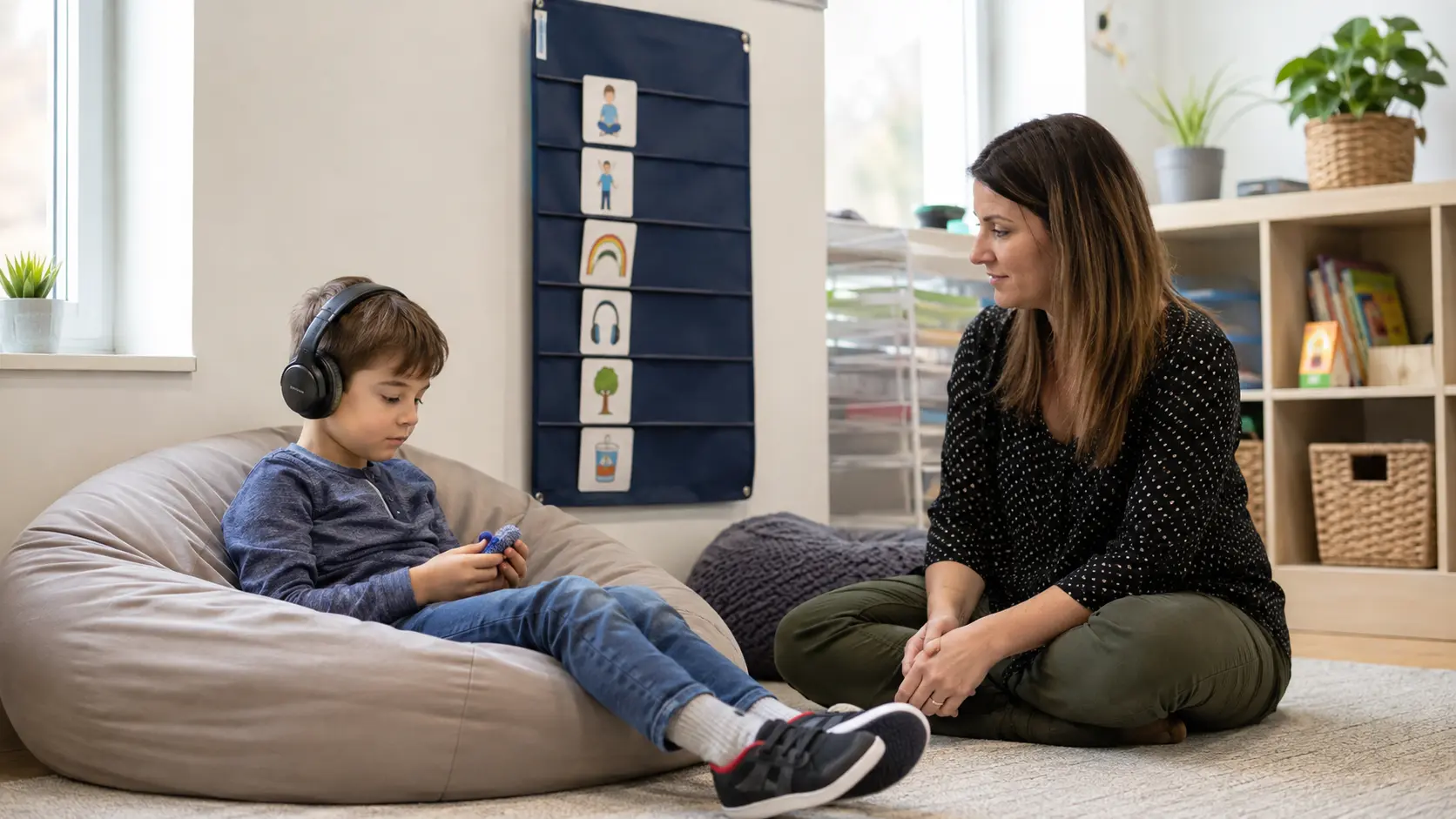
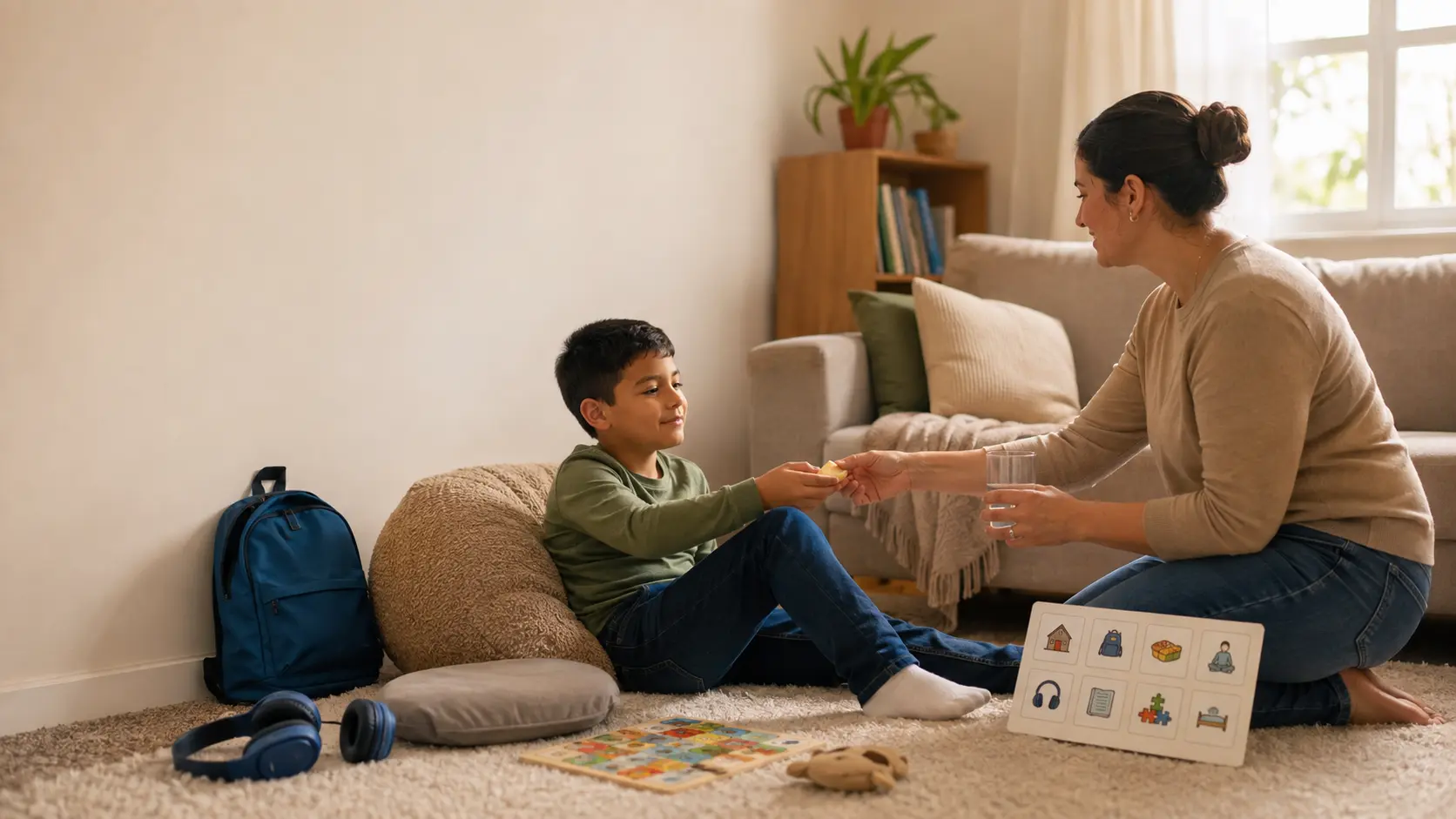
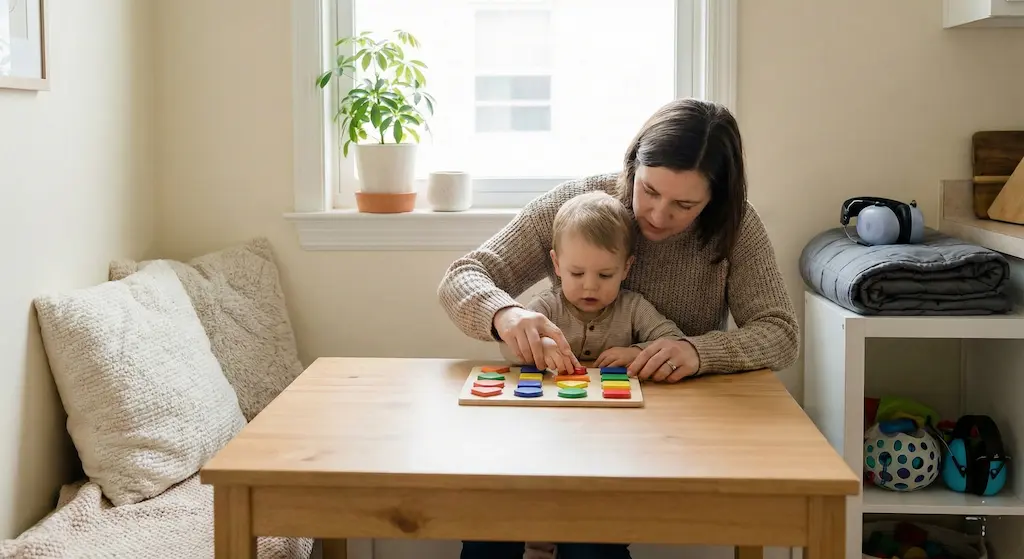
A calm space (bean bag corner, small tent, cozy chair) gives your child a predictable place to regulate. Toolkit items might include:
- Headphones.
- Fidgets.
- Soft blanket or weighted lap pad.
- Visual “break” card.
After a Meltdown: Recovery and Repair
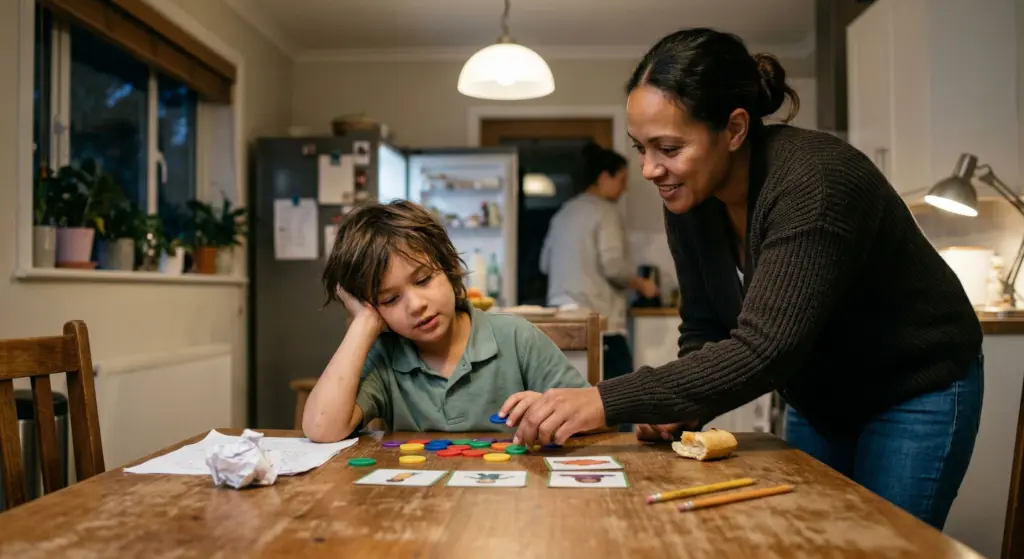
In the aftermath of a meltdown, your child’s nervous system is exhausted. This is not the time for a lecture.
- Allow quiet recovery time without demands.
- Offer a drink of water and physical comfort if accepted.
- Reconnect gently with low-key proximity.
Parent Coaching ABA: How to Use ABA Principles at Home
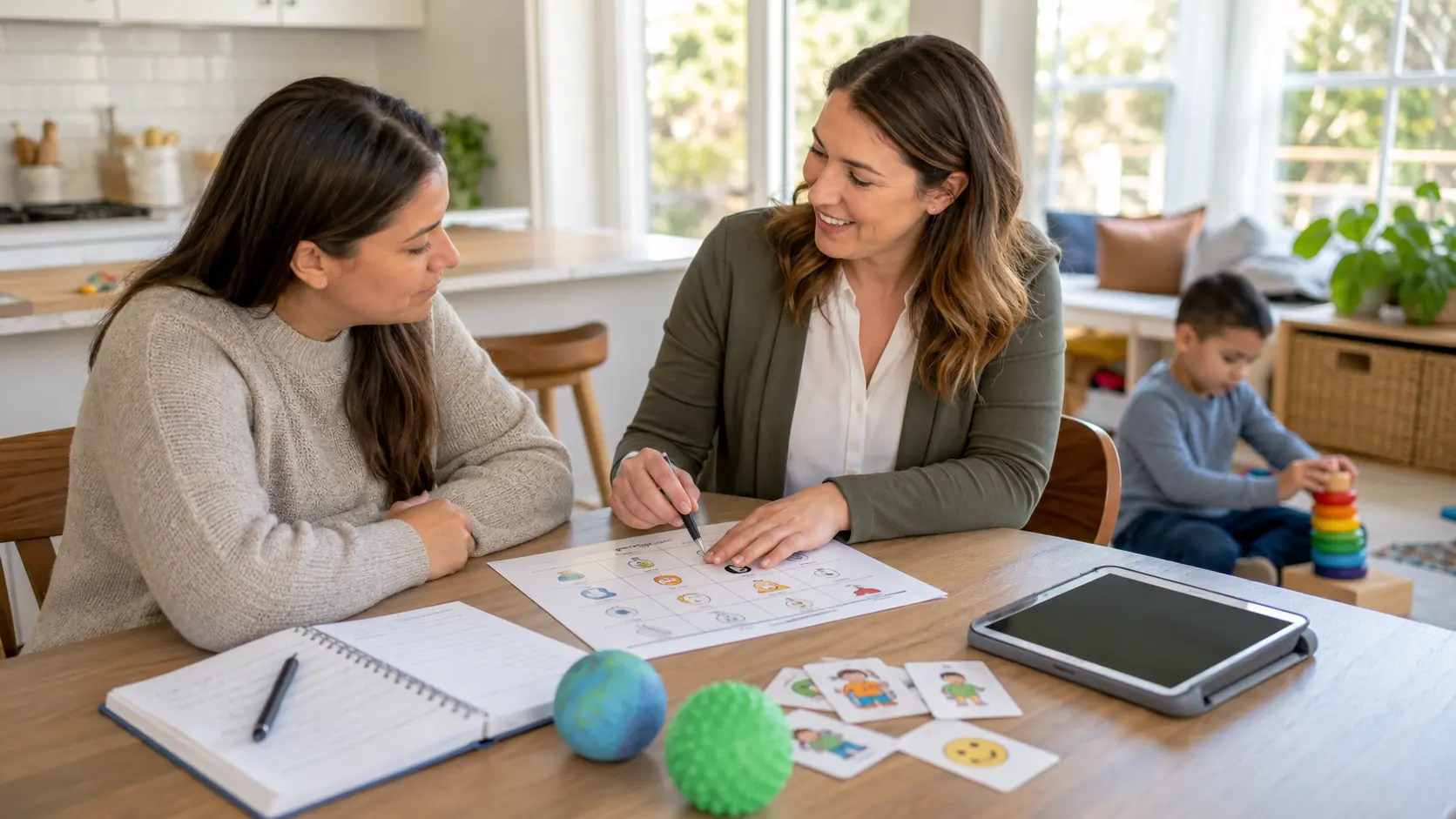
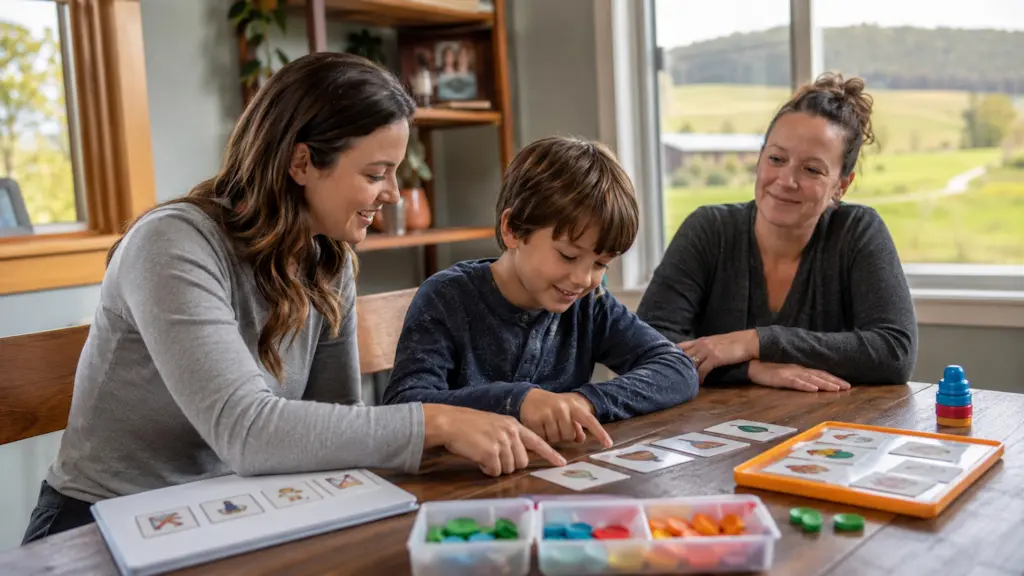
Parent coaching ABA helps caregivers apply behavioral strategies during everyday routines. Focus on functional goals like communication, independence, and safety. Keep data simple by noting what worked and what fell apart each day.














.webp)

.webp)

.webp)
.webp)
.webp)








.webp)

.webp)
.webp)





%20During%20Play%20in%20the%20Home.webp)