.webp)
When you type “autism therapy near me” into a search bar, you’re not just looking for an address. You’re looking for a team you can trust with your child’s growth—one that will be honest, skilled, and genuinely invested in your family’s priorities.
Finding providers in your area is the easy part. Knowing whether they offer quality care? That takes a bit more digging. This guide walks you through three pillars of high-quality ABA therapy—BCBA leadership, clear goals, and data tracking—and gives you concrete questions to ask so you can feel more confident in your choice.
AtlasCare ABA can help you evaluate options for autism therapy near me and understand what quality ABA care should include. We serve families in Iowa, New Mexico, and North Carolina. Call 888-838-7222 or email info@atlascareaba.com to get started.
First, a Quick Note: "Autism Therapy" Can Mean Different Things
The phrase “autism therapy” is an umbrella term. Depending on your child’s needs, a care team might recommend Applied Behavior Analysis (ABA), speech-language therapy, occupational therapy, developmental approaches, school-based services, or a combination. Each addresses different skill areas, and many children benefit from more than one type of support working together.
This article focuses specifically on ABA therapy—what quality looks like, what to expect from providers, and how to spot red flags. If you’re exploring other therapies or unsure which supports fit your child, a developmental pediatrician or your child’s care team can help you sort through options.
Disclaimer: This article is for informational purposes only and is not medical advice. It does not replace evaluation or recommendations from a licensed healthcare provider. If you have questions about your child’s development or treatment, please speak with a qualified professional such as a pediatrician, psychologist, or Board Certified Behavior Analyst (BCBA).
What Quality ABA Care Looks Like (The 3 Must-Haves)
Not all ABA providers operate the same way. Many professional practice guidelines and quality standards highlight markers that can help families identify thoughtful, ethical ABA care—and avoid programs that may not be a good fit. Here are three core indicators to look for.
1) BCBA-Led Care (Not Just a Name on Paperwork)
A Board Certified Behavior Analyst (BCBA) is typically the clinical lead for an ABA program. BCBAs hold a graduate degree, complete supervised fieldwork, pass a certification exam, and maintain their credential through ongoing education. They’re trained to assess behavior, design individualized treatment plans, and make data-based decisions about what’s working.
But here’s the key: quality care typically includes an actively involved BCBA—not someone who only signs off on paperwork from a distance.
What real BCBA supervision looks like:
- Observing therapy sessions in person or via a secure, privacy-conscious video platform—not only reviewing notes
- Training and coaching the Registered Behavior Technicians (RBTs) or Behavior Technicians who work directly with your child
- Meeting with you regularly to discuss progress, answer questions, and adjust goals
- Updating the treatment plan based on your child’s data and your family’s feedback
The person delivering most of your child’s therapy sessions is typically an RBT—a trained technician who works under the BCBA’s guidance. RBTs implement the plan, practice skills with your child, and collect session data. It’s a team effort, with the BCBA steering the clinical direction.
Tip: You can verify a BCBA’s certification through the BACB Certificant Registry. Some states also require behavior analysts to hold a state license in addition to national certification—your provider should be able to explain what’s required where you live.
2) Goals That Are Meaningful, Measurable, and Individualized
Quality ABA programs avoid one-size-fits-all programming. Goals should be chosen based on your child’s unique strengths, challenges, and what matters most to your family—not pulled from a generic checklist.
The field calls these “socially significant” goals: skills that make a real difference in your child’s daily life. That might include:
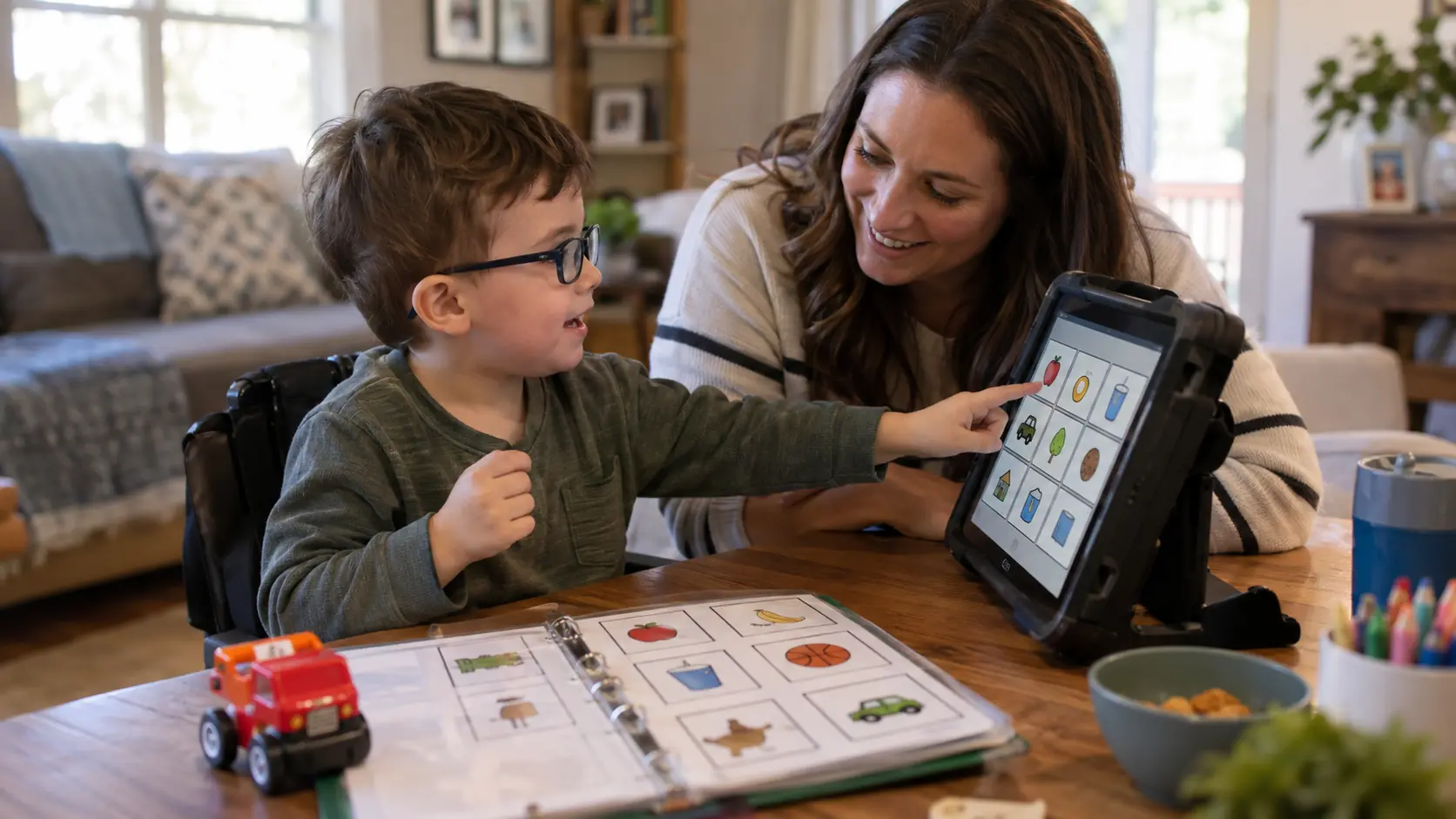
- Communicating wants and needs (verbally, with signs, or using a communication device)
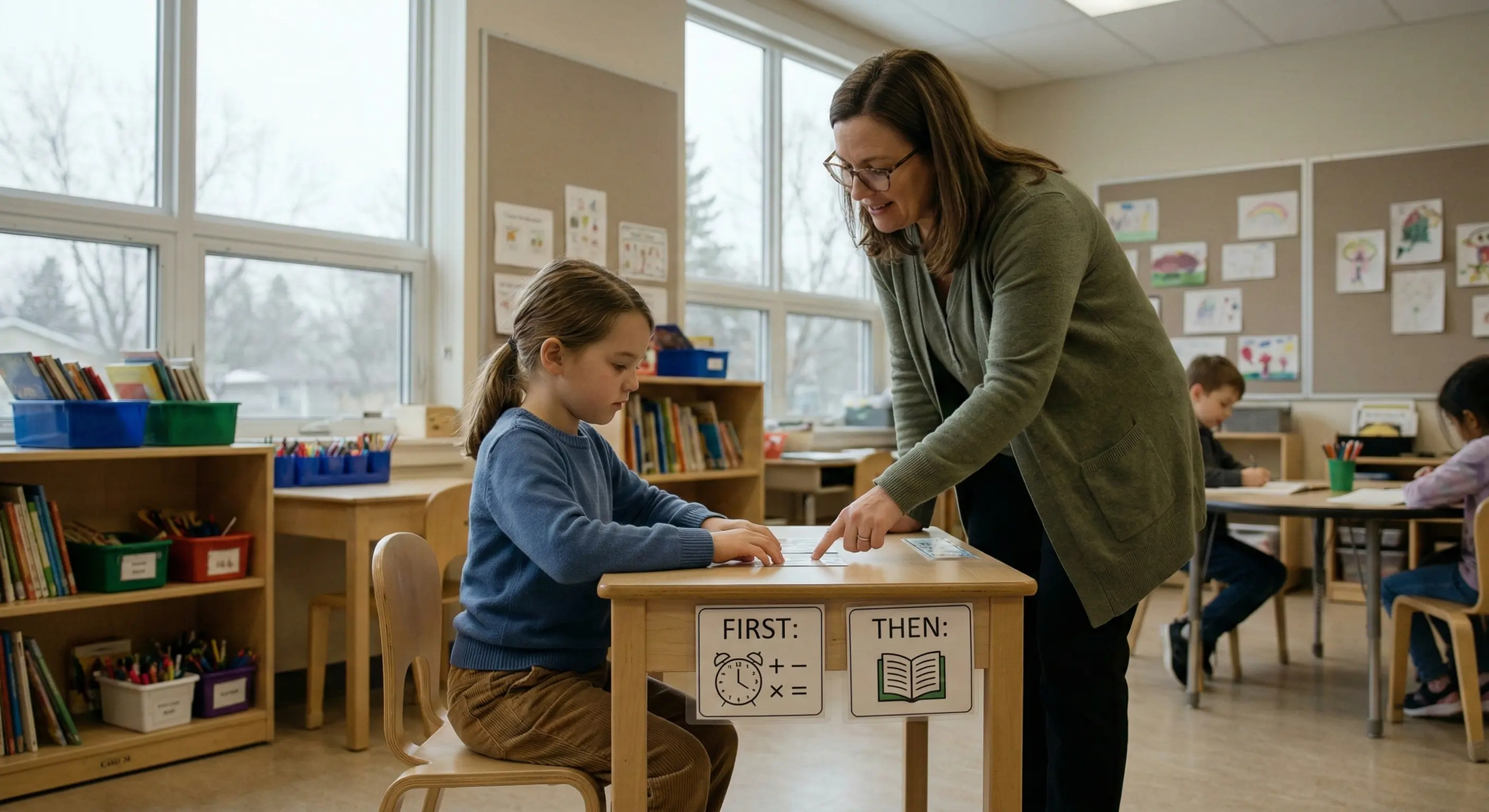
- Moving through transitions between activities with increasing flexibility and support
- Playing alongside or with peers
- Following safety instructions like “stop” or “come here”
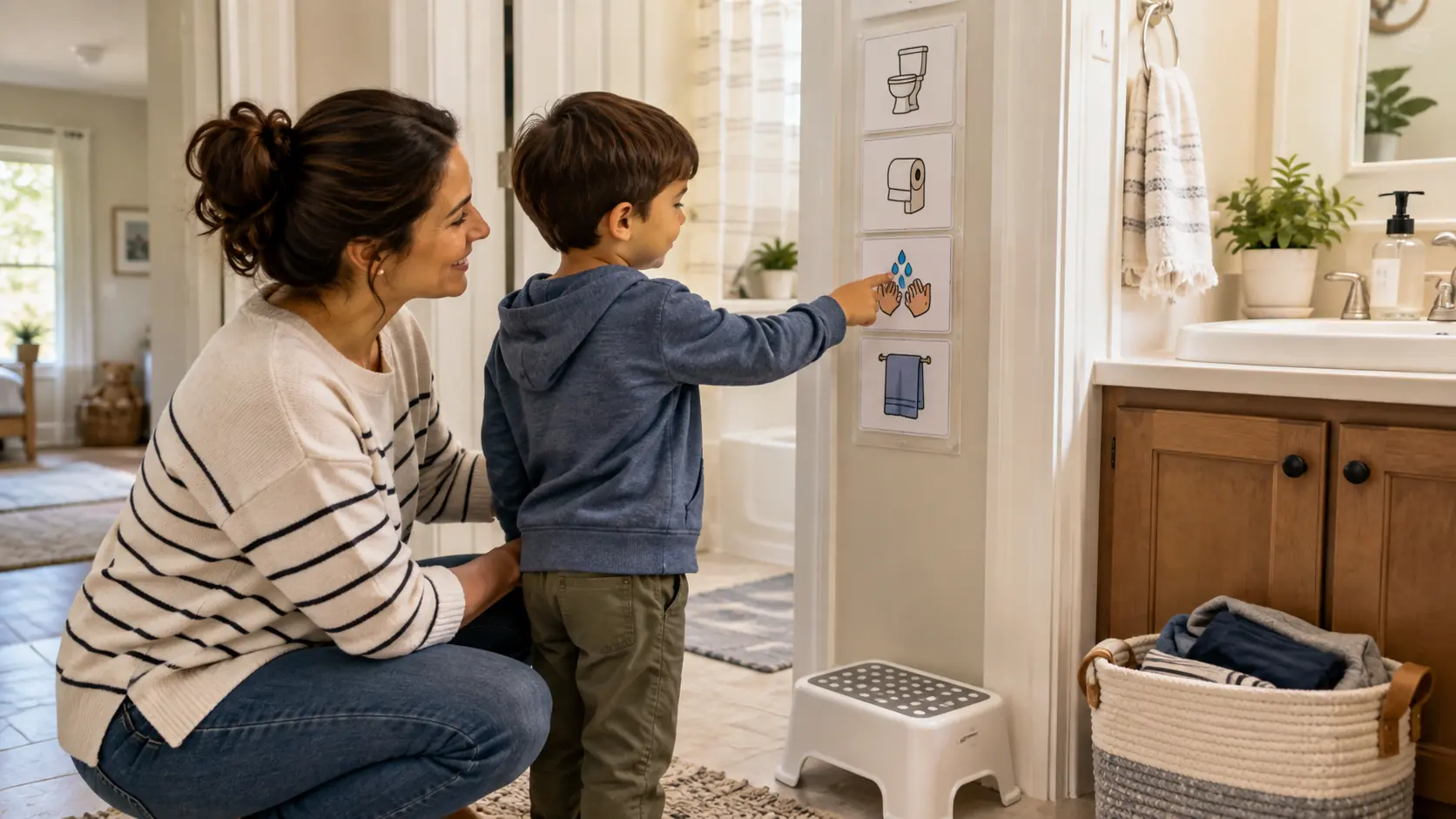
- Managing daily routines such as brushing teeth or getting dressed
- Asking for help when frustrated instead of engaging in challenging behavior
Goals should also be observable and measurable. Vague targets like “behave better” or “be more social” don’t give anyone—including you—a clear way to know if therapy is working.
Examples of well-written goals (examples only):
- “When offered a choice of two items, the learner will point to or verbally request the preferred item independently in 8 out of 10 opportunities across three consecutive sessions.”
- “The learner will follow one-step instructions (e.g., ‘sit down,’ ‘give me the cup’) within 5 seconds, with no additional prompts, in 80% of opportunities.”
- “During a 10-minute play activity with a peer, the learner will take turns (e.g., passing a ball, trading toys) at least 3 times with minimal adult support.”
Your input matters here. A good provider will ask about your priorities—what skills would help your child at home, at school, or in the community—and build those into the plan. Culturally responsive care also means considering your family’s values, routines, and communication preferences when setting goals.
3) Data Tracking That Guides Decisions (Not "Busywork")
ABA is a data-driven therapy. That’s one of its strengths—but only if the data is actually used to guide decisions.
During sessions, technicians record information about your child’s responses: how often a skill occurs, how long a behavior lasts, how much support your child needed, whether they were successful. This might look like tallying correct responses, timing how quickly your child transitions between activities, or noting what happened before and after a challenging moment.
Why does this matter?
Without data, it can be harder to make clear, consistent decisions about what to adjust. With data, your BCBA can look for patterns, monitor progress over time, and decide when to refine strategies. If progress slows or a strategy isn’t helping, the team can use the data—along with your input—to update the plan.
What you should expect as a parent:
- Regular progress updates (often shared monthly or quarterly, depending on the provider and payer requirements)
- Graphs or summaries showing trends over time—not just raw numbers
- Clear explanations: your team should translate the data into plain language so you understand what’s happening
- Plan adjustments when data shows a skill has been mastered, progress has stalled, or a new concern has emerged
You don’t need to become a data expert. But you should feel informed, not confused, about how your child is doing.
What to Expect From a Quality Provider (Step-by-Step)
If you’re new to ABA, knowing what the process typically looks like can help you feel more prepared.
Intake and Assessment
The journey usually begins with an intake conversation—your provider gathers information about your child’s developmental history, current skills, challenges, and your family’s concerns and priorities. This is followed by a formal assessment, which often includes direct observation of your child, standardized skill assessments, and interviews with caregivers.
The BCBA uses this information to identify your child’s strengths and areas where support could help. If insurance is involved, the provider typically submits documentation for authorization, which can take days to weeks depending on the payer.
Individualized Treatment Plan
Based on the assessment, your BCBA develops a written treatment plan. This document outlines:
- Specific goals and how they’ll be measured
- Teaching strategies the team will use
- A behavior support plan, if needed, for addressing challenging behaviors safely and respectfully
- A caregiver training component so you can reinforce skills outside of sessions
You should be offered a review of the plan and the chance to ask questions (and, when appropriate, suggest adjustments) before services begin.
Ongoing Therapy + Coordination
ABA sessions can happen in various settings—your home, your child’s school or daycare, a clinic, or the community—depending on the provider’s model and what fits your family. Sessions are led by an RBT or Behavior Technician, with the BCBA providing regular supervision.
Quality providers also coordinate with other professionals involved in your child’s care. With your consent, your BCBA might communicate with speech therapists, occupational therapists, or school staff to make sure everyone is working toward compatible goals.
Reviews and Adjustments
Treatment isn’t static. Many providers conduct periodic reassessments—often around every six months (timelines vary by child needs and payer requirements)—to evaluate progress, update goals, and confirm whether the current level of service is still appropriate.
When your child has made meaningful progress and support needs change, a quality provider should discuss transition planning—such as stepping down services, moving goals to new settings, or planning for discharge—based on your child’s needs and the data.
When to Talk to a Pediatrician or BCBA
Reach out to your child’s pediatrician or a qualified behavior analyst if you notice:
- Safety concerns such as self-injury, aggression, or elopement (running away)
- Regression in skills your child previously had
- Significant sleep or feeding difficulties
- Uncertainty about what type of support would help most
These conversations can help you get the right evaluations and referrals.
Questions to Ask When You're Comparing "Autism Therapy Near Me"
When you’re interviewing providers, these questions can help you gauge quality. Consider saving this list:
- Who is the supervising BCBA, and how often will they observe sessions in person or via video?
- How are goals chosen—and will our family’s priorities be included?
- What data do you collect, and how often will we review progress together?
- How do you train and supervise technicians?
- How do you handle challenging behavior safely and respectfully?
- What does parent or caregiver training look like?
- How do you coordinate with school, speech therapy, or OT (with consent)?
- What is communication like between visits—can I reach someone with questions?
- What are typical next steps if progress stalls or we’re not seeing changes?
A provider who welcomes these questions—and answers them clearly—is often a provider who values transparency.
Red Flags (What "Low-Quality" Can Look Like)
Not every provider meets the standard of care families deserve. Watch for these warning signs:
- Promises of a “cure” or guaranteed outcomes. Autism is a neuro developmental condition, and reputable providers set realistic expectations while focusing on practical skills and supports.
- Little or no BCBA involvement. If the supervising analyst is rarely present or difficult to reach, clinical oversight may be lacking.
- Vague or cookie-cutter goals. Goals should be tailored to your child, not copied from a template.
- No data shared with families. If you’re never shown how your child is progressing, that’s a transparency problem.
- Dismissive communication. Your questions and concerns should be taken seriously.
- Lack of caregiver collaboration. You’re part of the team—not an afterthought.
- Unsafe or disrespectful practices. Quality care should prioritize safety, dignity, and consent-based approaches—not punishment, fear, or coercion. If something feels wrong, pause and ask questions or seek another opinion.
How AtlasCare ABA Supports Families Searching "Near Me"
AtlasCare ABA offers in-home and community-based ABA therapy for children with autism, guided by a clear process: a thorough assessment, an individualized treatment plan, ongoing sessions with BCBA supervision, parent training, and coordination with your child’s broader care team.
Our focus often includes self-regulation, communication, social skills, and daily living skills—selected based on assessment results and what matters most to your family. Parent training is built into our model because we believe caregivers deserve tools and support, not just updates from the sidelines.
AtlasCare currently serves families in Iowa, New Mexico, and North Carolina. If you’re in one of these areas and want to learn more, we’re happy to answer your questions.
Final Takeaway: Quality Care Should Feel Clear, Collaborative, and Data-Informed
Searching for autism therapy near me is just the first step. The real work is finding a provider whose approach aligns with your family’s values—and who earns your trust through transparency, not promises.
It’s okay to interview multiple providers. It’s okay to ask for clarification when something doesn’t make sense. And it’s okay to change course if a program isn’t the right fit. Your child deserves a team that sees them as an individual, involves you as a partner, and uses data to monitor progress and guide adjustments.























.webp)


.webp)

.webp)
.webp)
.webp)








.jpg)


.webp)

.webp)









%20During%20Play%20in%20the%20Home.webp)