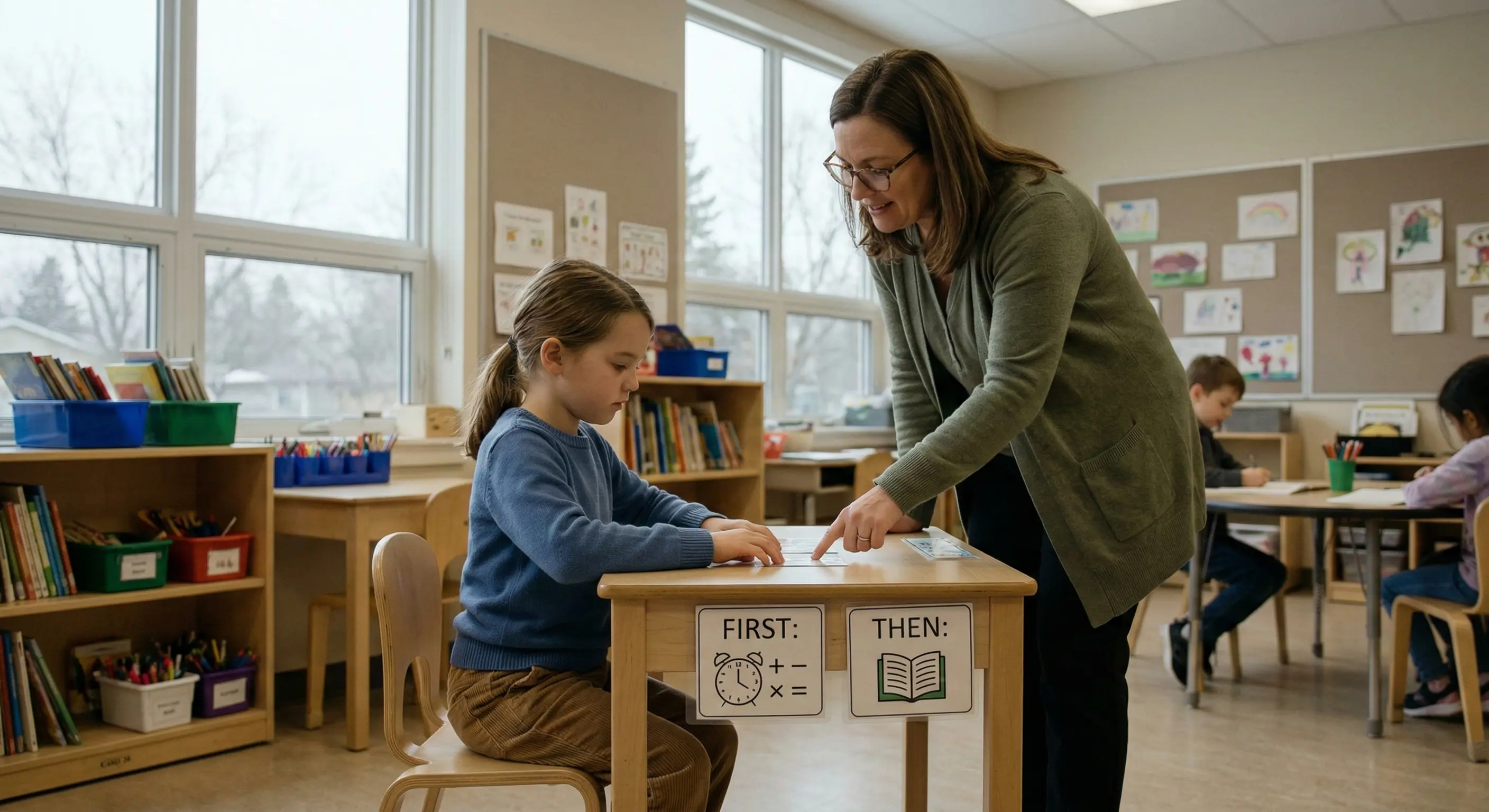
When your child begins ABA therapy, you may quickly notice that different professionals play different roles. One person may spend most of the session working directly with your child, while another reviews data, observes progress, speaks with your family, and helps guide goals or treatment changes.
These roles are often filled by an RBT and a BCBA.
For families new to ABA services, understanding the RBT vs BCBA difference can make it easier to know who does what, who to contact with questions, and how each professional supports your child’s care.
The RBT and BCBA Roles at a Glance
Before looking at specific responsibilities, it helps to understand the basic difference between the two roles.
An RBT (Registered Behavior Technician) is a paraprofessional who helps deliver behavior-analytic services under direction and ongoing supervision. RBTs often spend the most direct session time with the child, follow the treatment plan, collect data, and share observations with the supervising team.
A BCBA (Board Certified Behavior Analyst) is a graduate-level behavior analyst who can provide behavior-analytic services independently and may supervise RBTs. The BCBA typically oversees assessment, treatment planning, progress review, and clinically appropriate changes to the plan.
For parents, the simplest distinction is this: the RBT typically helps carry out the plan during sessions, while the BCBA typically oversees its clinical direction.
Who Delivers Sessions and Who Designs or Changes the Plan?
A simple way to understand the difference is to separate session implementation from clinical planning.
The RBT usually focuses on carrying out the treatment plan during scheduled sessions. This may include working through activities and routines, collecting data, and recording observations. The RBT follows the plan but does not independently design or change it.
The BCBA typically provides clinical oversight within the care team. This typically includes assessment, treatment planning, reviewing data, supervising implementation, and making appropriate changes to goals or procedures.
For example, an RBT may notice that a particular routine is becoming more difficult and document what they observe. The BCBA can then review that information alongside the broader data before deciding whether the plan should be adjusted.
Why This Matters for Families
- Questions about today’s session or what was observed: the RBT may be the right starting point.
- Questions about goals, progress, or changing the treatment plan: speak with the BCBA or supervising clinician.
The exact communication process may vary by provider, so families should also ask how their ABA team prefers questions and updates to be shared.
Who Parents Can Contact About Daily Observations
Because the RBT is often the team member working most directly with your child during sessions, they may be the best starting point for day-to-day updates, such as:
- What your child worked on during the session
- How a routine or activity went
- Any notable observations from that day
Families may also notice changes at home or school. These observations are worth sharing through the communication process set up by the provider.
If you notice a recurring pattern, significant concern, or something that may affect goals or the treatment plan, ask for the information to be shared with the BCBA or supervising clinician.
The main distinction is simple: RBTs can often discuss session observations, while clinical questions about patterns, goals, or treatment decisions belong with the BCBA.
Who Handles Goals, Concerns, and Progress Questions?
A simple rule can help: for day-to-day session updates, the RBT may be a good starting point. For questions about goals, progress, or treatment changes, contact the BCBA or supervising clinician.
For help understanding graphs, goals, or data in a progress report, families can refer to AtlasCare ABA’s guide on how to read an ABA progress report.
How Supervision and Communication Work
RBTs work under direction and ongoing supervision as part of their credential requirements. A qualified supervisor provides oversight, helps support consistent implementation, and gives the RBT feedback and guidance over time. In many ABA teams, this supervisory role is filled by a BCBA.
Supervision may include:
- Observing sessions
- Reviewing session data
- Meeting with the RBT
- Providing feedback or coaching
The exact format can vary based on the child’s plan, provider practices, payer requirements, and applicable regulations.
For families, the key point is simple: you should know who is supervising your child’s ABA services and how to contact that clinician if you have questions about goals, progress, or treatment decisions.
Supervision is not a sign that an RBT is doing something wrong. It is a routine part of ABA services designed to support consistency and clinical oversight.
Questions to Ask Before Services Begin
Before ABA services begin, it helps to know who is on your child’s team and who to contact for different questions.
You may want to ask:
- Who is my child’s supervising clinician?
- Who will work directly with my child during sessions?
- Who should I contact with day-to-day observations?
- Who should I contact about goals or treatment-plan concerns?
- How and when will the BCBA communicate with our family?
- How are goal or plan changes explained to parents?
- Who handles scheduling, cancellations, and administrative questions?
Knowing these details early can make communication easier and help families feel more confident about how the care team works.
Starting ABA Services? Know Your Child’s Care Team
AtlasCare ABA can help families understand who is involved in their child’s care, how communication works, and where to bring questions about goals, progress, or day-to-day services.
Contact AtlasCare ABA to learn more about services available in your area.