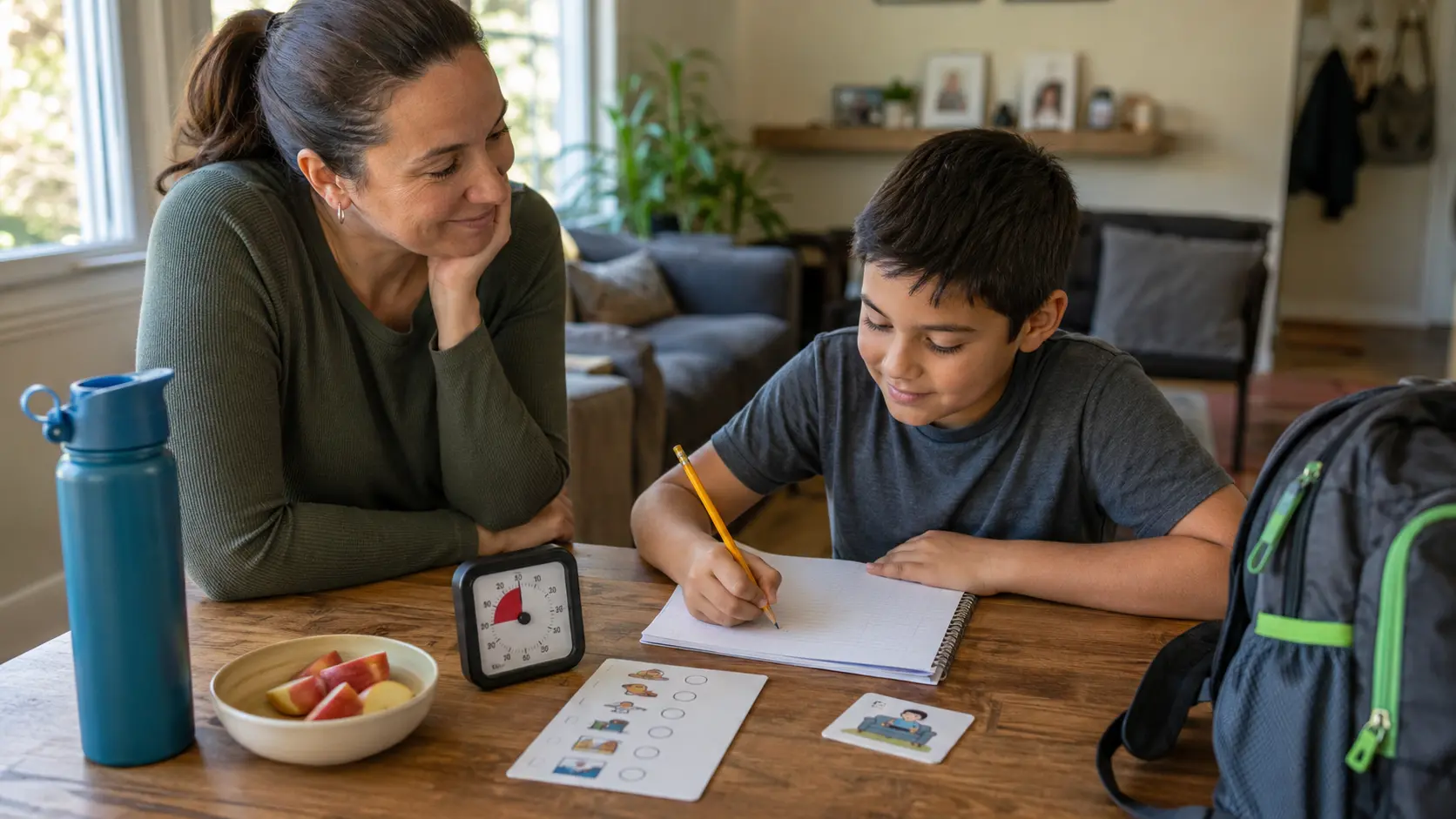
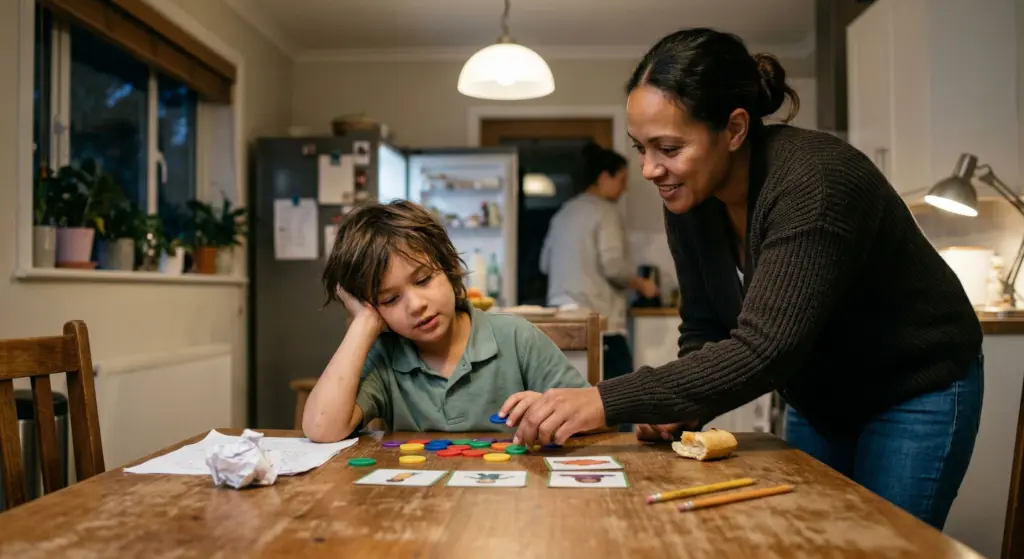
Your child comes home from school, drops their backpack, and wants quiet, a snack, or screen time. Then homework appears, and the afternoon unravels — crying, arguing, hiding, shutting down, or spending an hour getting very little done despite constant adult support.
When this becomes a daily pattern rather than an occasional difficult evening, autism homework refusal is worth understanding rather than simply pushing through.
Many autistic children arrive home already depleted after managing sensory, social, communication, and academic demands all day. Homework adds another demand on top of that. If the work is also difficult, unclear, or introduced at the wrong time, resistance can become much more likely.
The goal is not to label the child as unmotivated. It is to understand what is making homework hard and build a calmer, more predictable after-school routine.
Why Autistic Children May Refuse Homework
There is rarely one single cause of autism homework refusal. Several factors may overlap, and the right support depends on what is making homework difficult for that child.
Common contributors include:
- School-day fatigue: Sensory, social, communication, academic, and masking demands can leave a child depleted by the time they get home. See the after-school restraint collapse guide for more.
- Transition difficulty: Moving from recovery time or a preferred activity into homework can be especially hard for children who struggle with transitions.
- Task difficulty: If the work is genuinely too difficult to complete independently, refusal may reflect a skill mismatch rather than a behavior problem.
- Executive-function demands: Starting, organizing materials, planning steps, and holding instructions in mind can be harder than the academic content itself.
- Anxiety or perfectionism: Fear of making mistakes can make it difficult to begin, especially with open-ended or unfamiliar work.
- Sensory needs: Noise, lighting, seating, or other environmental factors can make concentration harder.
- Unclear instructions: Vague directions, dense reading, or too many implied steps can make an assignment difficult to start.
- Demand-related distress: Some autistic children experience strong distress around demands or loss of control. Families may hear terms such as PDA, pathological demand avoidance, or persistent drive for autonomy. PDA is not a standalone DSM-5-TR diagnosis, and demand-avoidance patterns can occur without using a specific label.
The key is to identify the pattern behind the refusal rather than assuming that all homework resistance has the same cause.
Homework Refusal vs. Skill Difficulty
One important question is whether the child is avoiding homework or genuinely struggling to complete it independently. These situations need different responses, and treating a skill difficulty as a behavior problem can increase frustration.
Signs the work itself may be part of the problem include:
- The child can complete the task with step-by-step adult help but cannot continue independently
- Homework takes much longer than the teacher expects
- The same academic skill also appears difficult at school
- Instructions are unclear or depend on information the child may have missed
- Handwriting or other physical demands cause noticeable fatigue
Compare what the child can do with support to what they can do independently. If the gap is significant, bring that information to the teacher rather than relying on repeated persistence at home.
How School Fatigue Affects After-School Behavior
A child’s ability to cope at school does not always reflect how much capacity they have left when they get home. Following instructions, managing sensory input, navigating social situations, and moving through transitions can require significant effort throughout the day.
For some autistic children, this means the period immediately after school is the worst time to introduce homework. A predictable, low-demand decompression period may make the transition into homework easier.
If a child regularly arrives home exhausted, shuts down, melts down, or shows what is sometimes described as after-school restraint collapse, that may reflect the cumulative demands of the school day rather than simple unwillingness to do homework.
Creating a Predictable Homework Routine
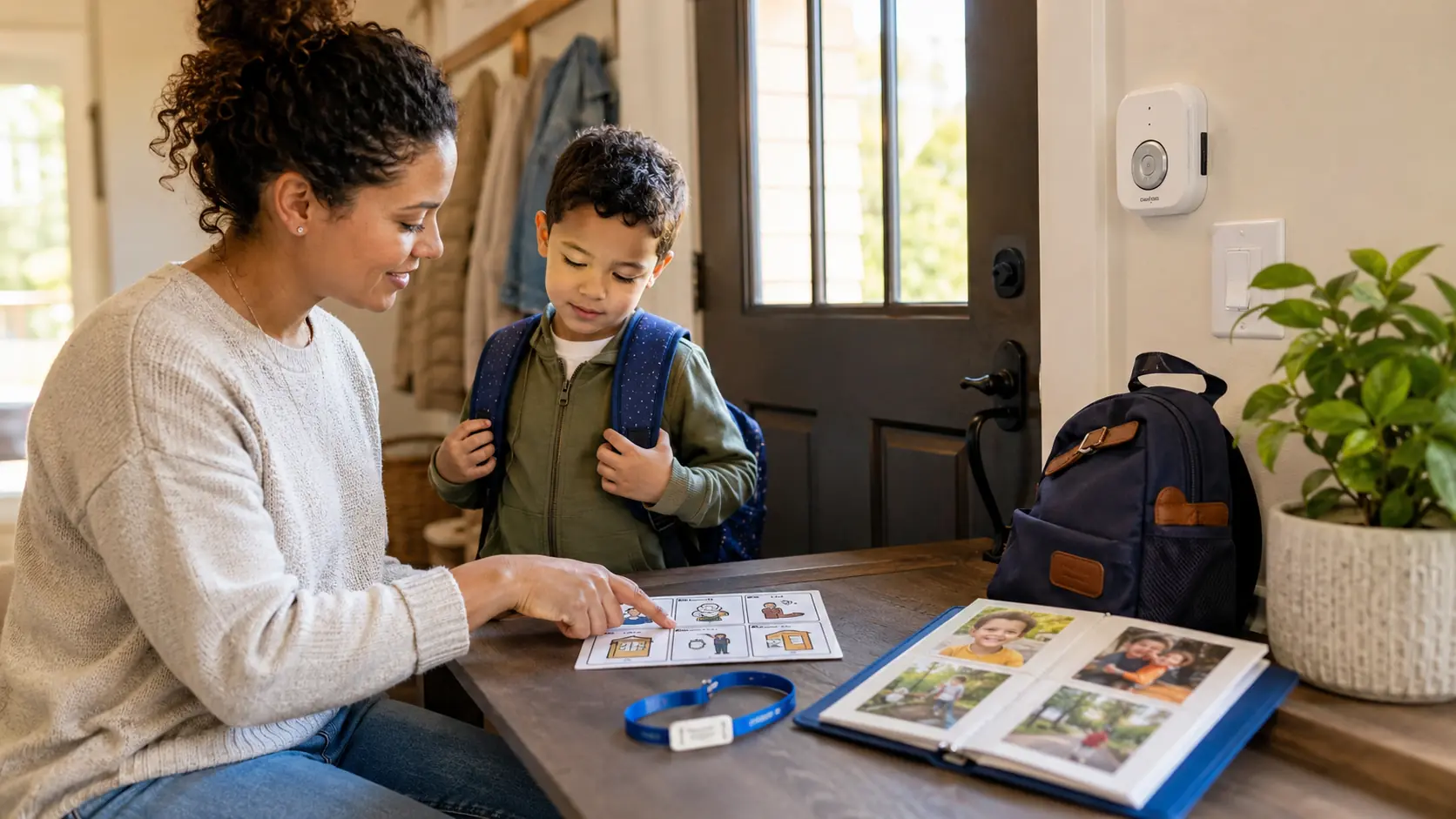
Predictability can make homework easier to start. Using the same cue, location, and general sequence each day reduces uncertainty and helps the child know what to expect.
One possible routine is:
The timing and order should be adjusted to the individual child and family.
The most important part is a clear endpoint. “Do your homework” is open-ended. “Complete these three problems, then take a break” is much more predictable for a child who is already tired after school.
Breaking Homework Into Smaller Steps
Breaking a broad task into smaller, visible steps can make homework easier to start and finish. Each step should be clear, manageable, and have an obvious endpoint.
The size of each step should match the child’s current capacity. If three problems are too much, start with one. If a full paragraph feels overwhelming, begin with the first sentence.
A simple checklist that allows the child to cross off each completed step can also make progress visible and reduce the feeling that homework will continue indefinitely.
Using Breaks, Visual Supports, and Reinforcement
Breaks work best when they are planned and predictable rather than something the child has to escalate to earn. Knowing when a break is coming can make the homework period feel more manageable.
Helpful break options may include:
- Movement: A short walk, stretching, jumping, or other physical activity
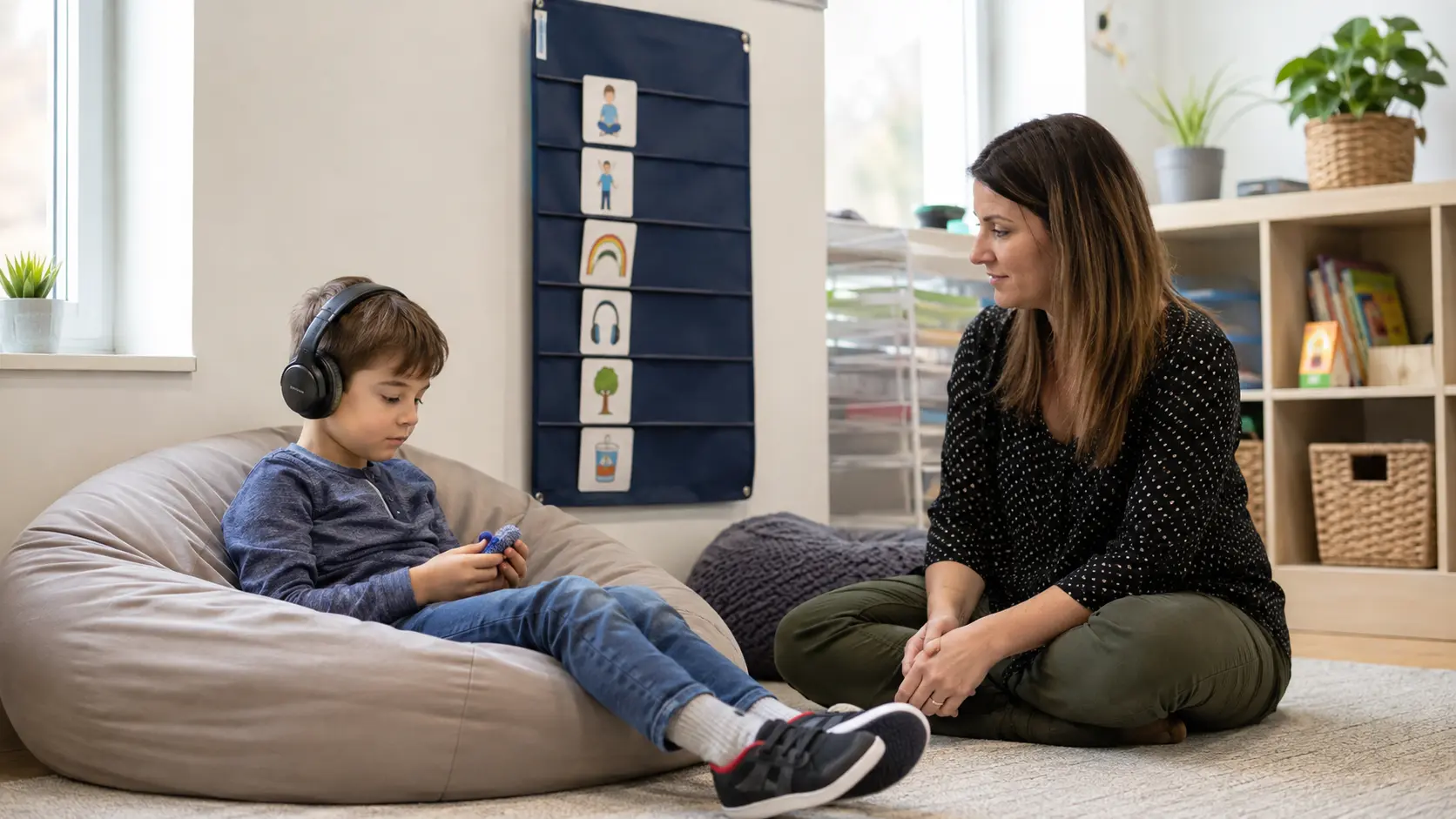
- Quiet time: A low-demand sensory reset with a comfort item or familiar activity
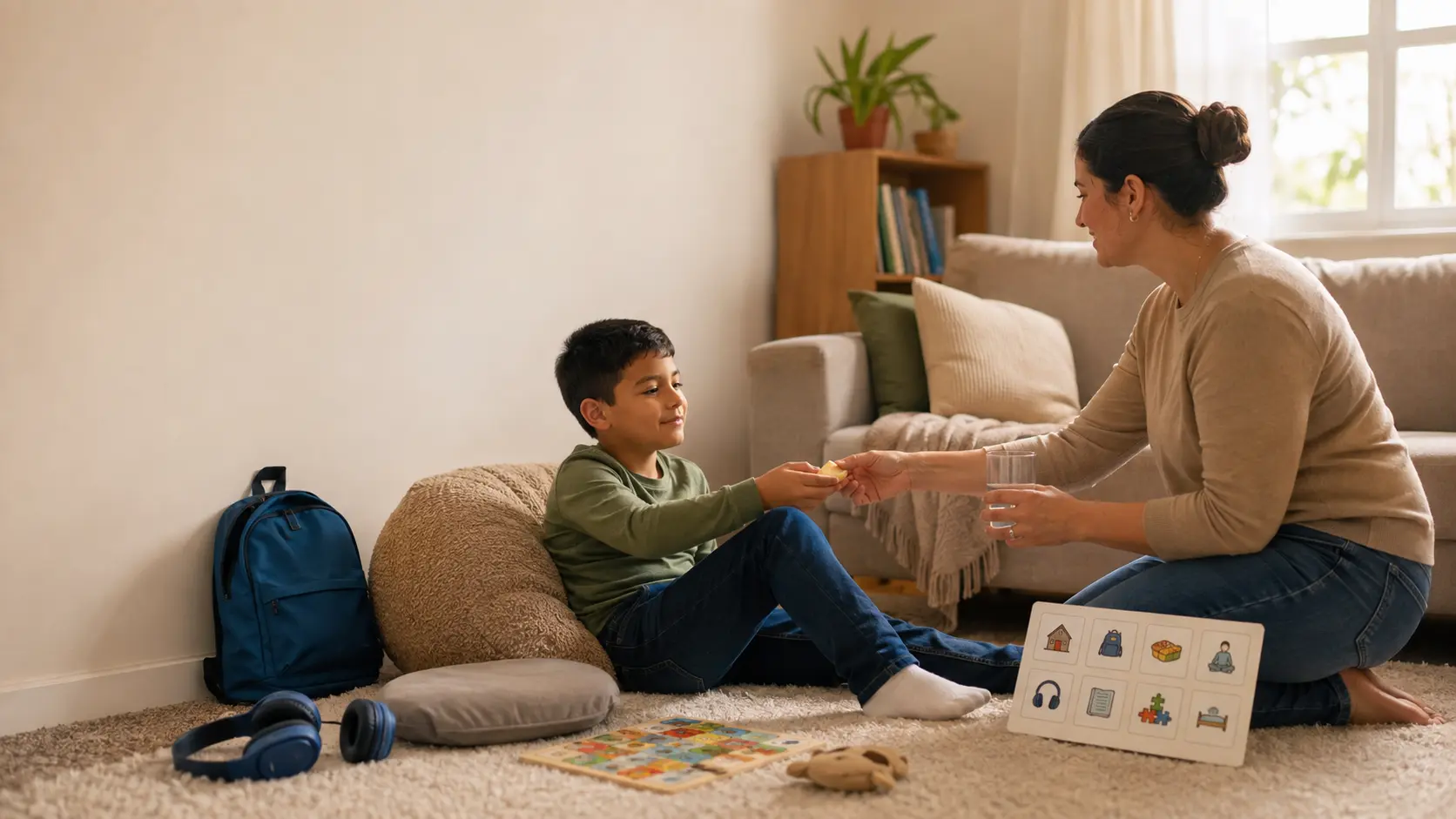
- Snack or water: Meeting physical needs before returning to work
- Brief preferred activity: A short, clearly timed activity the child enjoys
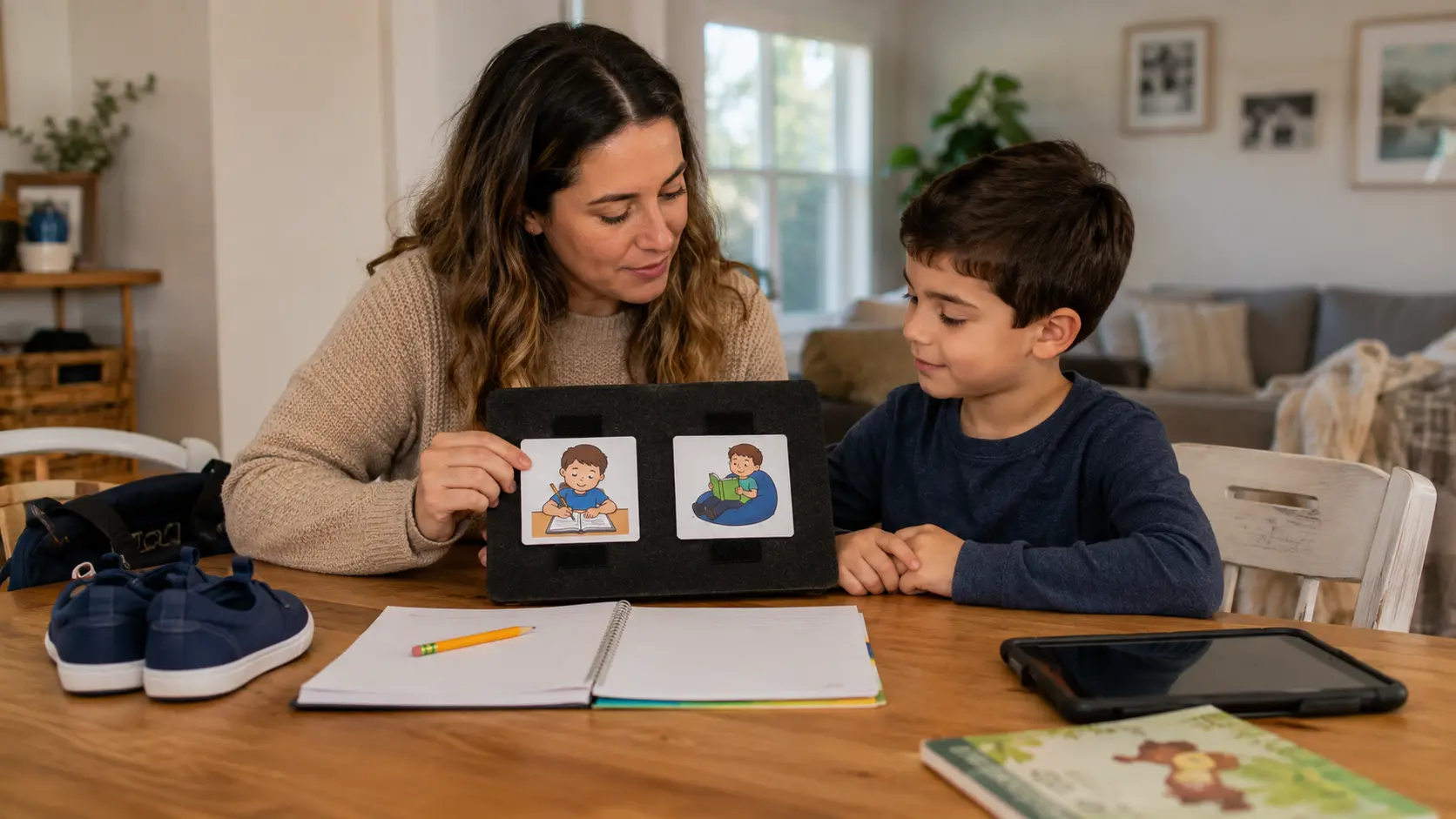
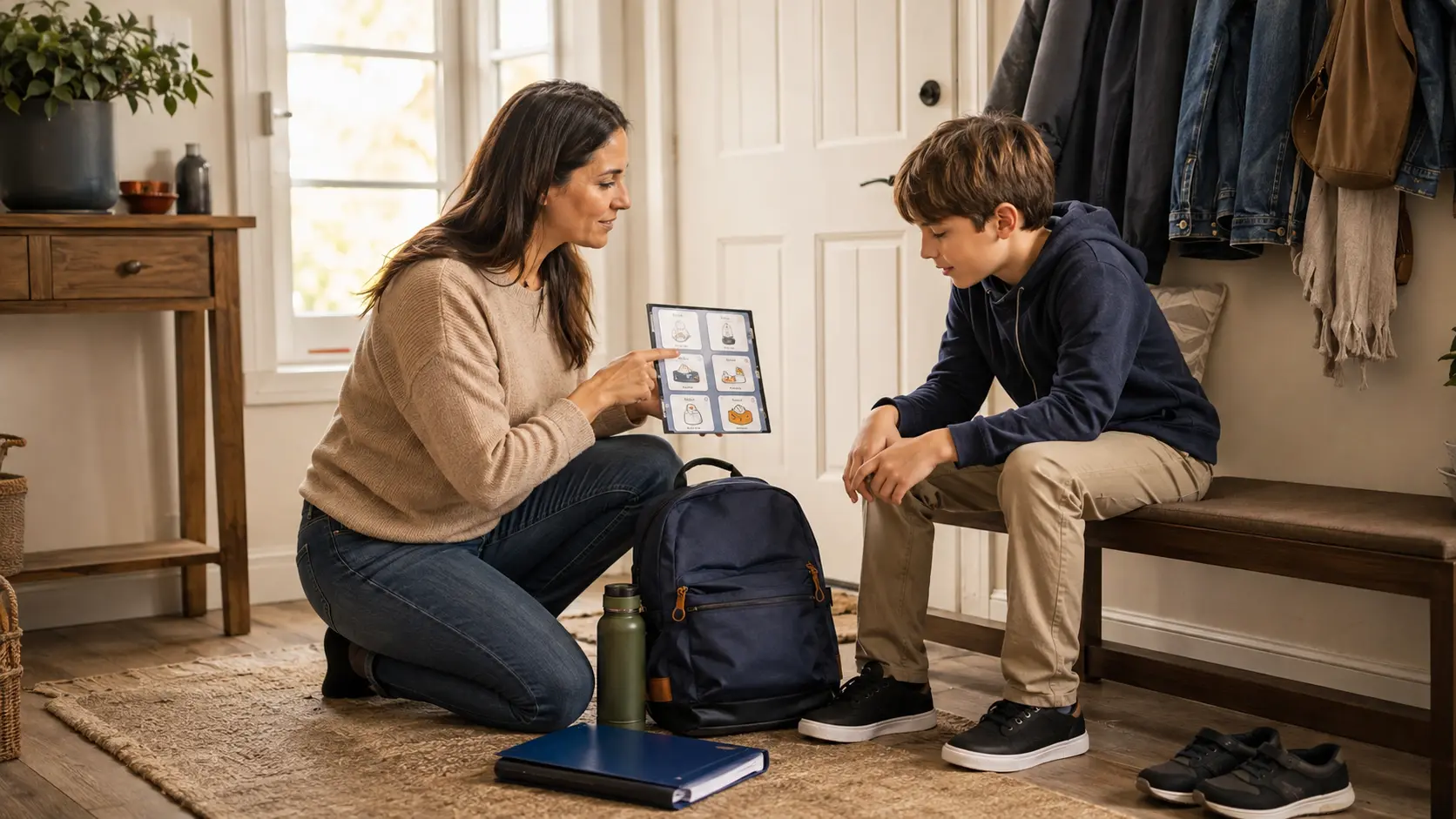
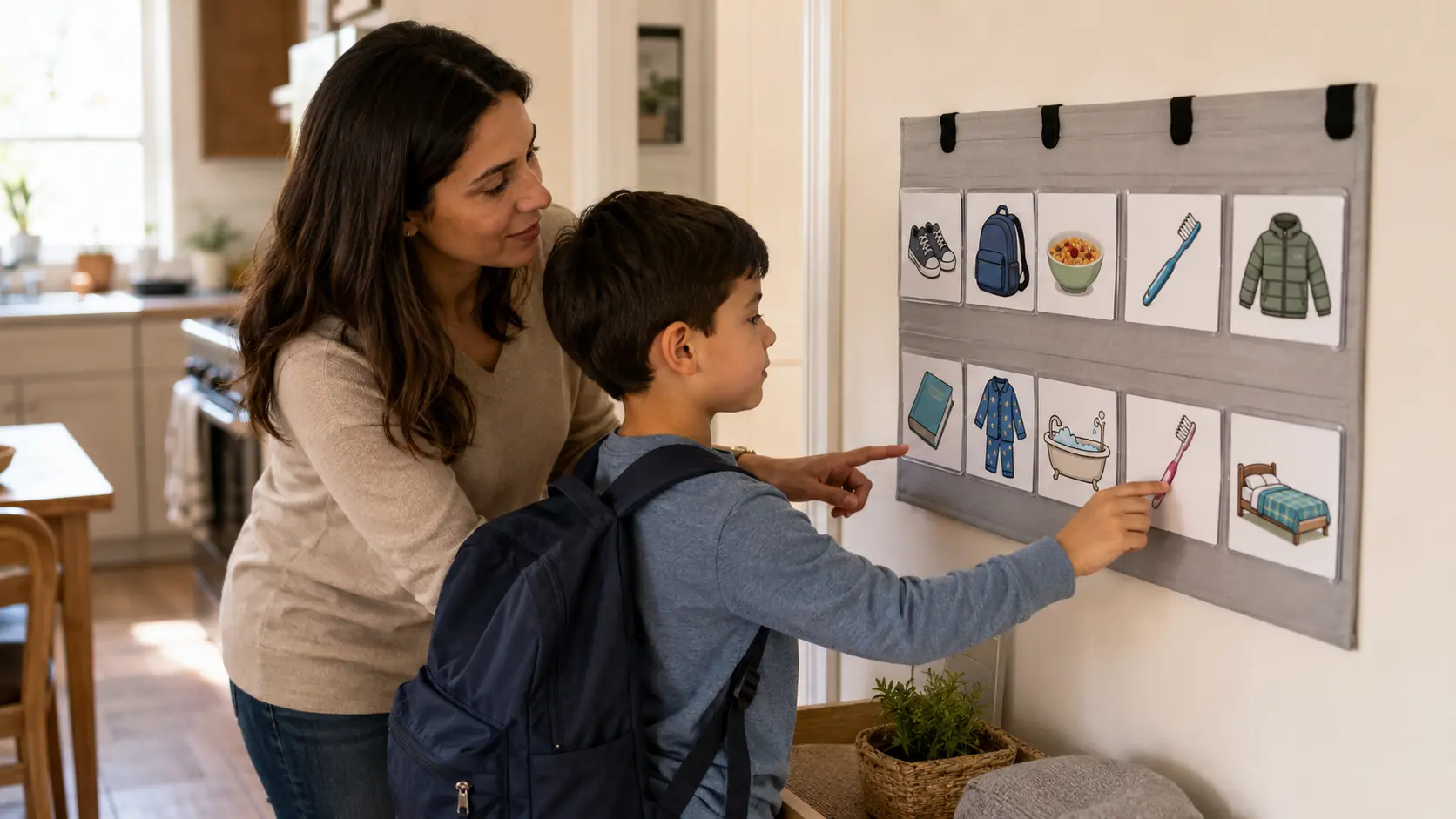
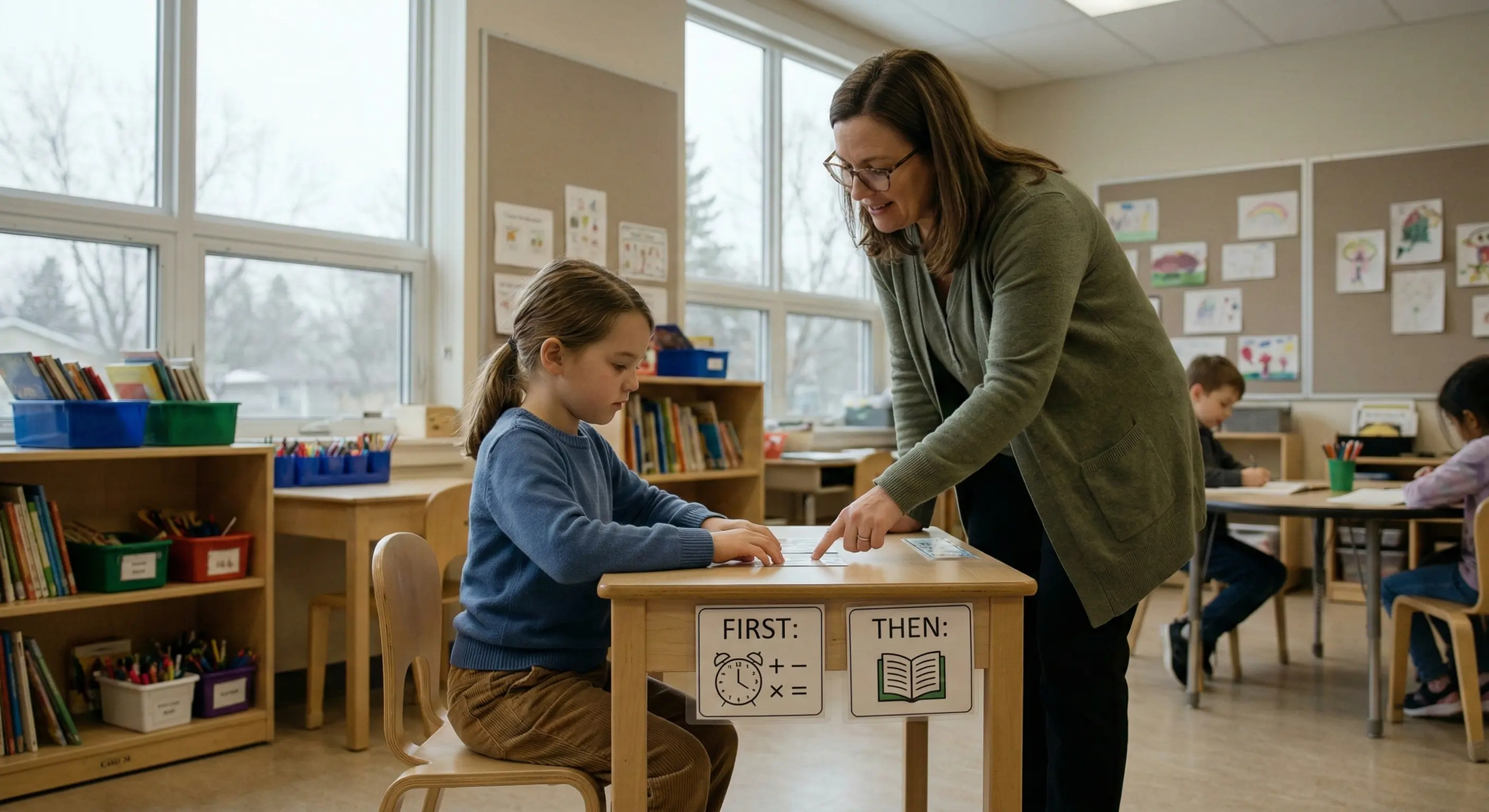
Visual supports can also reduce the need for repeated adult reminders. A homework checklist, first-then board, visual timer, or completed-task box can make the sequence and endpoint easier to see. See the first-then board guide for practical examples.
Reinforcement should be predictable and proportionate. The goal is not to withhold everything the child enjoys, but to create a reliable pattern in which effort is followed by an agreed break or preferred activity.
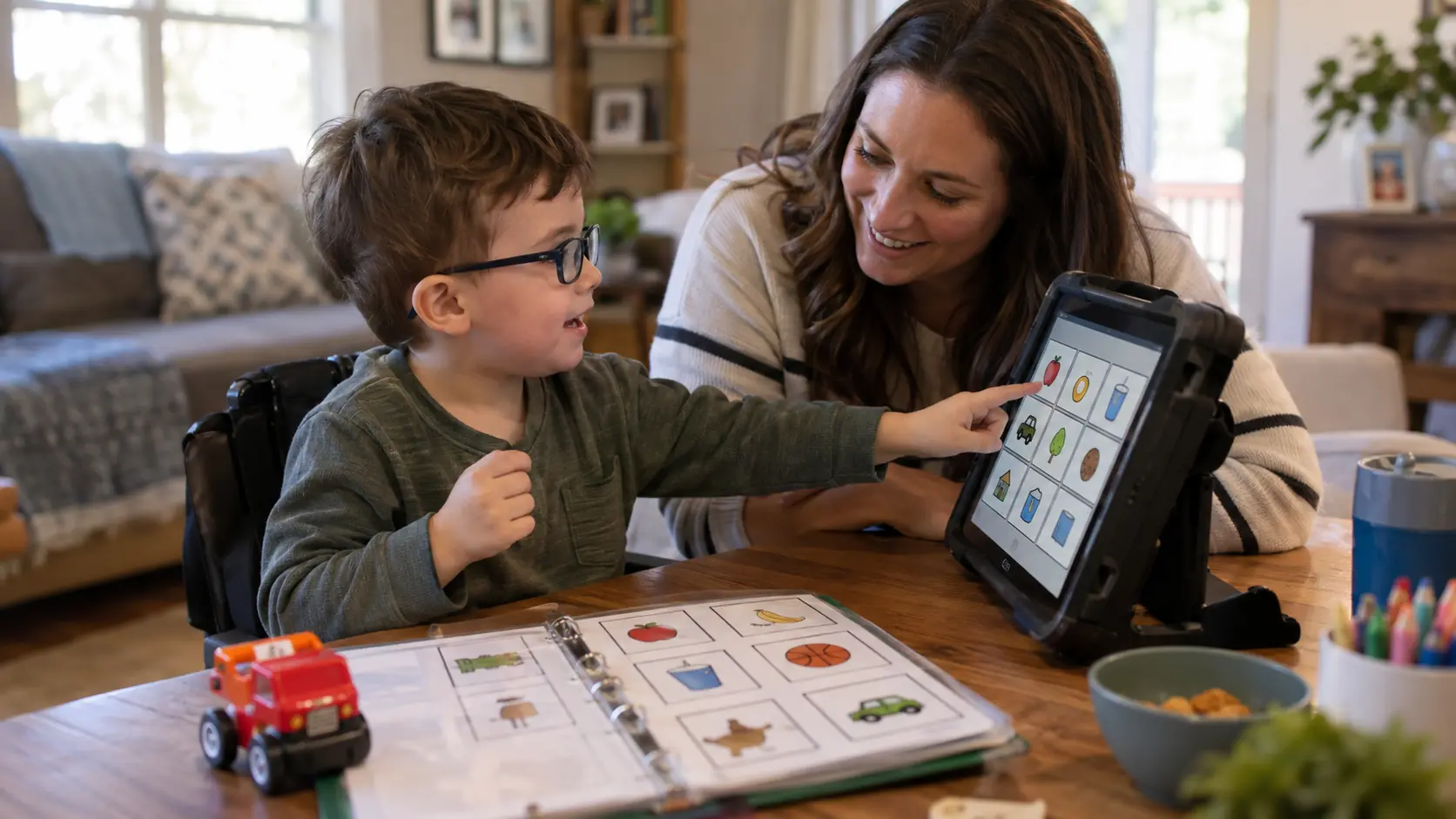
Teaching simple break and help requests such as “break,” “help,” or “I don’t understand,” including AAC equivalents, also gives the child a clearer way to communicate before frustration escalates.
When Homework Expectations May Need to Change
Not every homework problem should be solved at home. If assignments consistently exceed the child’s independent skill level, take far longer than expected, or cause significant distress, the homework itself may need to be reviewed.
Consider contacting the teacher when:
- Homework takes much longer than expected, even with support
- The child cannot begin without repeated adult explanation
- The assignment format is difficult to access independently
- The work covers material the child has not yet understood
- Homework-related distress affects sleep, appetite, or the next school day
Possible options to discuss may include reduced volume, chunked assignments, alternative response formats, extended time, or modified expectations.
Any changes should be individualized through the teacher or IEP team when appropriate. The goal is to address the barrier early rather than waiting until homework becomes a nightly crisis.
Coordinating With Teachers and the IEP Team
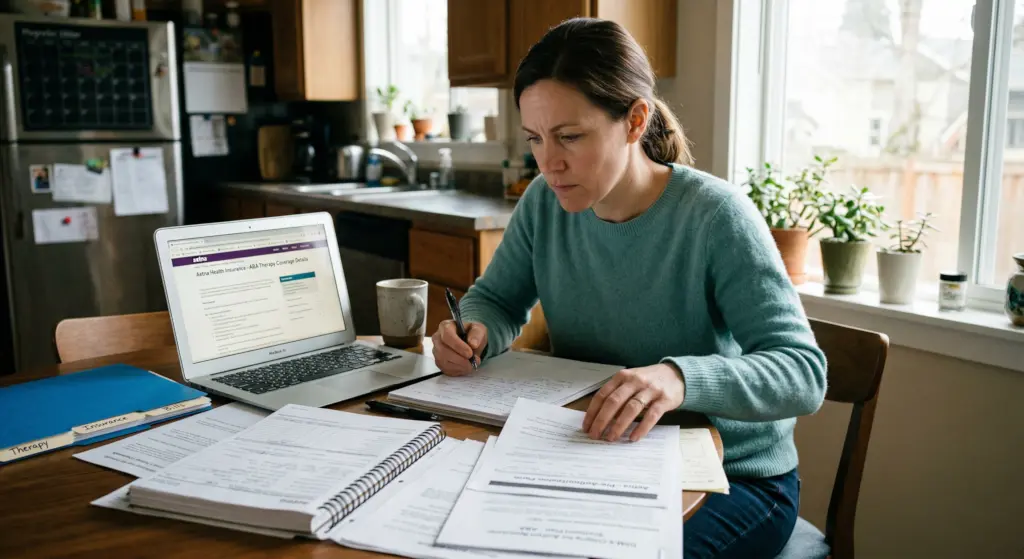
Brief, consistent communication between home and school can reveal homework patterns more clearly than occasional crisis-driven emails.
A simple tracking log may include:
Patterns such as certain subjects taking much longer, repeated difficulty understanding instructions, or particular task formats requiring heavy support can give teachers more useful information than simply saying homework is difficult.
Parents can also raise homework-related barriers with the IEP team when they affect educational access or participation. Any goals, accommodations, or other supports should be determined through the child’s individualized school-team process.
How ABA Can Support Homework Participation
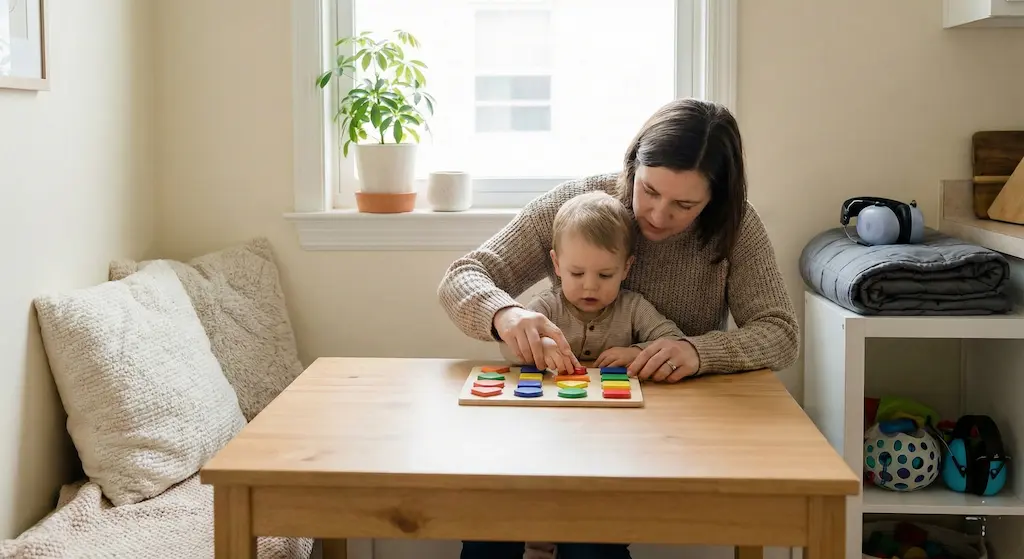
ABA can be one part of a coordinated homework support plan. It does not replace educational, mental health, occupational therapy, or medical support when those needs are contributing to the problem.
ABA may help with:
- Functional communication: Teaching the child to ask for a break, request help, say they do not understand, or ask for more time.
- Task initiation: Using a predictable start cue and routine to make beginning homework easier.
- Visual routines: Creating a clear homework sequence that matches the child’s current capacity.
- Caregiver consistency: Helping adults use similar language, break responses, and expectations when homework becomes difficult.
- Building work capacity gradually: Increasing manageable work periods over time rather than expecting long sessions immediately.
If homework refusal is connected to significant anxiety, depression, sleep problems, physical pain, or possible learning differences, those concerns should also be evaluated by the appropriate medical, mental health, or educational professional.
Calmer Evenings Come From Understanding the Pattern
Homework refusal is a signal that something about the timing, task, environment, or support is not working for the child right now.
Progress usually comes from identifying that barrier and adjusting the routine rather than increasing pressure. When homework is matched to the child’s after-school capacity and supported with clear structure and communication, evenings can become more manageable.
Is Homework a Consistent Source of Conflict in Your Household?
If homework refusal, difficult after-school transitions, or inconsistent caregiver responses are making evenings stressful, AtlasCare ABA parent coaching can help.
AtlasCare supports families with identifying patterns, building predictable routines, strengthening functional communication, and creating more consistent support at home.
Contact AtlasCare to learn more about parent coaching and routine-based ABA support.













.webp)


.webp)

.webp)
.webp)
.webp)






.jpg)


.webp)

.webp)
.webp)







%20During%20Play%20in%20the%20Home.webp)