.webp)
Aggression Toward Caregivers: Safety and Intervention for High-Intensity Behavior
Managing aggression in autism is one of the most isolating challenges a caregiver can face. The incident might involve hitting, biting, scratching, hair pulling, throwing objects, or charging directly at you. It may happen several times a day, or only occasionally — but after it happens once, the fear that it will happen again changes how the whole household feels. You walk differently. You choose your words more carefully. You watch for signs you cannot always read accurately. And you carry the weight of it mostly alone, because it is the kind of thing that is hard to explain to people who have not lived it.
If this is your reality, the first thing to hear is this: you are not alone, and what you are dealing with is serious enough to deserve real support, not just patience tips.
Aggression toward caregivers is often not random, even when it feels sudden in the moment. High-intensity behavior like this is almost always communicating something — a need, an overwhelm, a barrier, a pain. The first priority is your safety and the safety of everyone in the home. The next step is understanding what the behavior is responding to, so that a structured, humane plan can begin to reduce it.
The Silent Struggle: When Autism Leads to Physical Aggression
Caregivers dealing with physical aggression at home often describe a very specific kind of loneliness. There is the incident itself — being hit or bitten by a child you would do anything for — and then there is the aftermath: the guilt, the grief, the fear, and sometimes the quiet resentment that you immediately feel ashamed of. All of those feelings can exist at the same time, in the same person, in the same exhausted body.
This is one of the most distressing situations a family can find itself in, and it deserves to be named plainly. Aggression can coexist with a genuinely loving parent-child relationship. A child who bites their parent during a transition is not expressing hatred. But that reality does not make the bite less painful, and it does not make the dread of the next incident any easier to carry.
This is why early support matters. Seeking help sooner rather than later can reduce risk, protect family routines, and prevent the household from organizing itself entirely around fear and avoidance. Siblings may become anxious or withdrawn. Caregivers may stop taking the child to community settings, not because they have given up, but because it is no longer safe to do so without a plan. The household can begin to organize itself entirely around avoiding triggers, which is exhausting and unsustainable.
Caregiver burnout in these situations is not a weakness. It is a predictable response to an ongoing physical and emotional demand that very few people outside the situation fully understand.
Safety Comes First: What to Do During an Aggressive Episode
When an aggressive episode is actively unfolding, the goal is not to teach a lesson, resolve the conflict, or figure out the function. The goal is to reduce immediate risk and bring the situation to the lowest possible level of intensity as quickly as possible.
General in-the-moment principles that tend to lower risk:
• Reduce demands and verbal output immediately — say less, not more; every additional instruction or explanation can add to escalation
• Create space if it is safe to do so — moving back or to the side reduces the opportunity for contact and communicates that you are not a threat
• Move siblings, young children, or vulnerable adults out of the immediate environment
• Protect your head, face, and hands as you are able, without entering a physical confrontation
• Avoid cornering the child — a cornered person, regardless of age, tends to escalate
• Avoid prolonged eye contact, lectures, or escalating power struggles during the episode
• Remove objects that could be used as projectiles when it is safe to do so, not while active aggression is occurring
• Keep your voice low, calm, and brief — even if you do not feel calm
• Offer a clear, familiar path toward de-escalation: a preferred item, a known calm space, a simple verbal cue you have used before
Regarding physical holds and restraint: restrictive physical interventions, when they are ever appropriate at all, are last-resort measures. They carry real injury risk for both the child and caregiver, they require specific training, and they should only be used within a reviewed, professionally supervised plan. If you have not received formal training in safe, least-restrictive physical management from a qualified professional, improvised physical holds should be avoided.
The 'Why' Behind the Strike: Identifying the Function of Behavior
One of the most important principles in behavioral support is that behavior serves a function. It is doing something for the person exhibiting it, even when it looks completely disorganized or senseless from the outside. Understanding what that function is — what need the behavior is meeting or what situation it is helping the child escape — is the foundation of any effective intervention.
Common functions for aggressive behavior include:
• Escape or avoidance — the behavior reliably ends a demand, task, or uncomfortable interaction
• Access — the behavior results in the child getting something they wanted: food, an object, attention, physical contact
• Sensory regulation — the behavior provides sensory input that is stimulating, grounding, or relieving in some way
• Communication — the behavior is, functionally, a message: "stop," "help," "I'm overwhelmed," "I need a break," "this hurts"
• Responding to internal distress — pain, illness, anxiety, or a sensory state that the child cannot express verbally
The same behavior can have completely different functions in different contexts. Hitting that consistently occurs when a task is introduced likely serves a different function from hitting that occurs during sudden loud noise or unexpected physical contact. That distinction matters enormously for what the intervention should look like.
What Counts as an Aggressive Behavior Incident
For documentation and assessment purposes, it helps to define clearly what you are tracking. An incident typically includes the specific physical behavior (hit, bite, scratch, throw, charge), the approximate time and location, who was present, and roughly what was happening immediately before.
Start With ABC Data: What Happened Before, During, and After
ABC data is the most accessible behavioral observation tool available to caregivers, and it is the starting point for any functional behavior assessment. It does not require clinical training to begin. It requires only consistent observation and honest recording.
• Antecedent (A) — What happened immediately before the behavior? What was the setting, the activity, who was present, what was just asked or offered or changed?
• Behavior (B) — What exactly occurred? Describe it in observable, specific terms. Not "he got upset" but "he bit my forearm."
• Consequence (C) — What happened right after? What did you do, what changed in the environment, how did others respond?
How to Document Patterns Without Writing a Novel
You do not need a formal system. A notes app on your phone, a simple spreadsheet, or even a paper log with five columns — time, location, what was happening, what the behavior looked like, what happened after — is enough to build a useful picture over two to four weeks.
Communication Deficits vs. Sensory Overload vs. Pain
One of the most common mistakes in responding to aggressive behavior is assuming a single cause when there may be several overlapping ones.
When Communication Barriers Are the Root
Some children who exhibit aggression are trying to communicate a need they do not yet have the tools to express differently. They may not have a reliable way to ask for a break, request help, decline a demand, or signal that something is wrong. When hitting or biting consistently produces the result the child wanted — a demand ends, a preferred item arrives, an unwanted interaction stops — the behavior is communicating effectively, even if destructively.
When Sensory Overload Is a Primary Factor
For some children, aggressive episodes are closely tied to sensory environments that have exceeded their capacity. Abrupt transitions, unexpected touch, overwhelming noise, or crowded spaces can drive behavior that looks aggressive but is fundamentally a dysregulation response. In these cases, the most effective intervention often involves modifying the environment proactively — reducing sensory load before the threshold is crossed.
When Pain or Illness May Be Part of the Behavior
This is an underrecognized factor in behavioral presentations, and it is worth taking seriously. A child who is experiencing dental pain, gastrointestinal discomfort, a chronic infection, sleep disruption, or another medical issue may have a significantly lower tolerance threshold than usual — and may not be able to communicate where the discomfort is coming from. If aggressive behavior has increased suddenly or is occurring in a pattern that does not respond to behavioral strategies, a medical review is warranted before assuming the cause is purely behavioral.
A sudden increase in aggression, especially when it is out of character or paired with sleep, appetite, or toileting changes, should prompt a medical evaluation as well as behavioral review.
Immediate De-Escalation Principles That Lower Risk
De-escalation in this context means reducing the intensity of a situation before it reaches the point of physical contact, or slowing the escalation as quickly as possible once it has begun.
What Not to Say During Escalation
During a high-intensity moment, the human impulse is often to explain, reason, or negotiate. In most cases, this makes things worse rather than better. Lengthy verbal responses during escalation add cognitive load to a child who is already overwhelmed. Repeating instructions increases pressure. Matching the child's tone or volume feeds the escalation. The most effective verbal approach is usually the fewest words, delivered calmly, using phrases the child has heard before in calmer moments.
• Reduce demands immediately — do not add new instructions or expectations
• Use familiar, practiced cues rather than novel language
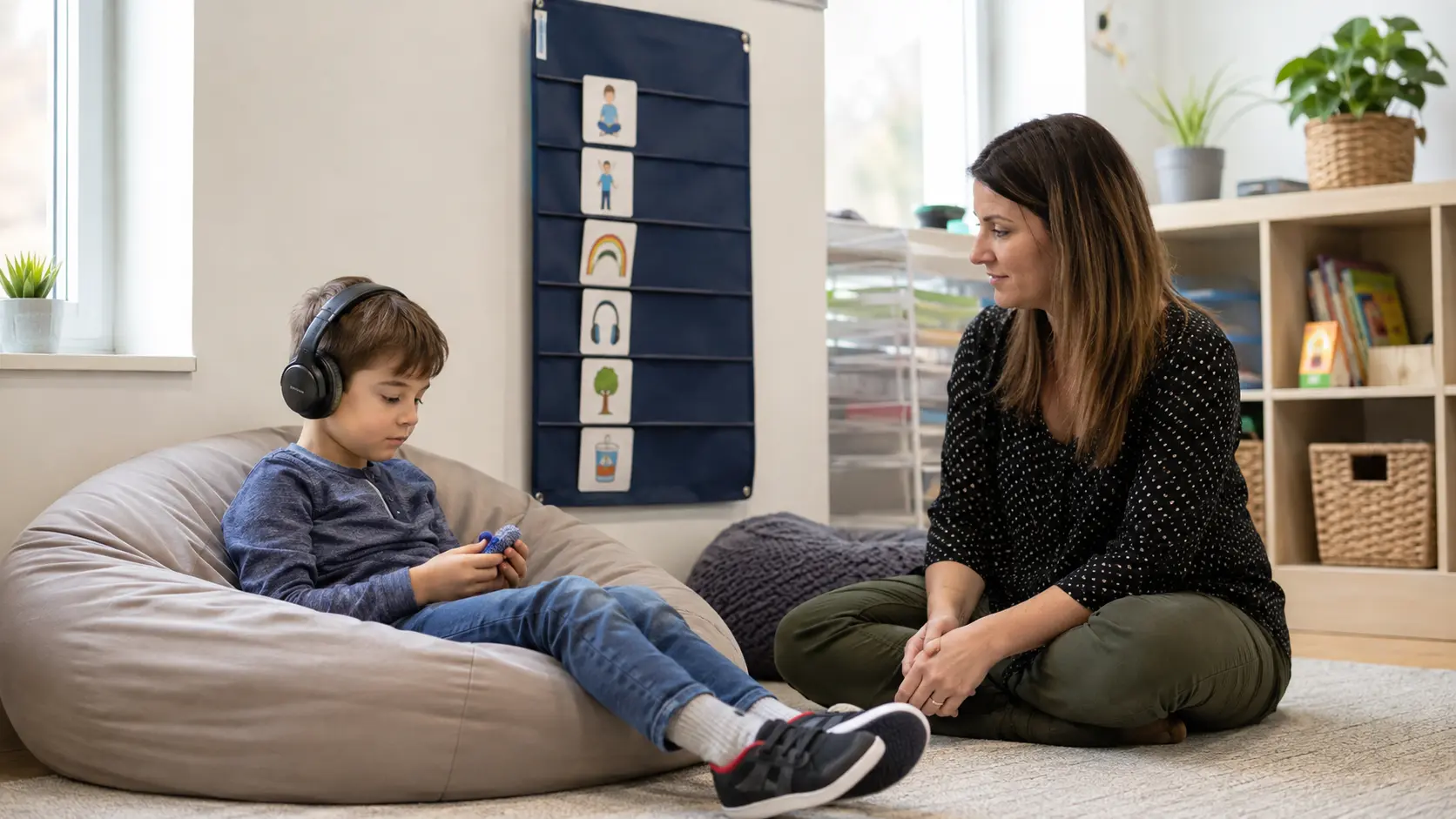
• Offer a concrete path to calm: a known location, a preferred sensory input, a visual support
• Reduce sensory input where you can — lower lights, reduce sound, create physical space
• Prioritize the child's regulation over any behavioral compliance in the moment
What to Do After Everyone Is Safe
Once the incident is over and everyone is safe, resist the impulse to immediately address the behavior through consequences, discussion, or displays of upset. The window for connecting a consequence to a behavior meaningfully is much shorter than most people realize, and post-escalation conversations often occur when both the child and caregiver are still dysregulated. The most useful thing to do in the immediate aftermath is document what happened, review any patterns, and use that information to inform what comes next.
Why Punishment Alone Often Misses the Real Function
If a behavior is functioning to help a child escape a demand, and the consequence for that behavior is removal from the situation — the consequence accidentally reinforces the behavior by delivering exactly the outcome the child was seeking. Punishment-based approaches for high-intensity aggression are clinically risky in this way: without knowing the function of the behavior, well-intentioned consequences can inadvertently strengthen what they are meant to reduce.
Long-Term Solutions: Functional Communication Training (FCT) and Replacement Skills
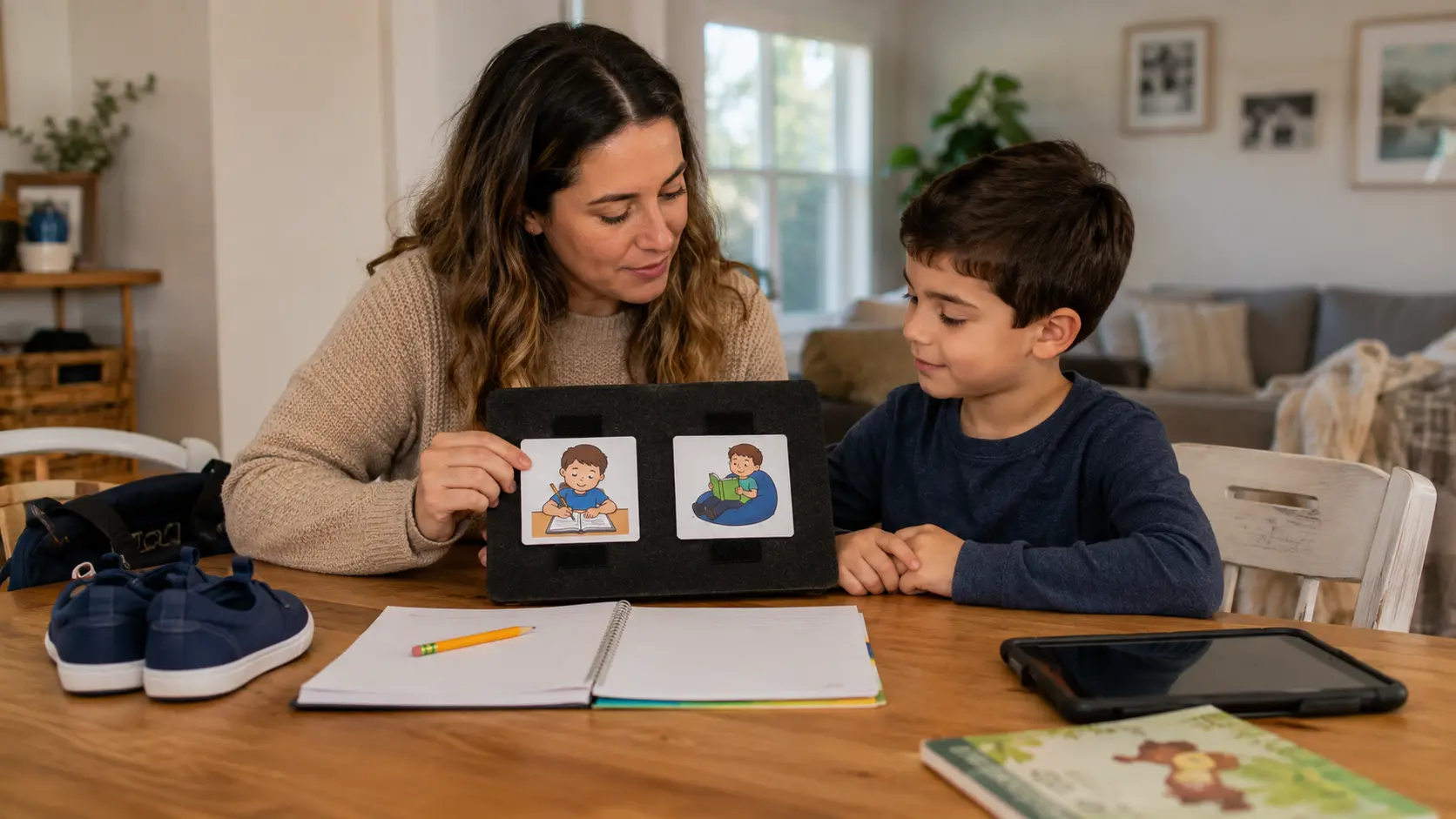
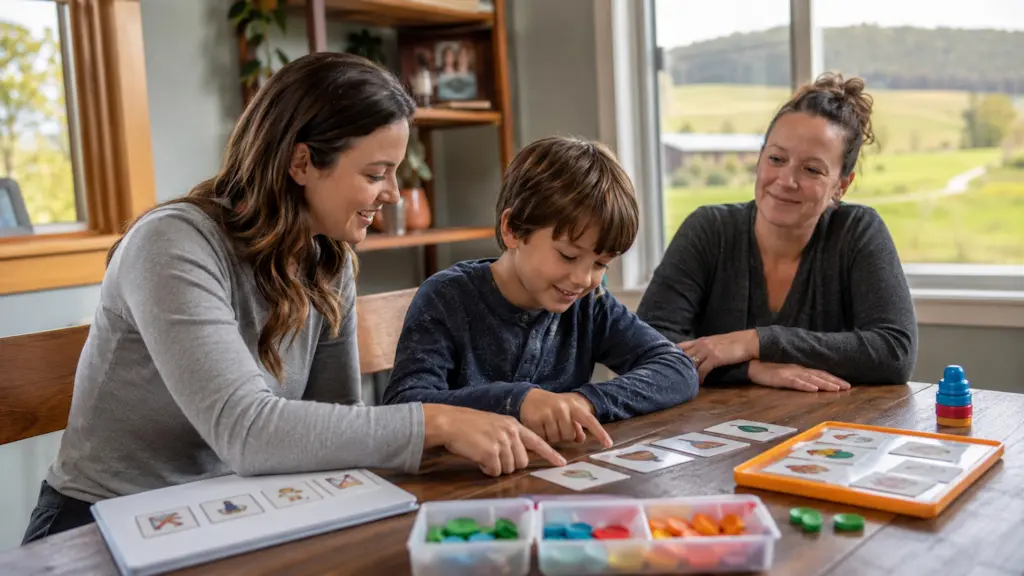
Functional Communication Training (FCT) is one of the most well-supported behavioral interventions for reducing aggression that is maintained by a communicative function. If a behavior is serving as a form of communication, the most effective way to reduce it is to teach a safer, more socially appropriate way to communicate the same message.
Examples of replacement communication responses that FCT might target:
• "Break" — a word, sign, picture card, or AAC symbol the child can use to request a pause from a demand
• "Help" — a signal that something is too hard and support is needed
• "Stop" or "no" — a way to decline an interaction or input
• "All done" — a signal for ending an activity
• "Space" — a way to communicate a need for physical distance
• "Quiet" — a request to reduce sensory input
For FCT to work, two things are essential. First, the replacement behavior must actually match the function of the problem behavior — teaching a child to say "break" will only reduce escape-motivated aggression; it will not address aggression that is driven by pain or sensory overload. Second, the replacement response has to work reliably. If the child uses their break card and the demand continues anyway, the new behavior loses its value and the old one comes back.
What a Safety-First Home Plan Should Include
A safety-first behavior plan is a working guide that every caregiver in the household knows, has practiced, and can access under pressure.
Core Elements of a Home Safety Plan
· A clear, specific description of what the target behavior looks like (observable, not interpretive)
· Known triggers and early warning signs — what to watch for before escalation
· Proactive prevention steps — environmental modifications, routine adjustments, and antecedent strategies
· De-escalation responses — what each caregiver does and says when the behavior begins
· A safe exit or calm-space plan — where the child can go, where others should go
· Who to contact — including emergency numbers, the BCBA's contact, and when to call 988 or 911
· What gets documented after each incident and how
· What replacement skill is being taught and how it is reinforced
· How consistency is maintained across all caregivers, including grandparents, respite workers, and school staff
Consistency across caregivers is one of the most significant factors in whether a safety plan actually reduces aggression over time. A strategy that one caregiver implements carefully while others respond differently is unlikely to produce stable change.
When It Is Time for Urgent Support
There is a meaningful difference between a behavioral challenge that needs a structured plan and a safety situation that needs immediate professional intervention. The following circumstances indicate that urgent support — not a waiting list, not a general caregiver resource — is appropriate:
• Injuries to caregivers, siblings, or the child that have occurred or are likely to occur
• Aggression that involves choking, head strikes, weapons of any kind, or severe biting that breaks skin
• Elopement combined with aggression — a child who runs and becomes aggressive during attempts to return them safely
• Repeated incidents with rising intensity — the behavior is getting worse, not staying the same
• Inability to maintain safety in the home without constant hypervigilance
• Fear that you may physically react back — this is an honest signal that the situation has exceeded a safe threshold and that additional support is urgently needed, not a reason for shame
• Breakdown of school, daycare, or community participation due to aggression-related safety concerns
If you are in the U.S. and need immediate behavioral-health crisis support, call or text 988. If there is immediate physical danger, serious injury, or a medical emergency, call 911.
Managing Caregiver Trauma, Shame, and Burnout
Being physically hurt by a child you love is a genuinely traumatic experience, and it is one that caregivers in this situation are often slow to name as such. There is a particular pressure to minimize it — to say it was not that bad, to focus on what the child must have been feeling, to worry that naming your own pain makes you seem less devoted. None of that is fair.
Caregivers who experience ongoing physical aggression from the children they care for may notice anxiety before transitions, hypervigilance in ordinary settings, difficulty feeling relaxed in the child's presence, or reactive responses during incidents that they then feel deeply guilty about.
A good safety plan should account for caregiver capacity, not only the child's behavior. It means making space for the caregivers to acknowledge how hard this is without the conversation immediately pivoting to strategies and solutions.
Seeking counseling, respite care, family support, peer connection with other caregivers who understand, and professional behavioral help is not giving up. It is what sustainable caregiving looks like when the demands are this high.
How AtlasCare BCBAs Build Custom Safety-First Plans
AtlasCare's approach to high-intensity behavior starts with assessment, not assumption. Before any intervention recommendations are made, the care team works to understand the specific function driving the aggression — what the behavior is communicating, what environments and routines are involved, and what the caregivers and household actually need to be safer.
What a safety-first planning process with AtlasCare typically includes:
• Functional behavior assessment — structured observation and caregiver interviews to identify the function and context of aggressive behavior
• Trigger mapping — building a clear picture of the antecedent conditions most closely associated with high-intensity episodes
• Caregiver coaching — working directly with the adults who are present daily to practice consistent responses and build shared understanding of the plan
• Replacement skill teaching — identifying and building the specific communication or regulation skill that can meet the same function safely
• Home safety modifications — practical environmental adjustments that reduce the conditions most likely to lead to escalation
• Coordination with other providers when indicated — communicating with the child's medical team, school, or other support services to ensure a coherent response across settings
• Urgent support planning for high-risk cases — when safety concerns are acute, providing a more intensive and faster-response planning pathway
From Crisis Response Toward Safer, More Predictable Routines
When aggression happens at home, families often carry it in silence — afraid of judgment, unsure where to turn, and caught between protecting themselves and protecting the child they love. High-intensity behavior is not a reflection of your family's values or your child's character. It is a signal that something in the current structure — communication, environment, routine, sensory support, or underlying health — is not meeting an important need.
With a safety-first plan, a function-based assessment, and the right level of support, families can move from a position of reactive crisis management toward more predictable, safer daily routines.
If aggression toward caregivers is making home feel unsafe, AtlasCare ABA can help you build a safety-first plan that is individualized, practical, and clinically grounded. Our team supports families with behavior assessment, caregiver coaching, replacement-skill teaching, and urgent planning for high-intensity behavior.









.webp)

.webp)

.webp)
.webp)






.jpg)

.webp)

.webp)
.webp)









%20During%20Play%20in%20the%20Home.webp)