Fourth of July Prep: A 30-Day ABA Plan for Fireworks and Crowds
Every year, the same question comes up sometime in June: Do we try to go to the fireworks this year? For many families raising autistic children, the Fourth of July is less a celebration to look forward to and more a logistical and emotional puzzle to solve. You want your child to enjoy the holiday. Your other kids want to go. Relatives may have expectations. And yet you remember last year, the first unexpected boom, the way everything unraveled, the long drive home in the dark.
There is a better way to approach it than waiting and hoping. Autism fireworks tips often focus on the day itself, but the families who tend to have the most manageable holidays are the ones who started preparing weeks earlier — not by forcing exposure, but by building predictability, practicing coping tools, and deciding in advance what success actually looks like for their child this year.
This 30-day ABA-based holiday plan is designed for exactly that. It breaks preparation into smaller, lower-pressure steps so that by July 4th, your child has already practiced the tools they need, you have a clear plan, and the day holds fewer surprises — whatever you decide to do with it.
Why Fourth of July Can Be Hard for Autistic Children
Independence Day involves a particular combination of sensory and social demands that can be genuinely difficult for children who experience sensory sensitivities, struggle with unpredictability, or find crowded environments overwhelming. Understanding what is driving the difficulty makes it easier to prepare for it.
• Loud, unpredictable noise — Fireworks arrive without warning. For children who are sensitive to sudden sounds, that unpredictability is often the hardest part.
• Bright flashes and visual stimulation — The visual intensity of fireworks, combined with flashing lights at public events, can be overstimulating for children with visual sensory sensitivities.
• Crowds and chaotic spaces — Public fireworks shows often mean dense crowds, unfamiliar people, unpredictable movement, and noise from multiple sources at once.
• Heat, smells, and unfamiliar foods — Summer heat combined with the smells of food trucks, sunscreen, and large gatherings can add to sensory load in ways that are easy to underestimate.
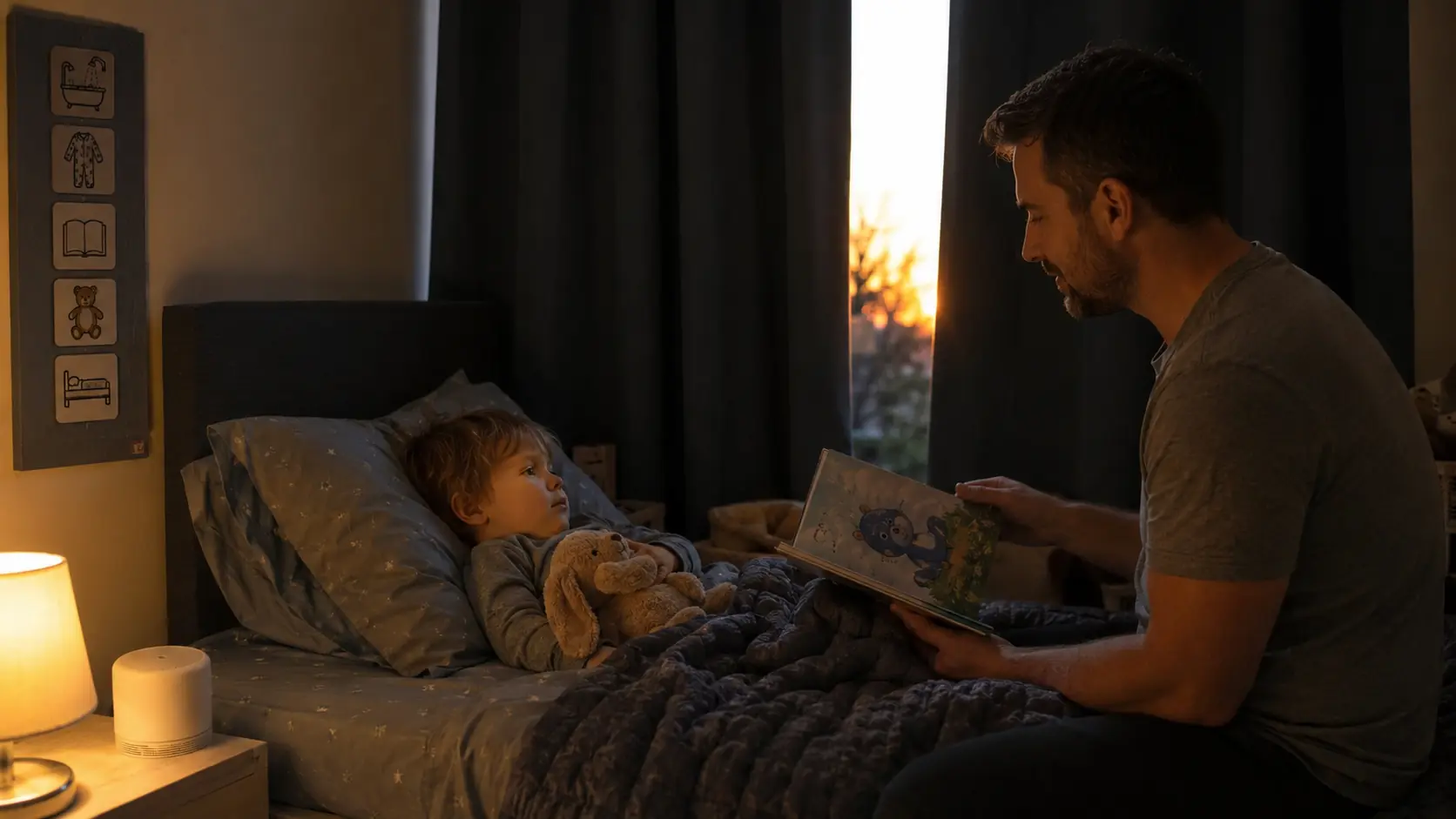
• Disrupted sleep and routine — July 4th events often run late, pushing bedtime back significantly. Disrupted sleep and an altered schedule can reduce a child's tolerance for everything else that day.
• Pressure from family and community — The social expectation that everyone should enjoy fireworks together can add emotional weight to a day that is already demanding. Children can sense that pressure even when it is not spoken directly.
None of these challenges are character flaws or signs that something has gone wrong in your family. They are real features of July 4th events that interact with individual sensory and behavioral profiles in predictable ways.
What Makes This an ABA-Based Holiday Plan?
Applied Behavior Analysis (ABA) is grounded in understanding behavior in terms of what happens before it, during it, and after it. Rather than waiting for a difficult moment to occur and then reacting to it, ABA-informed preparation focuses on changing the conditions that lead to difficulty in the first place. For holiday planning, that means anticipating likely triggers and adjusting them before July 4th arrives.
• Identifying triggers — figuring out which specific aspects of the holiday are most likely to be challenging for your child
• Changing antecedents — adjusting the conditions before a behavior happens, so the situation is less likely to escalate
• Teaching replacement skills — building coping tools your child can actually use when things get loud, crowded, or overwhelming
• Reinforcing coping behavior — noticing and acknowledging when your child manages a hard moment well, so those responses become stronger
• Gradual practice instead of surprise exposure — introducing sounds, crowds, and sensory demands in small, manageable doses before the holiday, not all at once on the day
• Collecting simple observations — paying attention to which strategies are working during practice so you can build on them
The CDC describes behavioral approaches as focusing on what happens before and after behavior, helping children develop skills in ways that are structured and individualized. That structure is what makes ABA-based preparation different from simply hoping the holiday goes better this year.
Days 30–21: Identify Triggers and Build Predictability
The first ten days of this plan are about preparation, not practice. Before you introduce any new coping tools or low-volume fireworks videos, take time to observe and record what you already know about your child.
Know Your Child's Specific Triggers First
Not every autistic child is bothered by fireworks, and not every child who struggles with noise handles crowds the same way. Spend a few days noting what specifically seems hardest: Is it sudden loud sounds? Waiting in crowded spaces? Being out past bedtime? Unfamiliar foods? Heat? Identifying this honestly helps you prepare for what is actually likely to happen.
Build a Visual Countdown Calendar
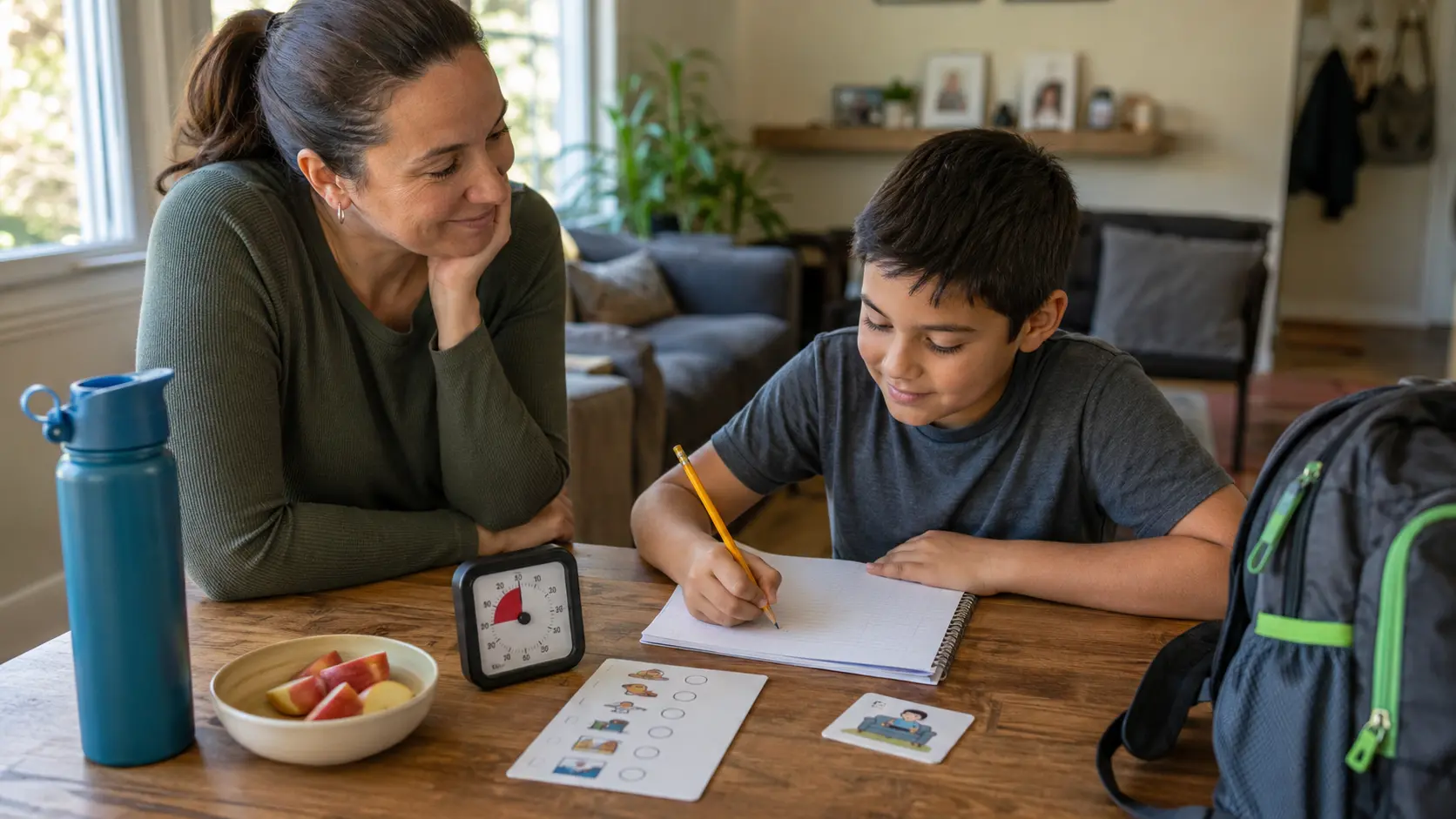
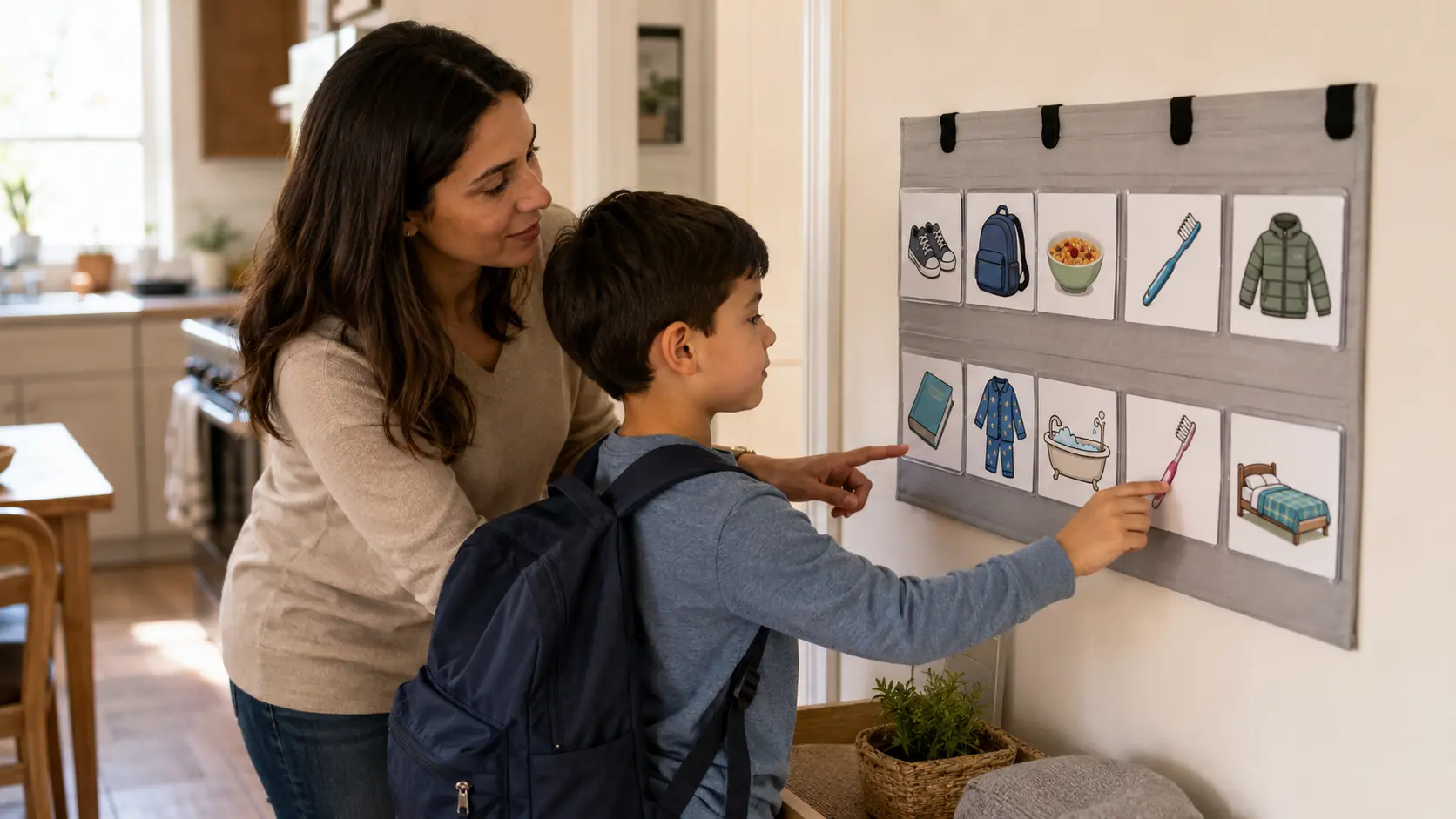
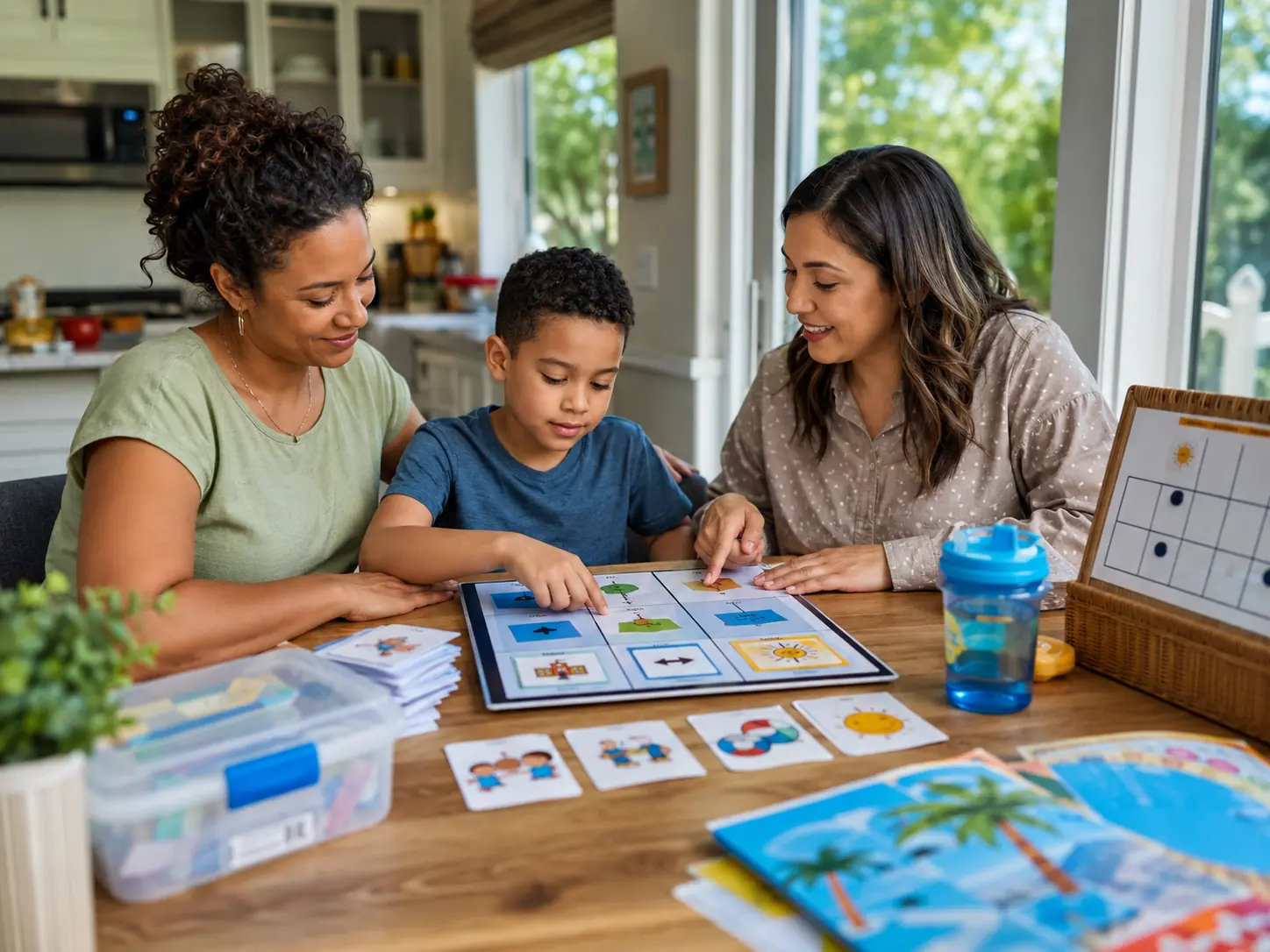
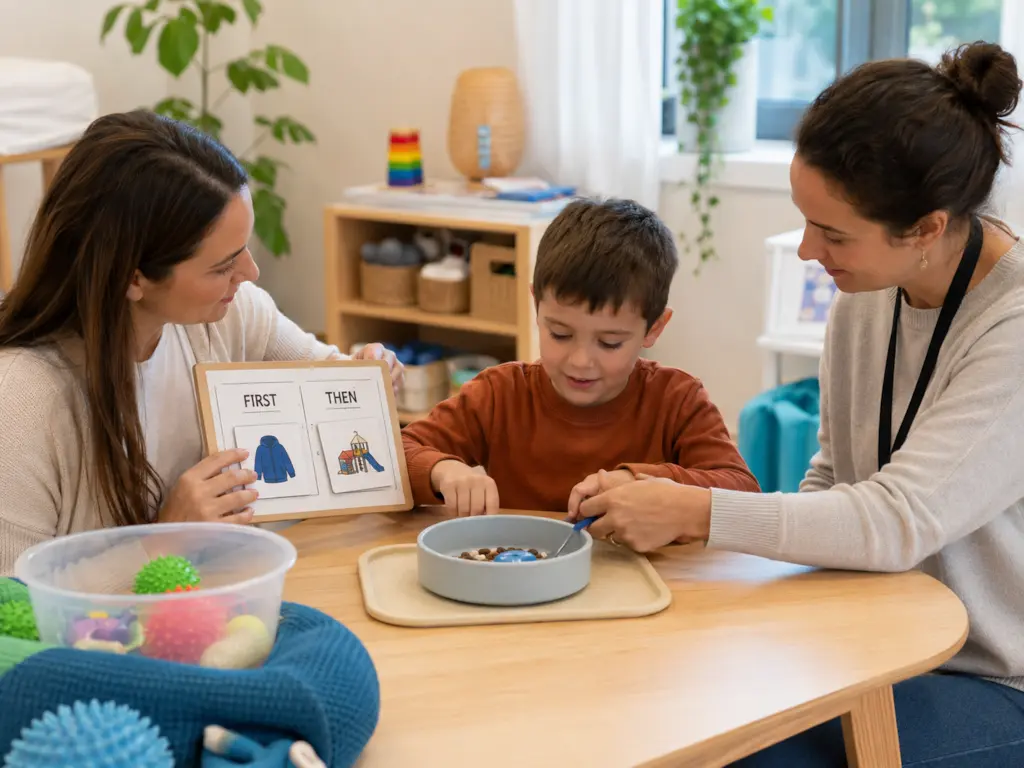
A visual countdown calendar gives your child a concrete, predictable structure for the weeks ahead. Something as simple as a paper chain, a whiteboard with numbered days, or a printed calendar they can mark each morning can reduce the anxiety of the unknown.
Create a Simple Social Story
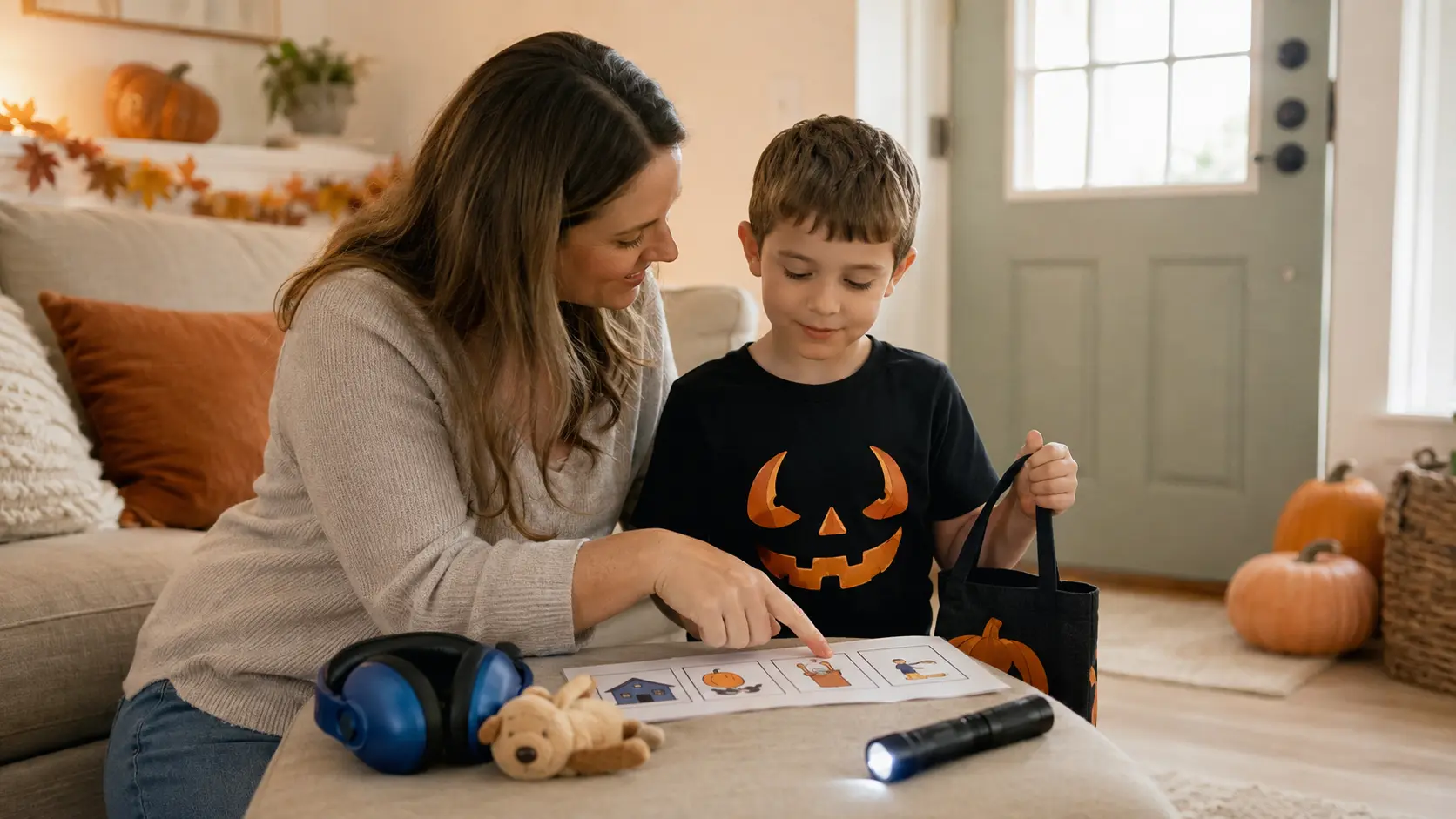
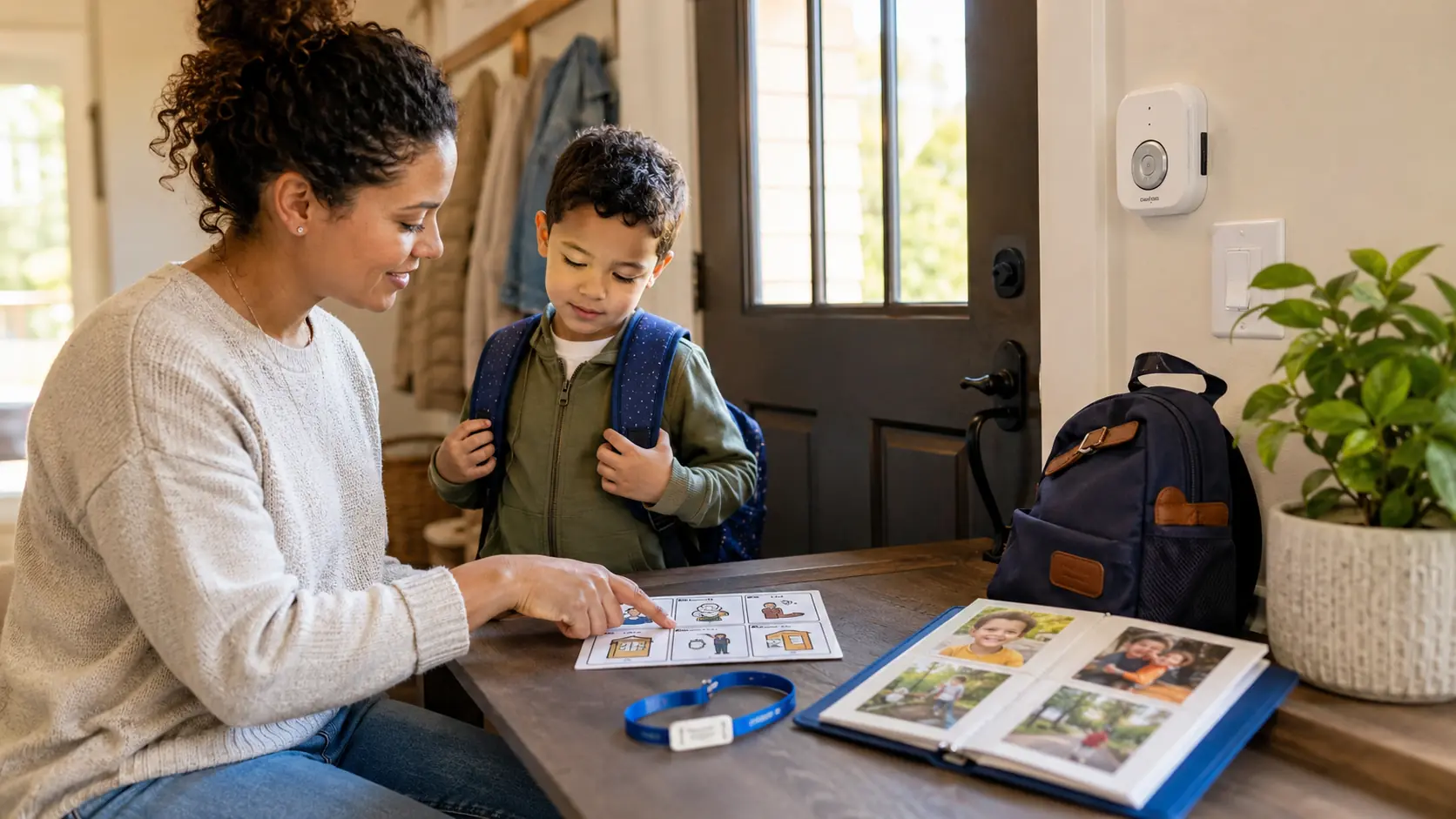
A social story is a short, first-person narrative that describes a situation your child will encounter — what will happen, how they might feel, and what they can do. For July 4th, a simple social story might walk through: "On the Fourth of July, there will be fireworks. Fireworks are very loud. I might feel surprised or scared. I can use my headphones. I can ask for a break. My family is with me."
Decide What Success Looks Like This Year
Before any preparation happens, it helps to be honest with yourself about what you are actually aiming for. Success this year might mean watching five minutes of fireworks from the car. It might mean attending a daytime parade without the nighttime show. It might mean staying home and having a celebration that does not involve loud sounds at all.
Days 20–14: Teach Coping Tools Before the Holiday
Week two of the plan is where coping tools get introduced — calmly, in low-stakes situations, well before they are actually needed.
What to Put in a Fourth of July Sensory Kit
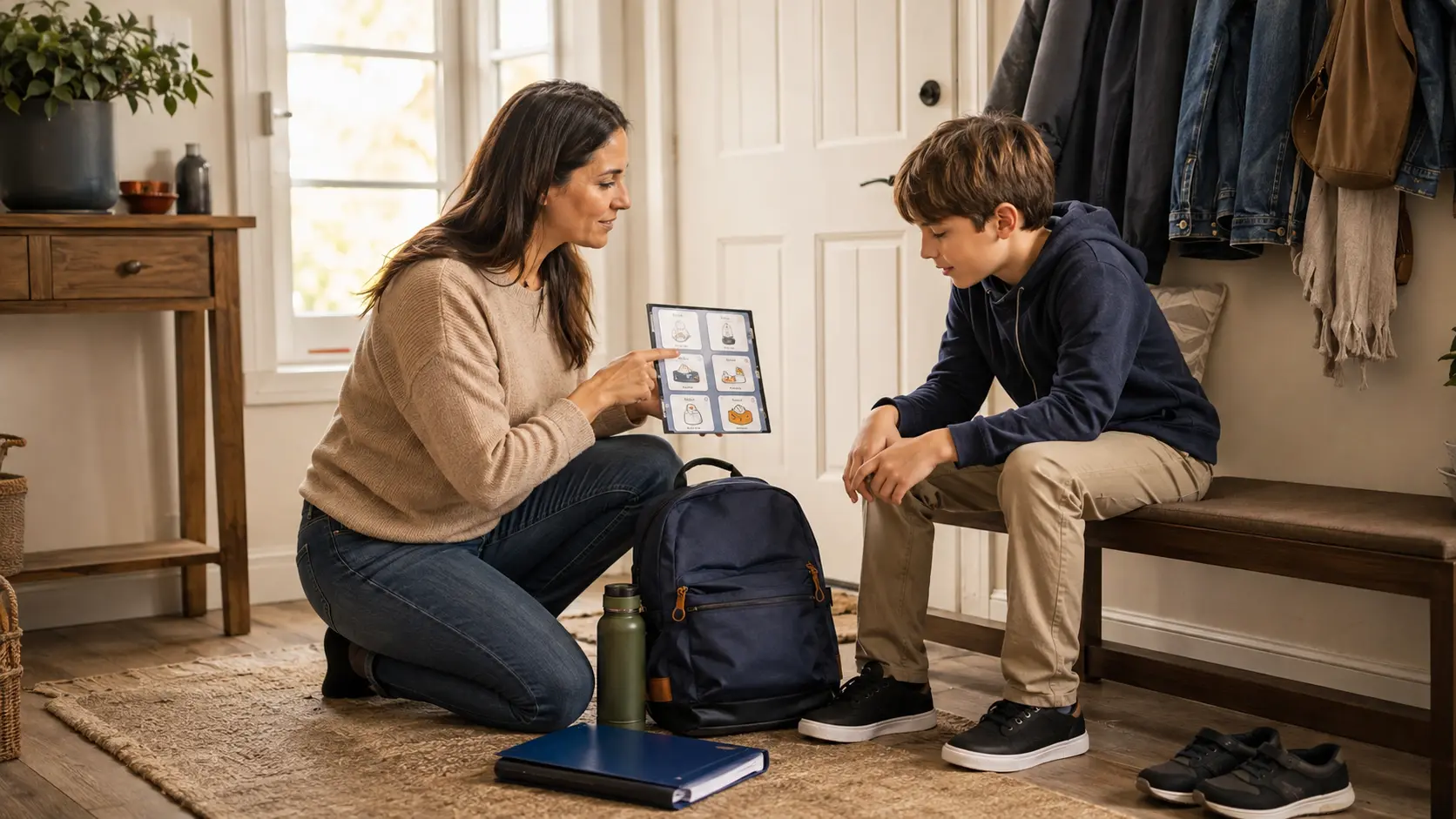
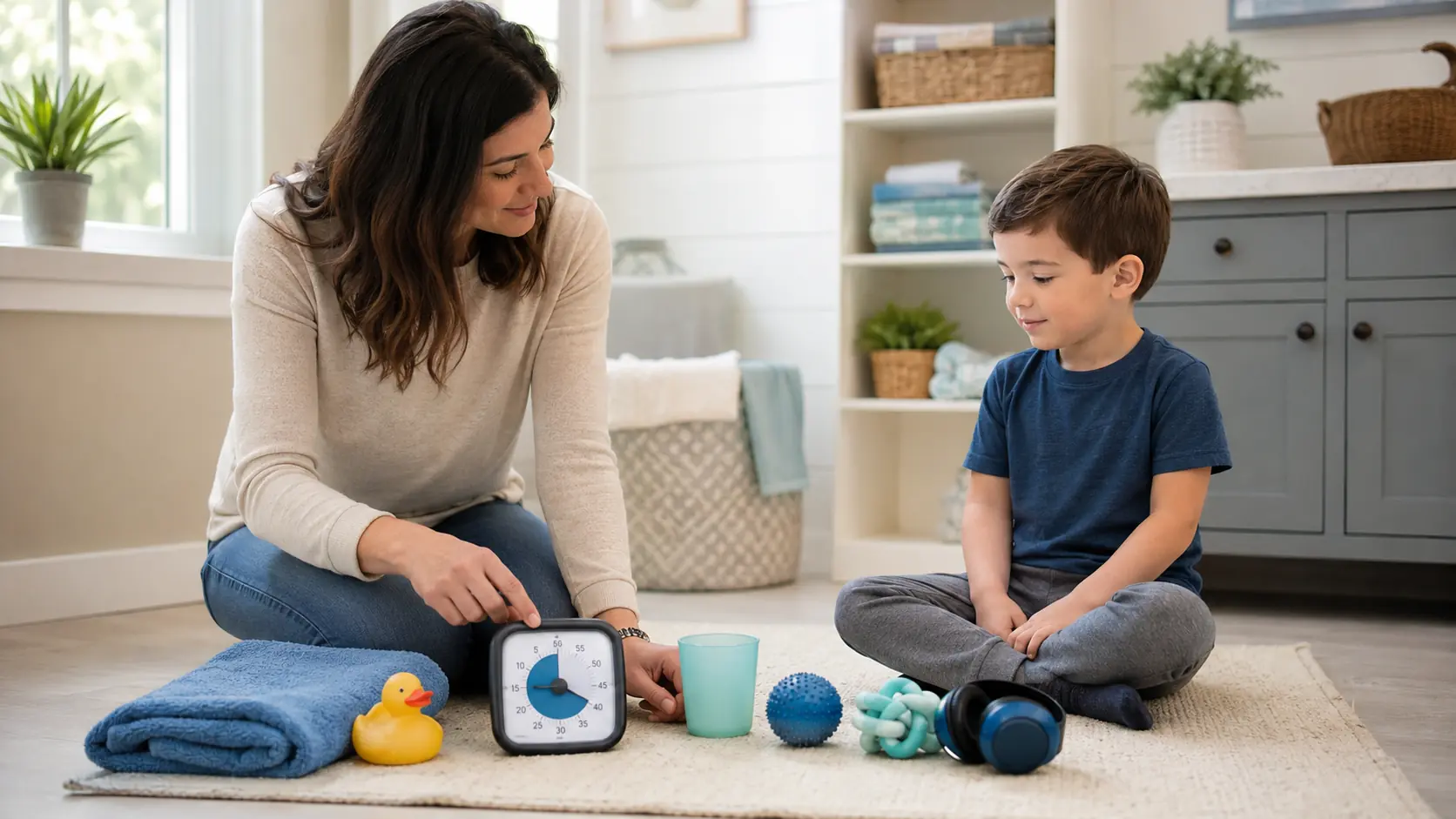
Packing a dedicated sensory kit for the holiday gives your child (and you) a portable, ready-to-use set of tools. Consider including:
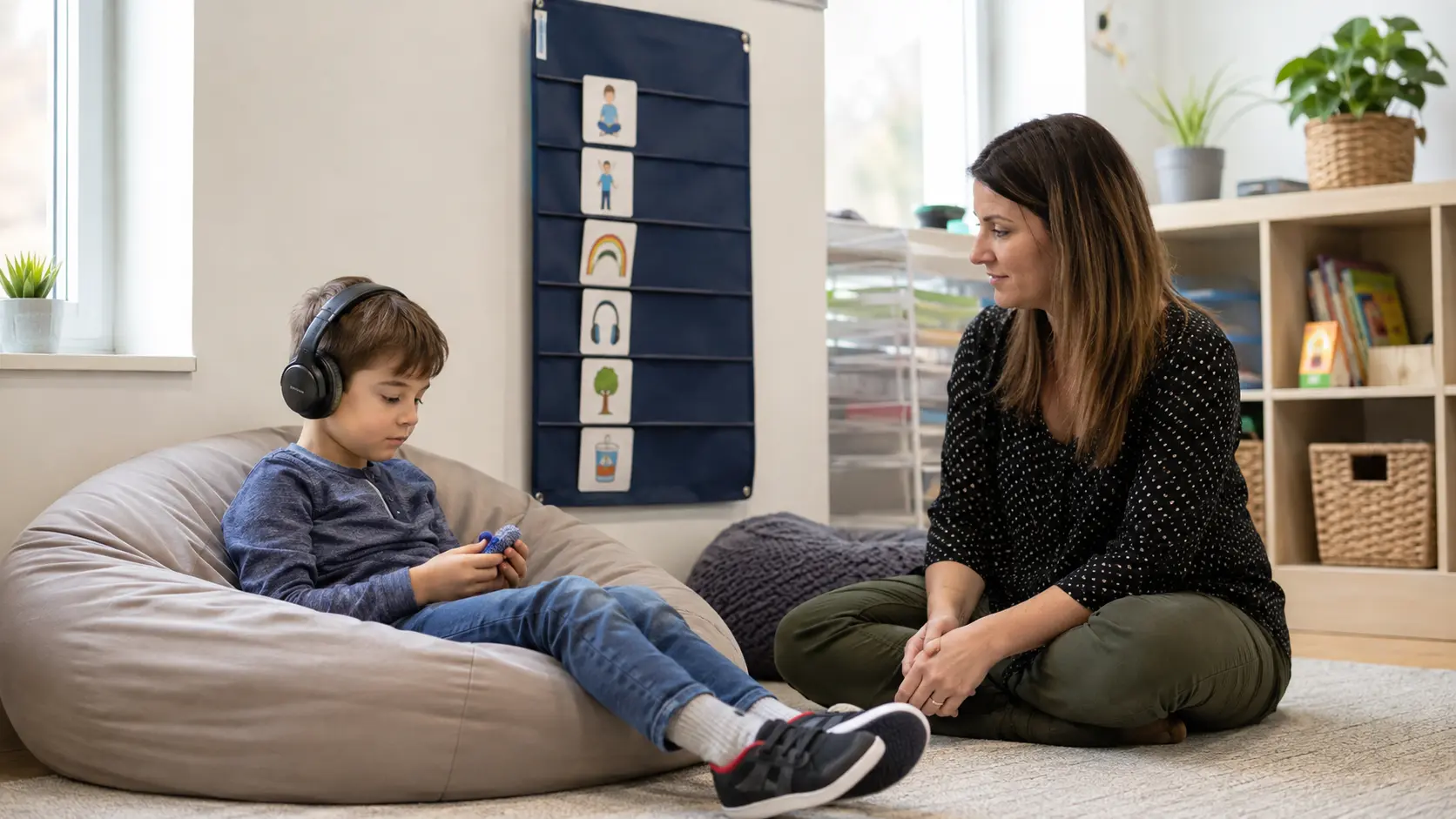
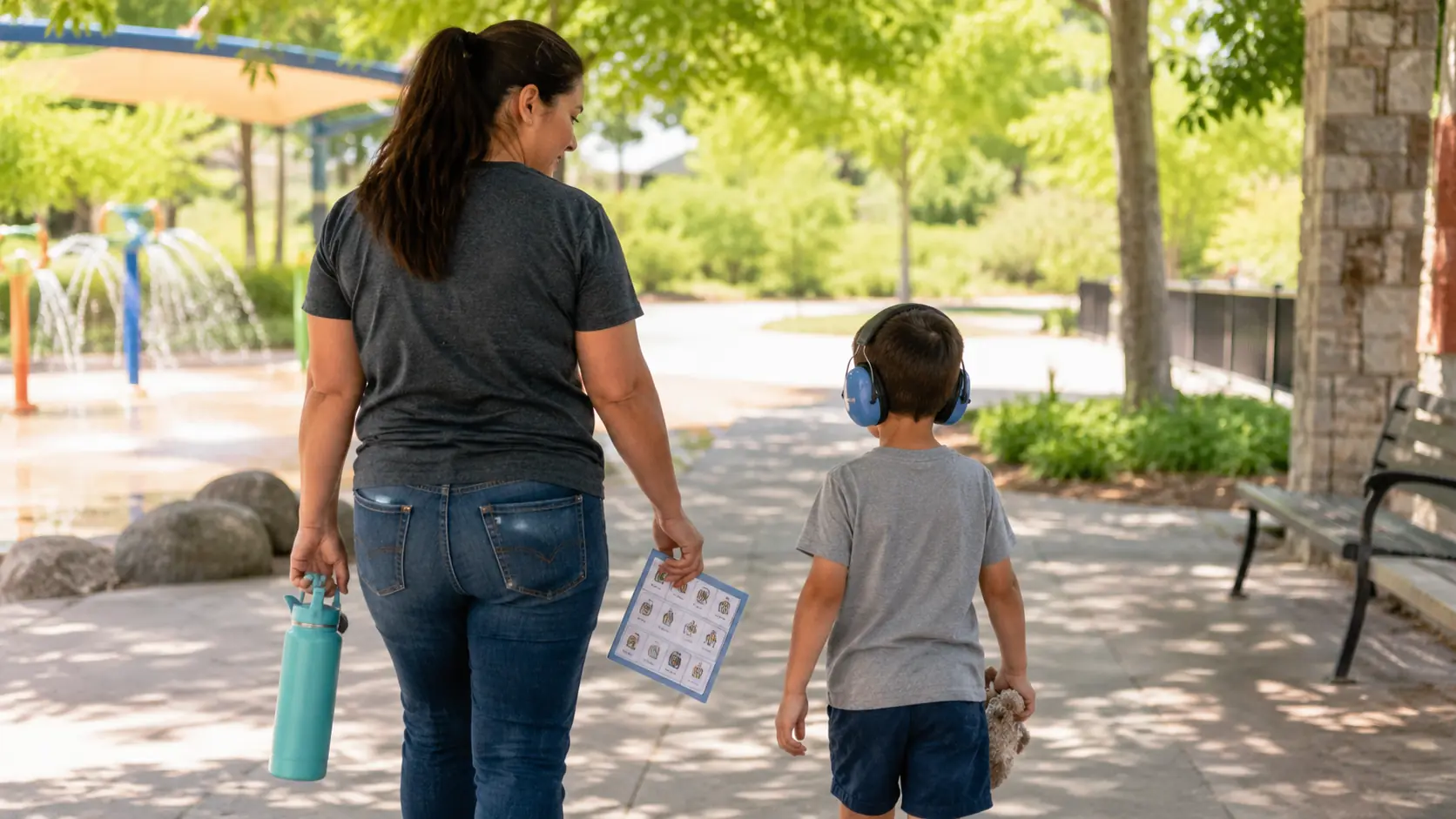
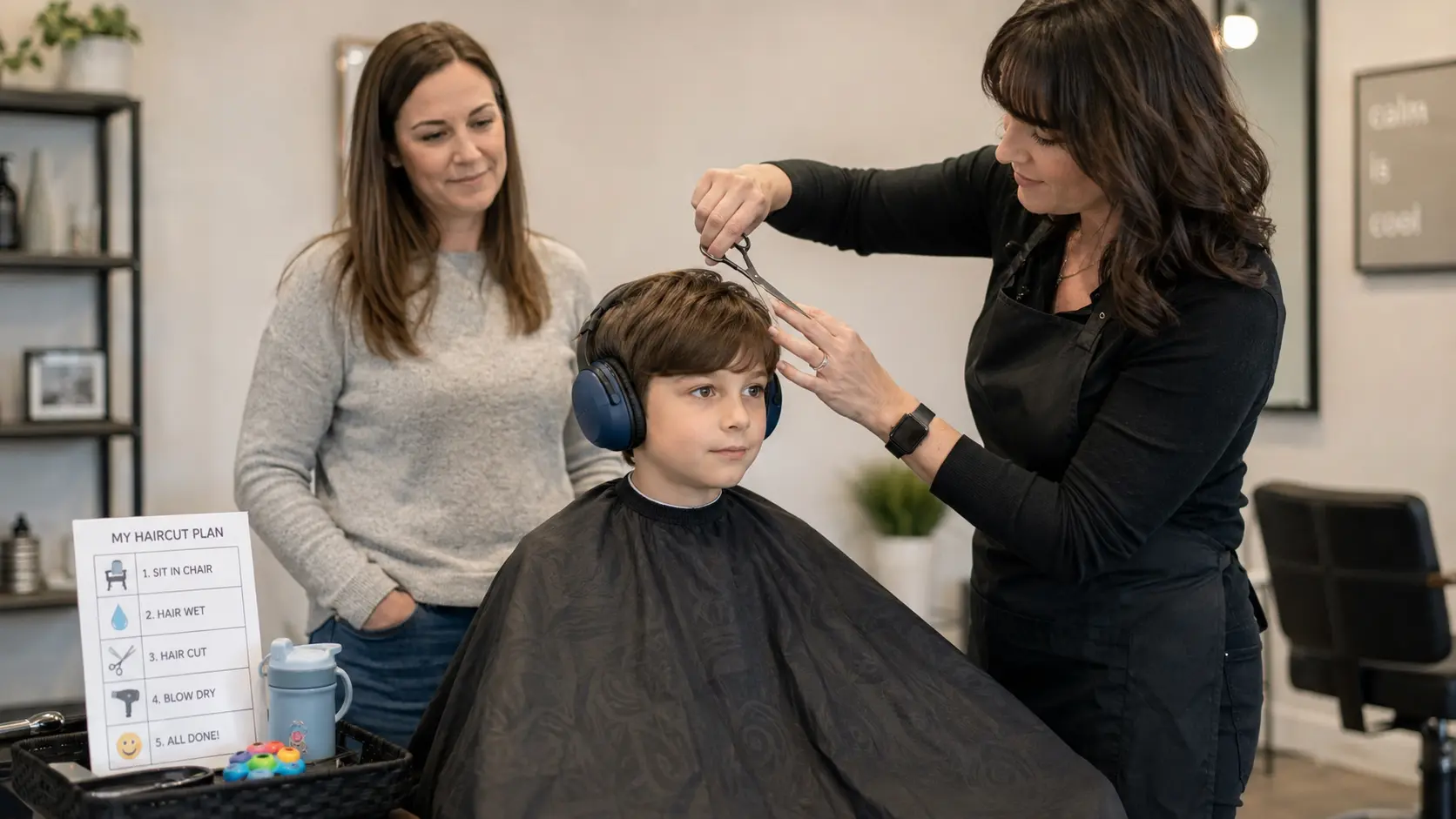
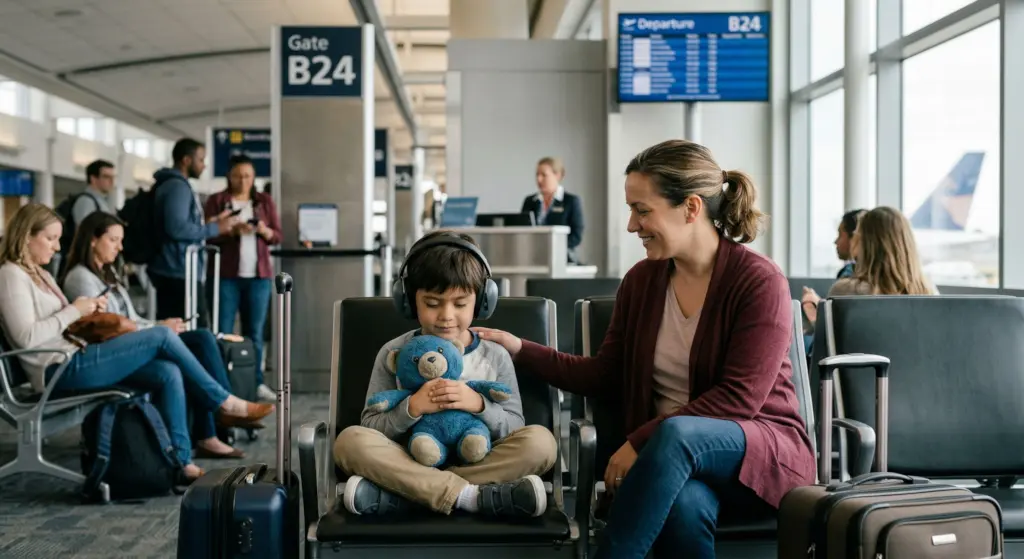
• Noise-canceling headphones or ear defenders rated for comfort, fitted before the holiday so they feel familiar
• Sunglasses or a wide-brim hat if visual brightness is a trigger
• A fidget tool, comfort object, or small sensory toy your child already likes
• Preferred snacks and a water bottle, especially if unfamiliar food is a stressor
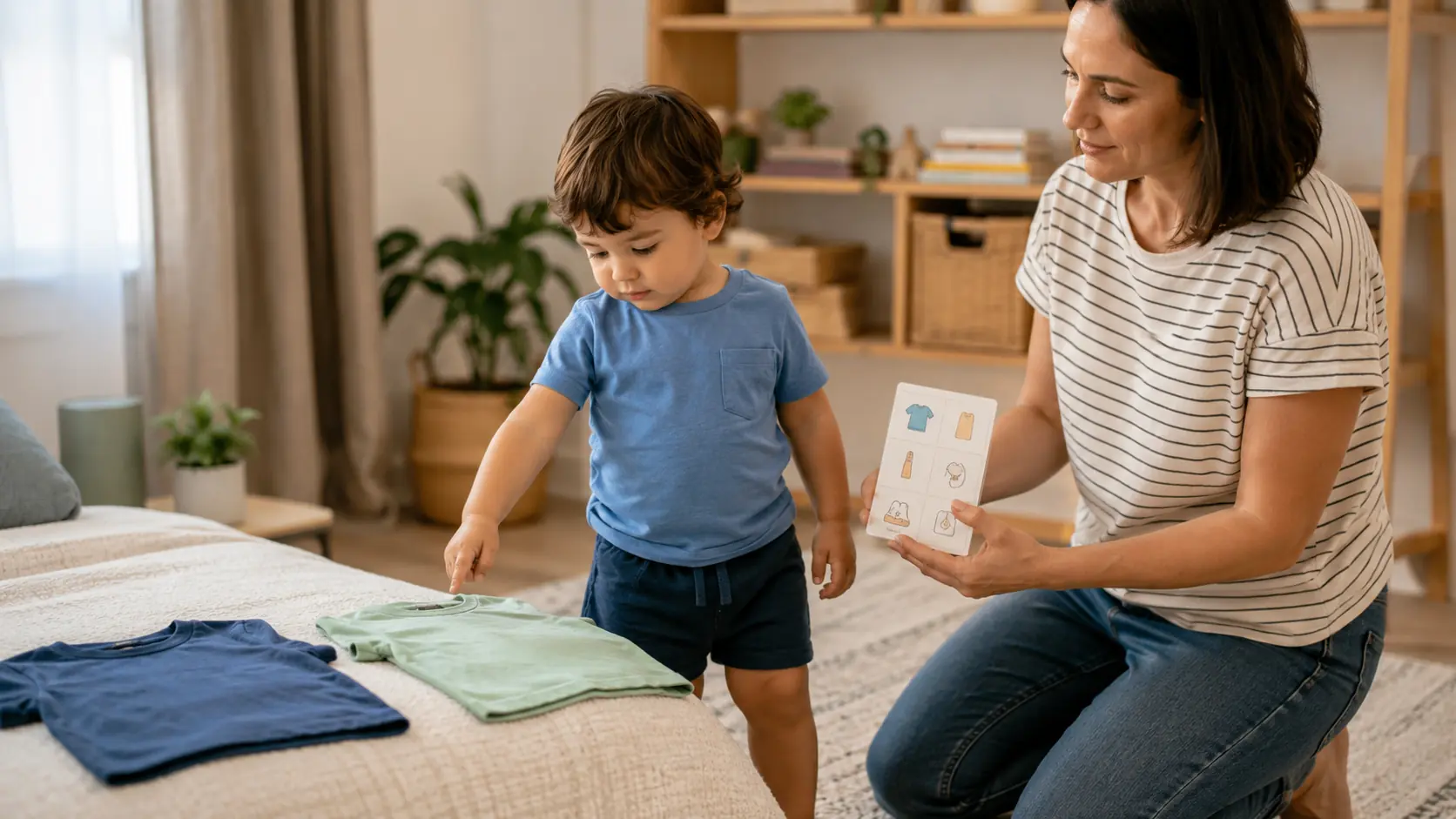
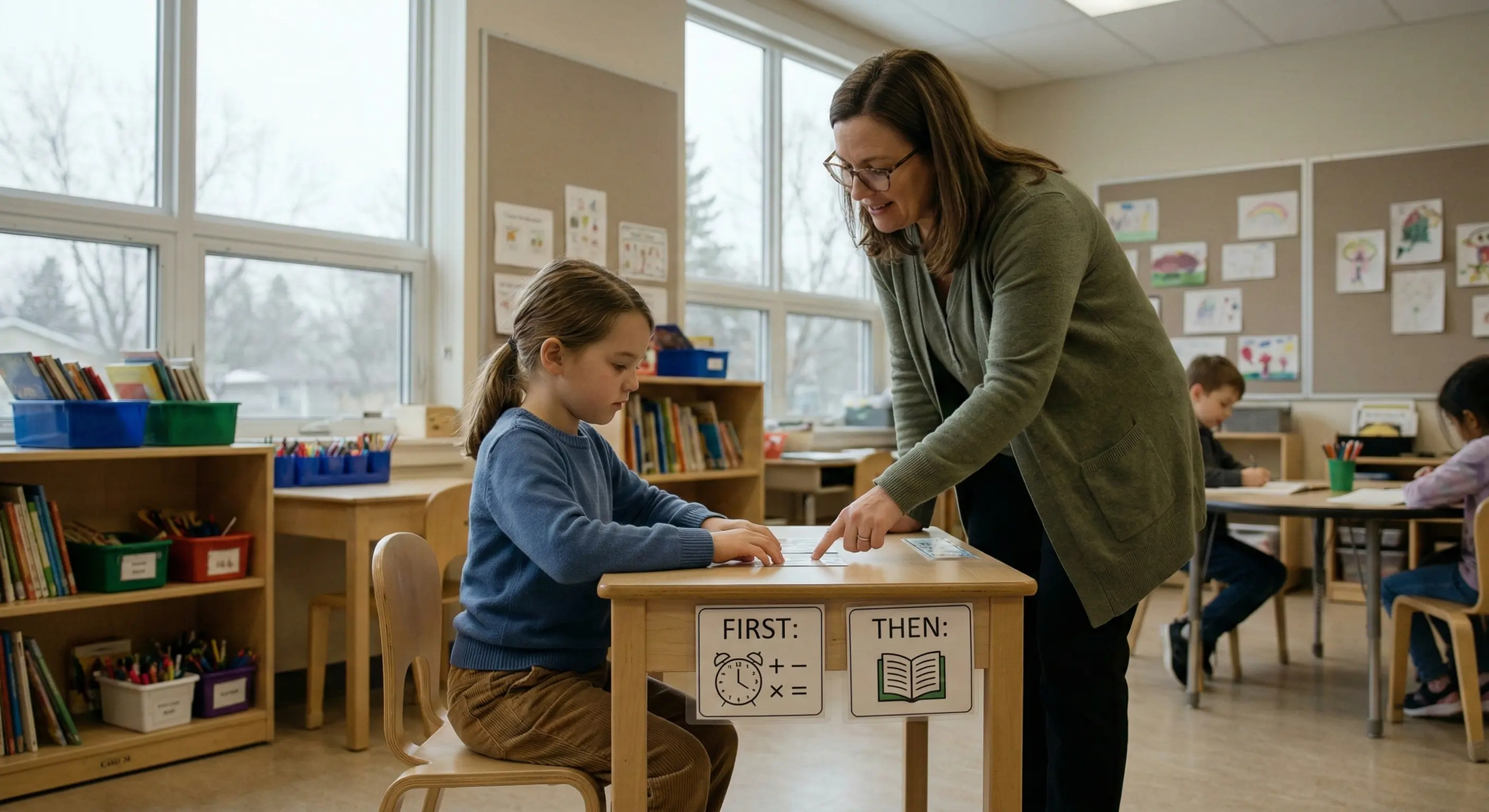
• A visual break card or help card they can hand to you or a caregiver
• A small printed copy of the social story or the day's visual schedule
• Earbuds or a phone loaded with calming music or a preferred audio program
Introduce each item during these two weeks, not all at once.
How to Reinforce Coping Without Bribing
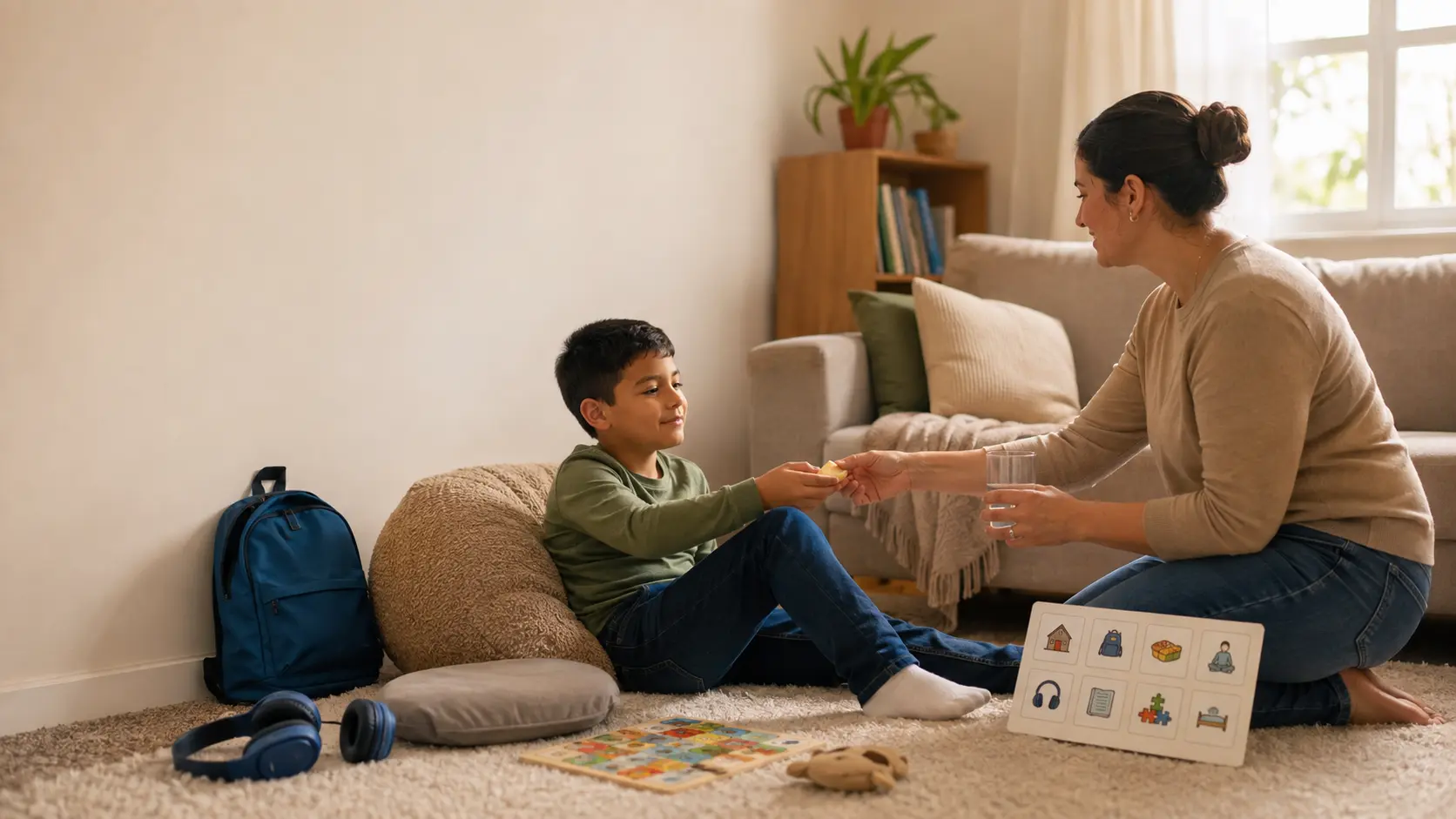
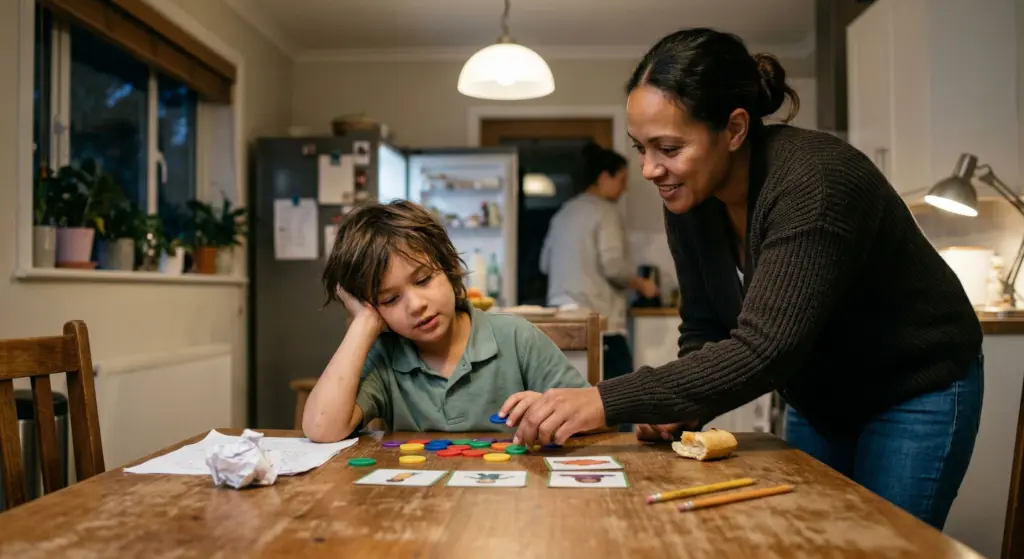
There is an important difference between reinforcing a skill and bribing a child to perform. Reinforcement in ABA means noticing and acknowledging when a child uses a coping tool or manages a hard moment well, with something that is genuinely meaningful to them — a brief verbal acknowledgment, a token toward a preferred activity, or a small preferred item. Bribing means promising a reward before a behavior occurs as a way of purchasing compliance. When your child asks for a break, acknowledge it warmly. When they try the headphones without protest, let them know you noticed.
Days 13–7: Start Gradual, Low-Pressure Practice
This week introduces what is sometimes called low-pressure exposure — not a push to tolerate as much as possible, but a gentle introduction to the elements of July 4th in a controlled setting where your child is already calm and has their tools available.
How to Use Fireworks Videos Without Causing Distress
Short video clips of fireworks at reduced volume can be a useful way to introduce the visual and auditory elements of fireworks before the holiday. The key is to stop before distress builds, not to see how much your child can handle. Start with the volume low, keep the clip short (30–60 seconds), have headphones available, and follow the video with a preferred activity.
Practice Crowd-Related Routines Separately
If crowds are a known trigger, the week before the holiday is a good time to visit a park, a shopping area, or a community space at a calm time of day — not during a busy weekend event, but during an ordinary quiet window.
Signs Your Child Needs a Break Before a Meltdown
Recognizing early signs of escalation is one of the most practical preparation skills a parent can develop. These signs are individual, but common ones include: increased repetitive behaviors, covering ears or eyes, reduced verbal communication, a change in breathing or facial expression, seeking a corner or a quiet space, or increased physical activity.
Days 6–1: Rehearse the Real Plan
The final six days before July 4th are about rehearsal and logistics, not new learning. Your child has been building skills and familiarity for three weeks; now you are making sure that everything is confirmed, packed, and practiced so the day itself holds as few surprises as possible.
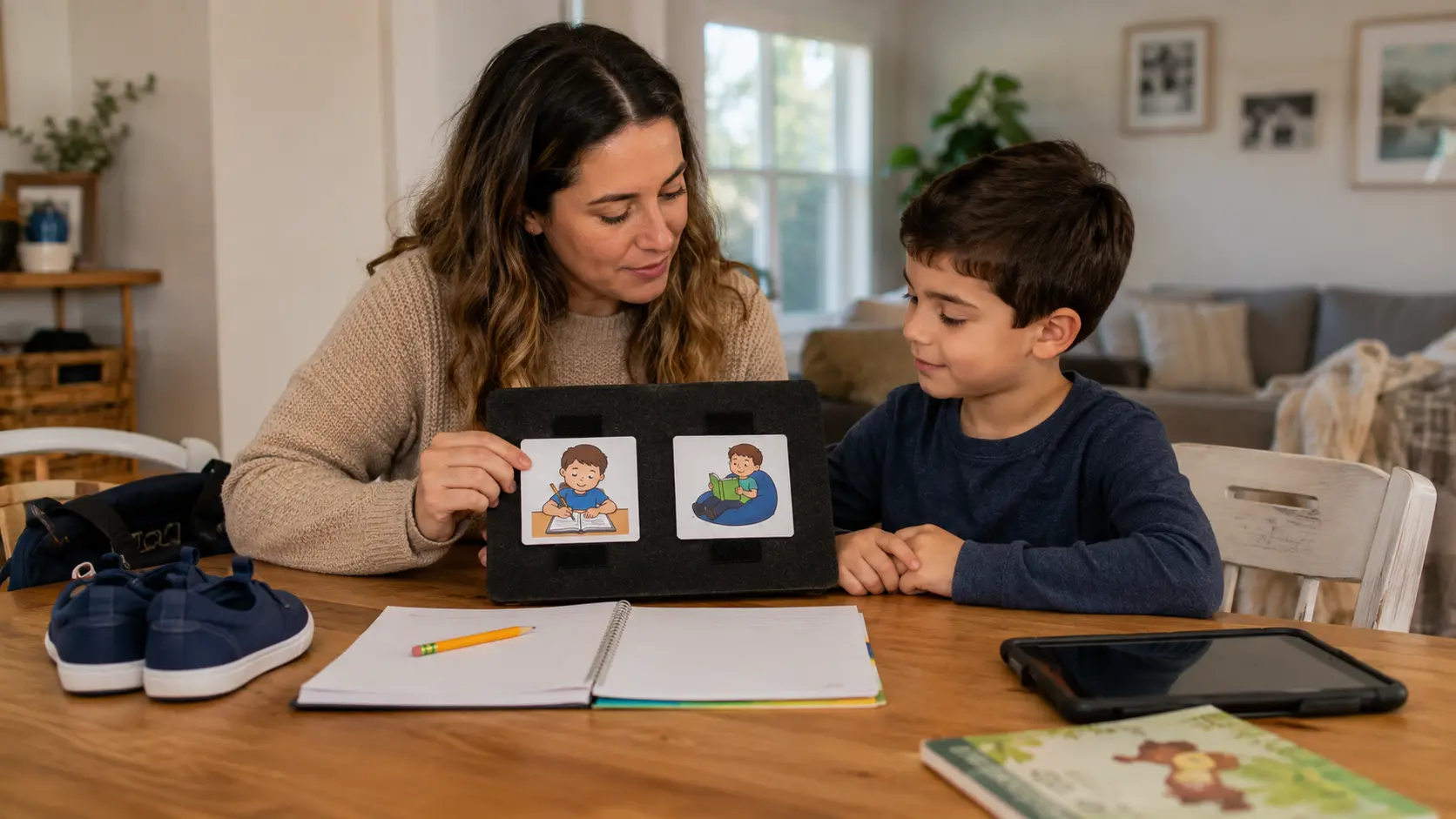
Walk through the plan with your child using whatever communication format works best for them — a visual schedule, a conversation, a social story review, or a combination. If you are attending a public event, confirm practical details in advance: where you will park, where the nearest bathrooms are, whether there is a quieter area nearby, how far you will be from the fireworks or parade route, what time the loudest part of the event is expected to begin, and what your fastest exit route will be if your child needs a break.
If your child takes medication that affects sleep or alertness, or has other health-related routines, consult with their care team before adjusting schedules.
Day-of Strategies for Fireworks, Parades, and Crowds
On July 4th itself, the most important thing is to protect your child's regulatory baseline for as long as possible. That means keeping daytime demands low, maintaining familiar routines around meals and rest, and arriving at any event with an exit plan already in place.
• Keep morning and afternoon demands minimal — avoid high-energy outings or significant schedule changes before the evening
• Feed and hydrate early, before the event, so hunger or thirst are not adding to sensory load
• Arrive at an event with an agreed exit plan: both you and your child know what the signal is, where the car is, and what happens next if you need to leave
• Choose a position that gives you flexibility — farther from the crowd center, near an exit, with access to a quiet space
• If watching fireworks from the car is an option, consider it seriously. It offers distance from the sound, a familiar and controllable environment, and an easy exit. Watching from the car still counts as being there.
• Put headphones on before the first loud burst, not in response to it. Putting them on proactively, while the child is still calm, is significantly more effective than trying to get them on during escalation.
• Leave on the first clear signs of escalation. Leaving early is not failure; it is the plan working correctly.
How to Talk to Family Members About Your Child's Limits
Extended family and friends may not fully understand why your child is wearing headphones at a party, why you leave before the main fireworks show, or why you choose to stay home instead of attending a community event. A simple, calm explanation in advance — "We have a plan that works for our child, and leaving early when things get too loud is part of that plan" — can head off confusion or commentary in the moment.
What If My Child Still Can't Tolerate Fireworks?
Some children, even after thoughtful preparation, will not be able to tolerate public fireworks events — and that is a valid outcome, not a failure. For some children at this stage of their development, the experience is genuinely too much, and that deserves to be respected.
• Watch from indoors — many windows provide a decent view of neighborhood fireworks with significantly reduced sound
• Watch a video of a fireworks show instead of the live event — for some children, this offers the visual experience they enjoy without the unpredictable noise
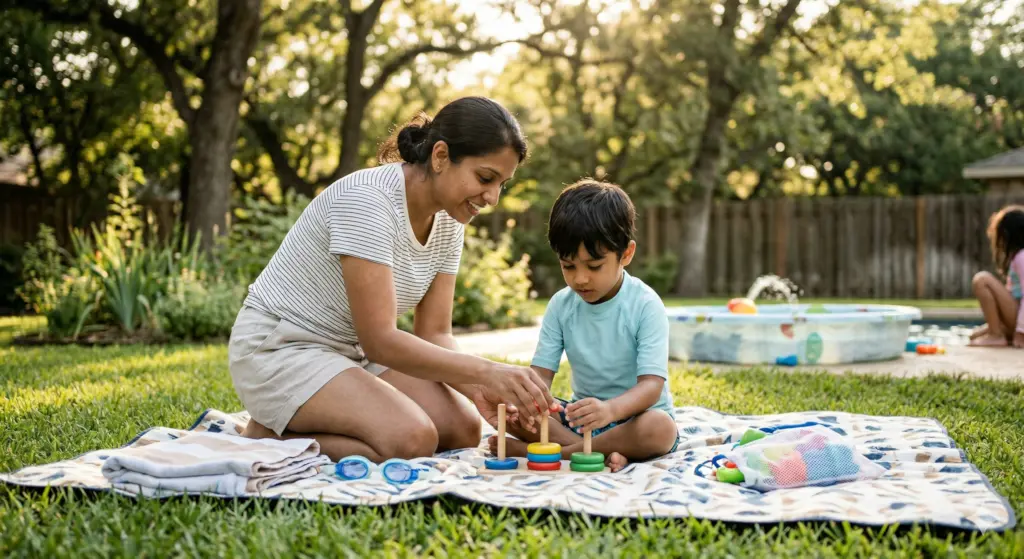
• Celebrate earlier in the day with daytime activities that avoid the nighttime sensory peak: a cookout, patriotic crafts, glow sticks, LED toys, a backyard picnic, or other quiet activities your child already enjoys
• Choose quieter traditions entirely — focus on food, family time, games, or seasonal activities your child actually enjoys
• Redefine success around regulation, not attendance — a child who stayed calm, communicated their needs, and ended the day without significant distress had a successful Fourth of July, regardless of whether fireworks were involved
Even when fireworks themselves are not a good fit, the 30-day plan still gives families better options, clearer decisions, and more confidence heading into the holiday.
When to Ask Your BCBA or Care Team for Extra Help
Consider reaching out to your BCBA or care team if your child experiences any of the following around seasonal events:
• Severe panic — extreme anxiety responses that are difficult to de-escalate and persist well beyond the triggering event
• Self-injury or aggressive behavior in response to loud sounds or crowded environments
• Elopement risk — your child's history or current behavior suggests they may run in an unsafe direction during distress
• Repeated sleep disruption in the weeks surrounding seasonal events, suggesting elevated baseline anxiety
• High anxiety in the days or weeks before predictable events, not only on the day itself
• Family routines that break down significantly each year around holidays, creating cumulative stress for the whole household
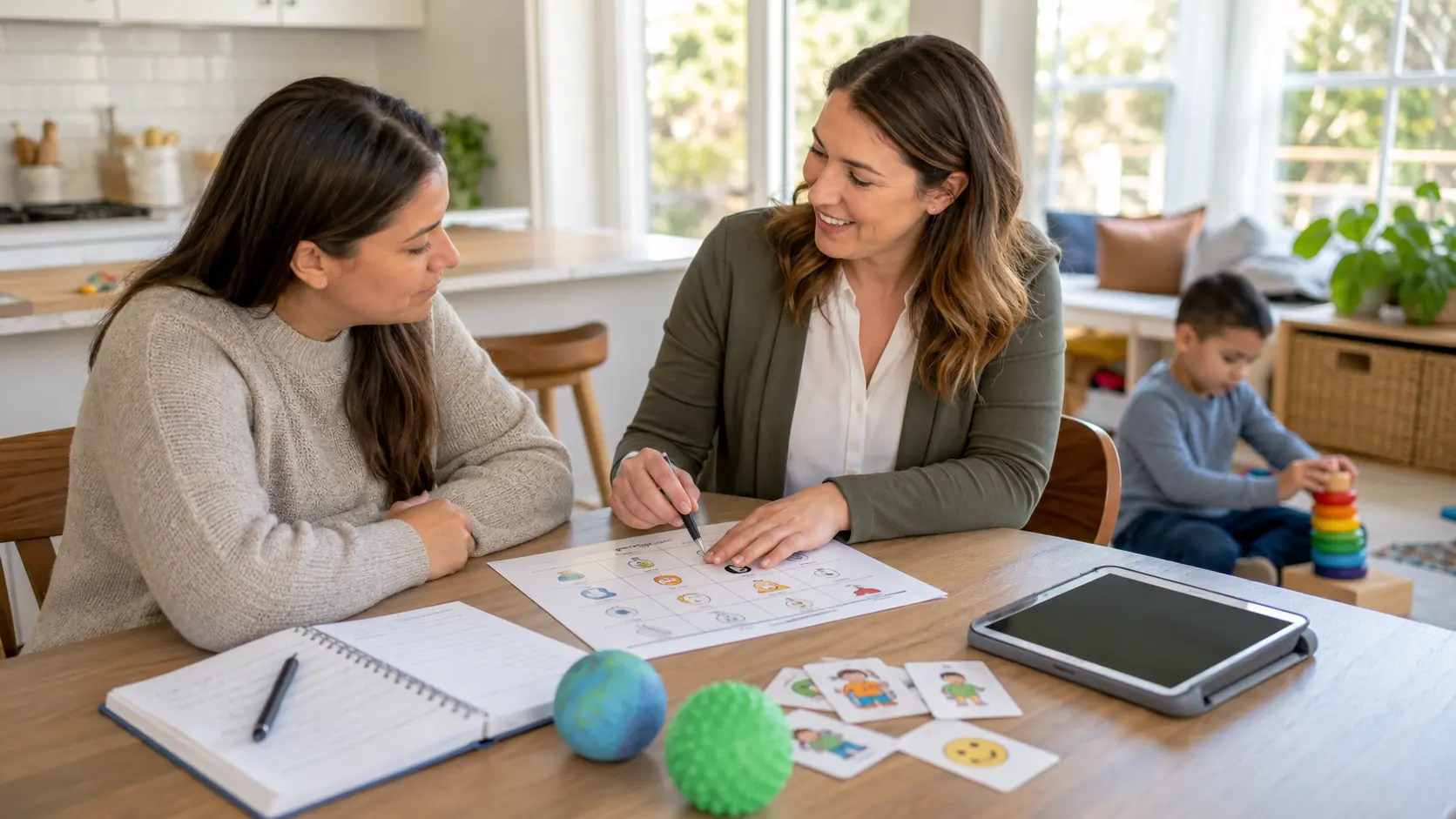
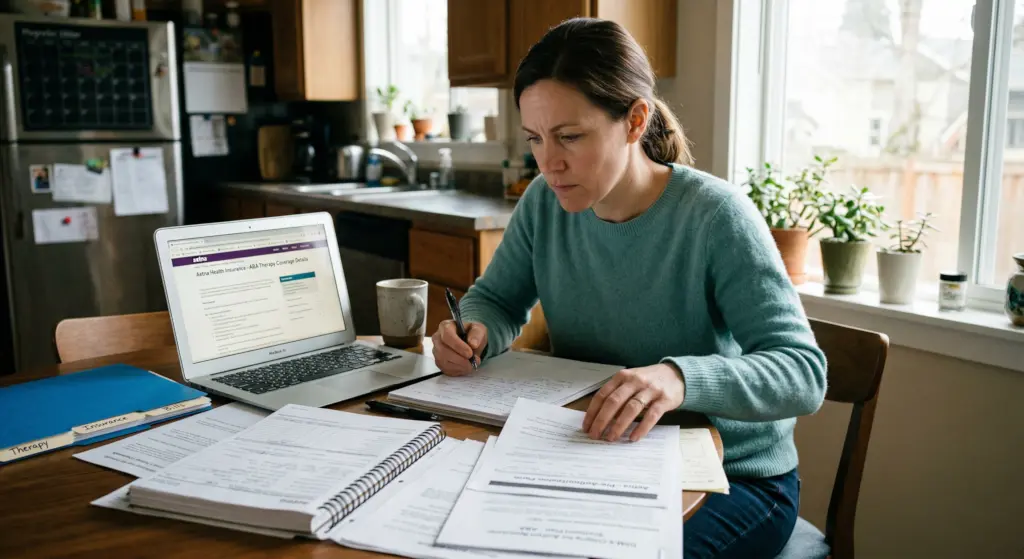
An individualized ABA holiday plan developed with a BCBA who knows your child can be meaningfully more targeted than any general guide. If July 4th has been consistently difficult in ways that affect the whole family for weeks before and after, that is a signal that professional support is worth pursuing.
A Better Measure of Success This July 4th
Families do not need to measure how well July 4th went by how long their child stayed at a fireworks show, or whether they managed to watch the finale without headphones. A better measure is whether the child felt more prepared, more supported, and safer than the year before — and whether the family had a clear plan instead of improvising through a hard evening.
A 30-day ABA-based holiday plan works because it takes the preparation out of a single overwhelmed day and spreads it across weeks of small, manageable steps.
That preparation does not guarantee a perfect evening. But it gives your family more options, more tools, and more confidence going into the day. For a holiday that is hard to predict, that matters a great deal.




.webp)
.webp)
.webp)
.webp)
.webp)



.jpg)
.webp)

.webp)
.webp)





%20During%20Play%20in%20the%20Home.webp)