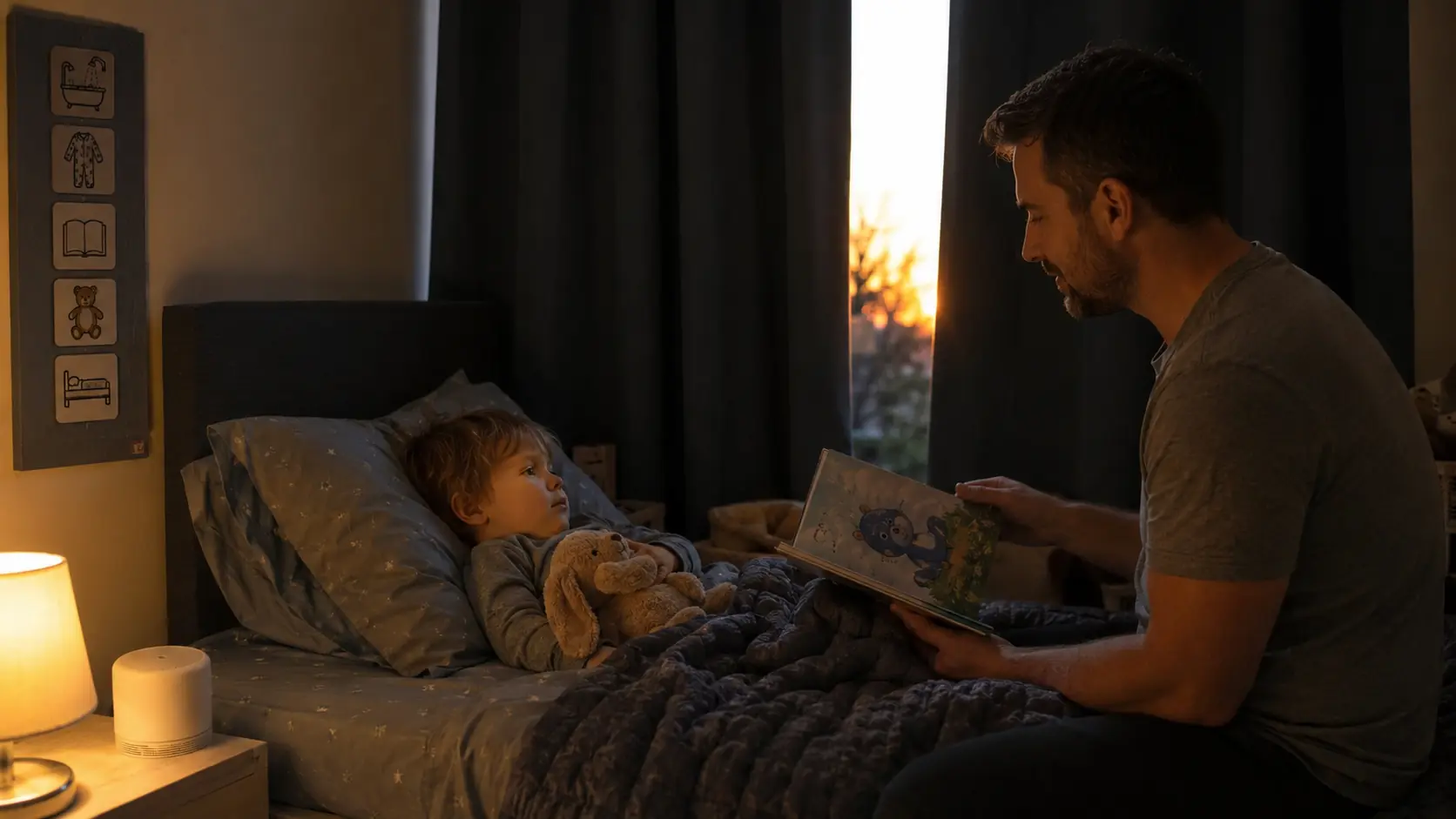
It is 8:15 in the evening, golden light is still streaming through the curtains, and your toddler is absolutely, categorically not going to sleep. Not because they are being difficult. Not because bedtime went wrong. But because the sun is still up, the neighborhood sounds the same as it did at noon, and every cue their small body has ever learned to associate with sleep — darkness, quiet, the settling cool of the evening — has simply not arrived yet.
Autism sleep problems can become especially disruptive in summer, and especially exhausting to manage. Autistic toddlers tend to be more sensitive to environmental cues than their neurotypical peers, which means the abrupt shift in light, temperature, and routine that comes with the longer days of June, July, and August can disrupt what took months to establish. The result is later bedtimes, earlier wakeups, more middle-of-the-night waking, and household exhaustion that builds across weeks.
The School-to-Summer Sleep Shift: Why Long Evenings Disrupt the Internal Clock
Sleep is strongly shaped by light. As evening gets darker, the brain increases melatonin and the body starts moving toward sleep. In summer, that cue comes later. Long sunsets and lingering evening light can push back the natural wind-down process, especially for toddlers who are used to a school-year rhythm where darkness and bedtime line up more closely.
Why Autistic Toddlers May Feel This More Intensely
Autistic children often have more sleep difficulties than other children. Sensory sensitivities, anxiety, differences in melatonin timing, and a stronger reliance on routine can all make bedtime harder. When summer changes the light, sound, and timing cues they depend on, winding down can become much more difficult.
How Routine Drift Makes It Harder
Summer often brings later meals, looser schedules, shifting naps, and less predictable evenings. For autistic toddlers, that routine drift can add to the light-related disruption and make sleep problems harder to reverse once they start.
High-Tech and Low-Tech Room Swaps for a Darker, Cooler Sleep Space
The bedroom environment is one of the most immediately adjustable factors in summer sleep disruption — and one that many families underestimate until they try it.
Blackout Curtains: What They Can and Cannot Do
Blackout curtains or room-darkening blinds are one of the most useful summer sleep adjustments for young children. They help block late evening light that keeps the brain alert and early morning sunlight that can trigger very early wakeups.
For sensory-sensitive toddlers, this can remove a real source of disruption. But blackout curtains are not a complete solution. They do not create a bedtime routine, change bedtime resistance on their own, or fix sleep problems caused by other factors. They work best as part of a consistent sleep plan.
Other Room Adjustments Worth Making
- Room temperature: A hot bedroom can make it harder to fall asleep. Cooling the room can help, but it should be done in a way that does not create a new sensory irritation.
- White noise or sound masking: Outdoor summer noise can disrupt bedtime. A steady background sound can help reduce unpredictable noise and become part of the sleep routine.
- Evening light control: Bright rooms and screens before bed can keep the body in “awake mode.” Dimming lights and reducing screens before bedtime can support better sleep onset.
- Sensory comfort items: A familiar blanket, soft toy, or calming texture can become a reliable sleep cue when used consistently.
Resetting the Bedtime Boundary: An ABA Approach to Bedtime Resistance
Bedtime resistance — crying, stalling, repeated requests, getting out of bed, or refusing to settle — is one of the hardest parts of summer sleep disruption. It often has a behavioral pattern behind it. When a child learns that calling out brings a parent back, protest delays bedtime, or summer rules are easier to bend, resistance can start producing results without anyone meaning to teach it.
That is not a parenting failure. It is a pattern, and patterns can be changed.
What ABA-Informed Bedtime Support Actually Looks Like
- Visual routines and clear cues: A simple bedtime schedule helps the child see each step and understand that the routine has a clear ending.
- A consistent sequence: The order of the bedtime routine matters as much as the exact clock time. Repeating the same steps each night helps the body learn what comes next.
- Reinforcement for calm bedtime behavior: Praising and reinforcing staying in bed, finishing the routine, or settling more calmly can help build those behaviors over time.
- Sleep logs and tracking: Tracking bedtime, sleep onset, night waking, and morning wake time can reveal patterns that are easy to miss when nights feel chaotic.
Simple Sleep Log: What to Track Each Day
- Time lights went out
- Estimated time the child fell asleep
- Night wakings and what happened
- Morning wake time
- Approximate total sleep
- Anything unusual that day such as late naps, screen time, visitors, or schedule changes
A Note on Natural Sleep Aids and Melatonin
Some families consider melatonin or other sleep aids when behavior changes are not enough. That can be a reasonable discussion, but it should happen with the child’s pediatrician or clinician. A behavioral sleep plan still matters, because supplements alone do not change the routine and environmental factors affecting sleep.
Sample Schedule: A Summer Evening Routine That Works
The following is a sample evening routine framework for a toddler with a target bedtime of around 7:45–8:00 PM in midsummer. The exact times and steps should be adjusted to fit your child's current sleep needs, your family's schedule, and any sensory or behavioral factors specific to your child.
When Parent Training Helps More Than Guesswork
Most families dealing with summer autism sleep problems are already trying hard. They have adjusted the room, worked on consistency, and tested earlier bedtimes — but the pattern still falls apart in ways that are hard to predict.
That is where a structured behavior plan can help more than continued trial and error. When the plan is built around the child’s actual sleep patterns, sensory needs, and bedtime behavior, it is usually more effective than guessing night to night.
A BCBA or parent training specialist can help families:
- Identify what is driving the sleep problem: light, heat, sound, routine drift, learned bedtime resistance, or a mix of factors
- Build a consistent bedtime plan: based on the child’s actual patterns, not a generic sleep strategy
- Support consistency across caregivers: so everyone responds the same way at bedtime
- Adjust the plan over time: as summer routines, fatigue, or behavior patterns change
AtlasCare’s parent training in New Mexico and Delaware helps families build realistic bedtime plans grounded in ABA principles and use them consistently at home.
Calmer Evenings Are Possible — Start With What You Can Do Today
Summer sleep problems are not a sign of bad parenting or lost progress. They are often a response to longer daylight, more heat, and less routine — all of which can be harder for autistic toddlers to handle.
The most helpful changes are usually simple but consistent: a darker and cooler room, a predictable wind-down routine, clear bedtime boundaries, and a summer sleep schedule that stays structured.
If bedtime is still falling apart despite your best efforts, parent training can help. AtlasCare supports families with practical, ABA-informed bedtime plans that reduce resistance and support a smoother fall transition.
If late sunsets and early wakeups are making summer nights harder, contact AtlasCare to get started with parent training support.






















.webp)


.webp)

.webp)
.webp)
.webp)








.jpg)


.webp)


.webp)
.webp)









%20During%20Play%20in%20the%20Home.webp)