Every family dealing with water sensitivity has their own version of this struggle. It may be the bath that causes tears before the water is even on, the shampoo routine that falls apart every night, or the community pool your child refuses to enter no matter how calmly you prepare them.
Autism fear of water can become one of the hardest daily sensory challenges for families because hygiene cannot simply be put off, and generic advice like “just keep trying” usually does not help. When bath time means repeated distress for both child and caregiver, the goal needs to shift from pressure to a more workable, sensory-informed plan.
The Sensory Science of Water: Why It Triggers Panic
What looks like water refusal is often not simple behavior. For many children with autism sensory issues, water creates a level of sensory input their nervous system cannot comfortably manage.
Baths, showers, and pools bring several sensory demands at once:
- Water temperature: Even small shifts can feel intense or wrong to a sensory-sensitive child.
- Tactile pressure and movement: Water moving across the skin can feel unpredictable and hard to process.
- Auditory echo: Bathrooms and pools often amplify sound, making the environment louder and more overwhelming.
- Shampoo or water near the face: Eyes, ears, and the face are especially sensitive, and even the anticipation of discomfort can trigger fear.
- Loss of control: Water routines often happen on someone else’s timing, which can make the experience feel even less predictable.
Why a Child Can Love Water in One Context and Fear It in Another
A child may happily play in a puddle or with a hose but still panic at bath time or the pool. That is not inconsistency — it is context.
In a puddle or with a hose, the child controls the contact, pace, and amount of water. In a bath or shower, they often lose that control, and the environment adds more sensory input through sound, temperature, steam, and face contact. The child is reacting not just to water itself, but to how the whole experience feels.
Reimagining Bath-Time: 4 Modifications to Try Tonight
Environmental changes can help before you even begin working on behavior. These adjustments target some of the most common sensory barriers at bath time.
4 Bath-Time Modifications to Try Tonight
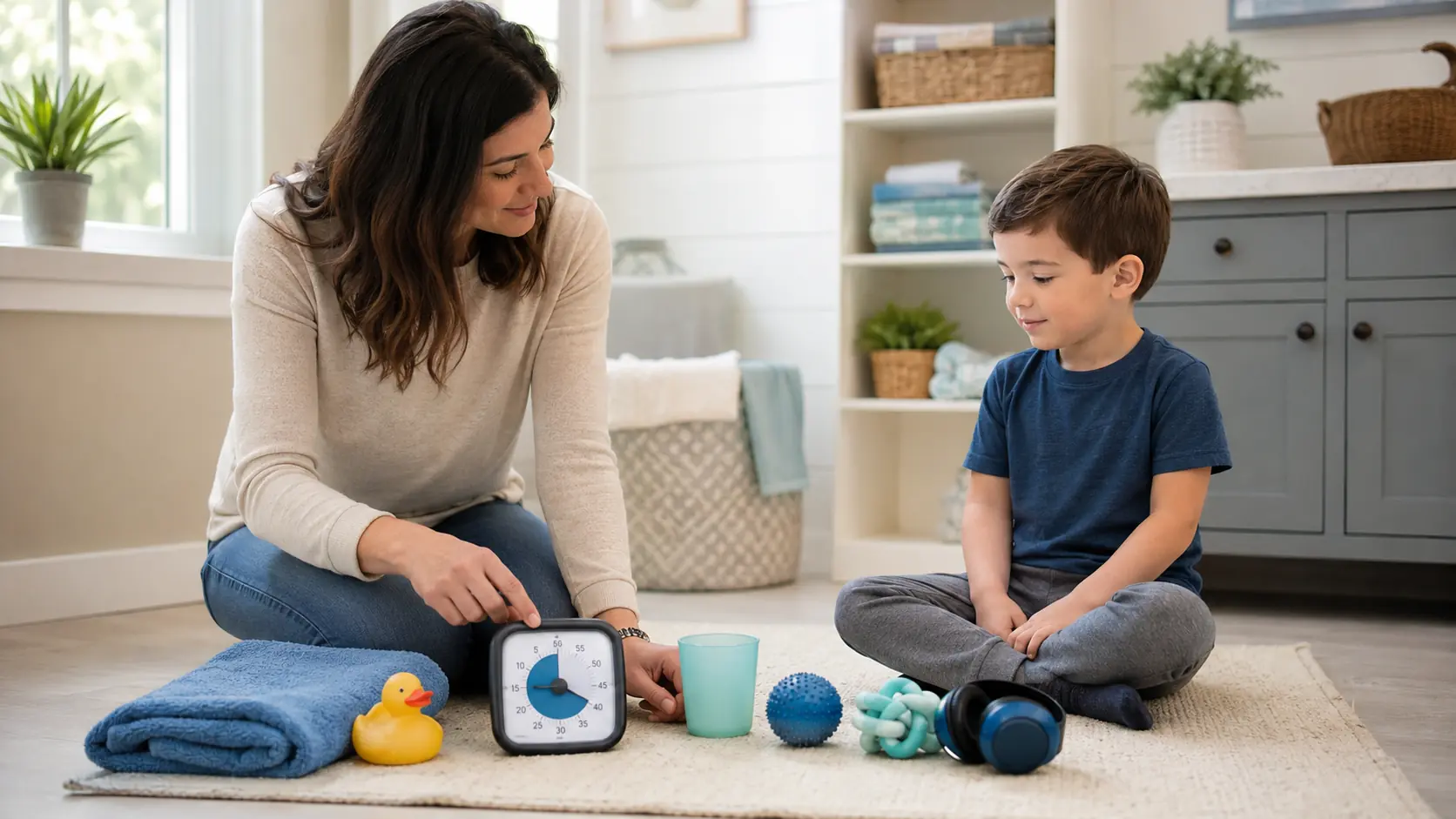
- Set the water before your child enters: Have the bath ready at the preferred temperature so there is no surprise when they approach.
- Reduce bathroom echo: Bath mats, towels, soft music, or headphones can make the space feel less loud and harsh.
- Give your child one control point: Let them choose a cup, the washing order, or turn the tap off at the end. Small control can reduce distress.
- Address shampoo sting directly: Try a visor, a washcloth over the face, a head-back position if tolerated, or a true tear-free shampoo. Reducing this one trigger can change the whole routine.
The Visual Countdown Timer
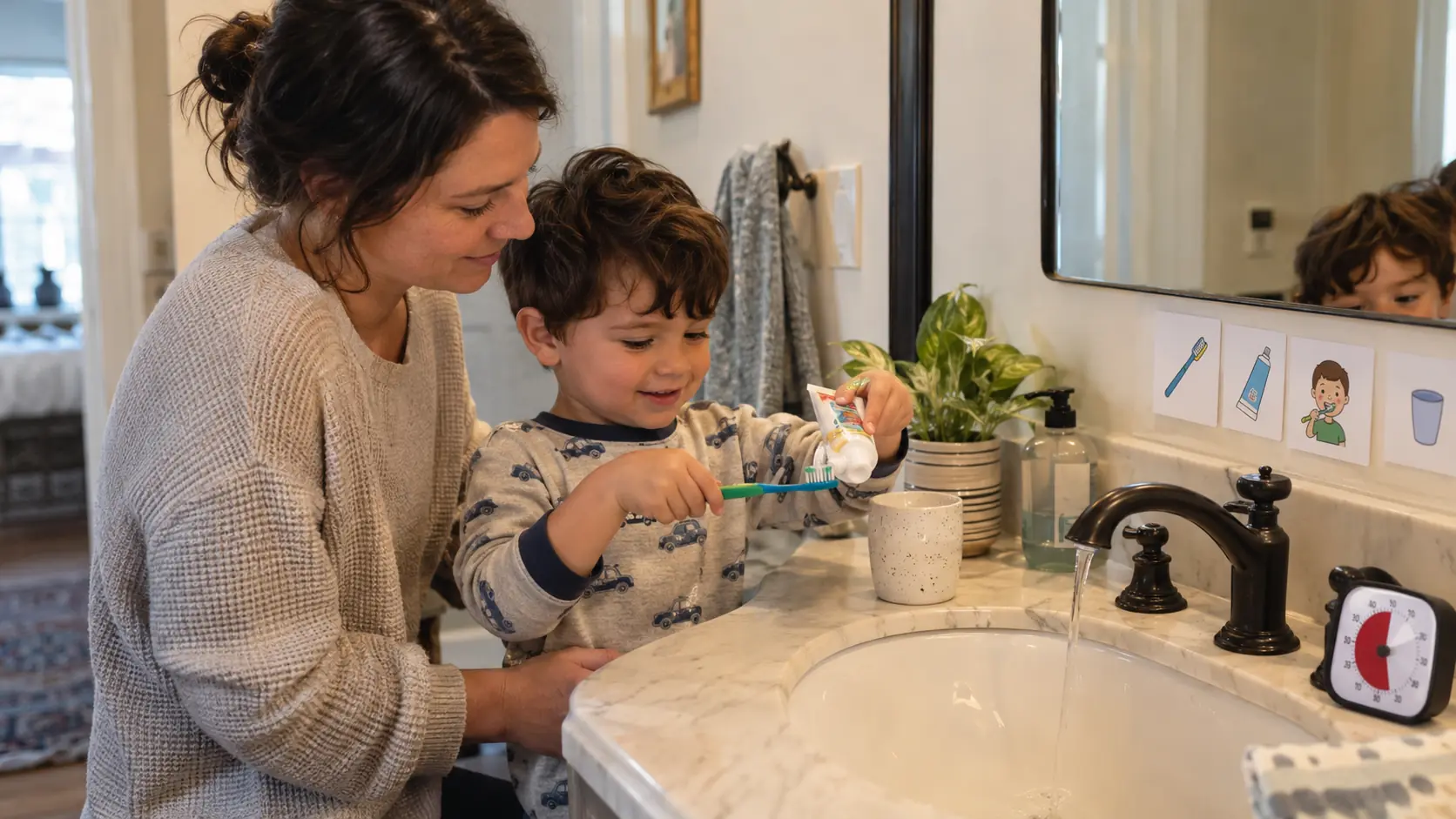
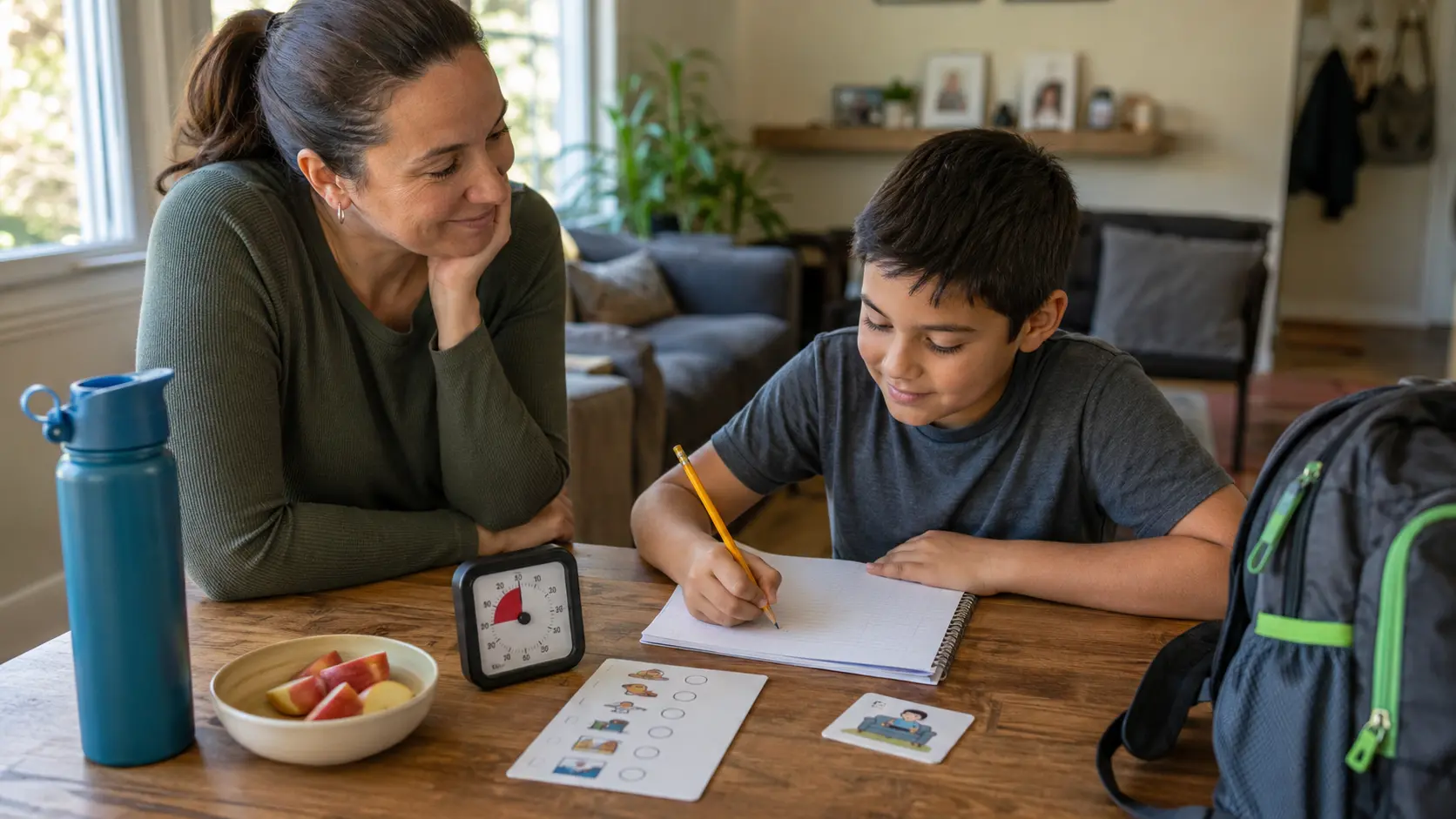
A visual timer can also help by showing your child exactly when bath time will end. That makes the routine feel more predictable and less open-ended. “Bath for four minutes” with a timer is often much easier than not knowing when it will be over.
Systematic Desensitization: Building Comfort Drop by Drop
Systematic desensitization — a gradual exposure approach grounded in behavioral science — is often one of the most effective long-term strategies for water-related distress when simple environmental changes are not enough.
The principle is simple: the nervous system learns that something is safe through repeated experiences in which the feared outcome does not happen, paired with calm, predictability, and regulation. Forced exposure does the opposite. It teaches the child to endure distress, not to feel safe.
Gradual Exposure Ladder: Water Comfort, Step by Step
Each step should be introduced only when the child is calm at the step before. There is no fixed timeline.
- Step 1 — Near the tub (dry): Child sits or plays near the empty tub with no expectation of water. Reinforce calm presence in the room.
- Step 2 — Touching the tub: Child touches the tub, faucet, or drain. Explore together without turning water on.
- Step 3 — Watching water run: Water runs while the child watches from a comfortable distance. If ready, the child can control turning it off.
- Step 4 — Hand in running water: Child touches the running water with one hand. Temperature is adjusted before the step begins.
- Step 5 — Feet in shallow water: A small amount of warm water is placed in the tub. Child steps in briefly, then out. Leaving is always allowed.
- Step 6 — Sitting in shallow water: Child sits in a comfortable amount of water. No rinsing yet — just tolerating the water is the goal.
- Step 7 — Tolerating rinse on hands or arms: A gentle rinse is poured over hands or lower arms only. The child helps control the cup or timing.
- Step 8 — Full bath with preferred tools: Child participates in a short bath using preferred items such as a favorite cup, soap, or timer. Keep the sequence predictable each time.
What to Pair with Each Step
Each step works better when paired with something the child genuinely finds calming or rewarding: a preferred bath toy, favorite audio, specific praise, or a preferred activity immediately afterward.
Keep the pace individual. Some children move through the early steps within days. Others need much longer. The key measure is not time — it is whether the child is calm and regulated at the current step before the next one is introduced.
Transitioning from the Bathroom to the Public Pool
Once bath time starts improving at home, many families wonder whether the pool is next. But a public pool is not just a larger bathtub — it brings a different and often more intense set of sensory demands. What works in the bathroom usually needs to be adapted rather than copied directly.
What Makes Pools Harder Than Baths
- Crowd noise and echo: Pools are loud, with splashing, shouting, and strong sound reflection that can overwhelm children with auditory sensitivities.
- Chlorine smell: The smell alone can trigger discomfort or fear before the child even gets near the water.
- Cold water on entry: Stepping into pool water creates a sudden full-body change in temperature, pressure, and sensation that feels very different from a bath.
- Visual and spatial chaos: Moving people, splashing, large open space, and shifting depth cues create much more visual input than a bathroom.
- Social pressure: Some children are very aware of being watched, especially in a place where others seem comfortable doing something they find hard.
These barriers are real, but they can be worked through with planning and gradual exposure.
Preparing for a First Pool Visit: A Pre-Trip Checklist
- Preview photos or video of the pool before the visit
- Choose a less crowded time for the first trip
- Allow the first visit to be observation only if needed
- Decide in advance where the child will stand and that leaving is allowed
- Bring ear defenders or other noise-reducing supports
- Prepare the child for the chlorine smell before arrival
- Identify a calm place to reset if needed
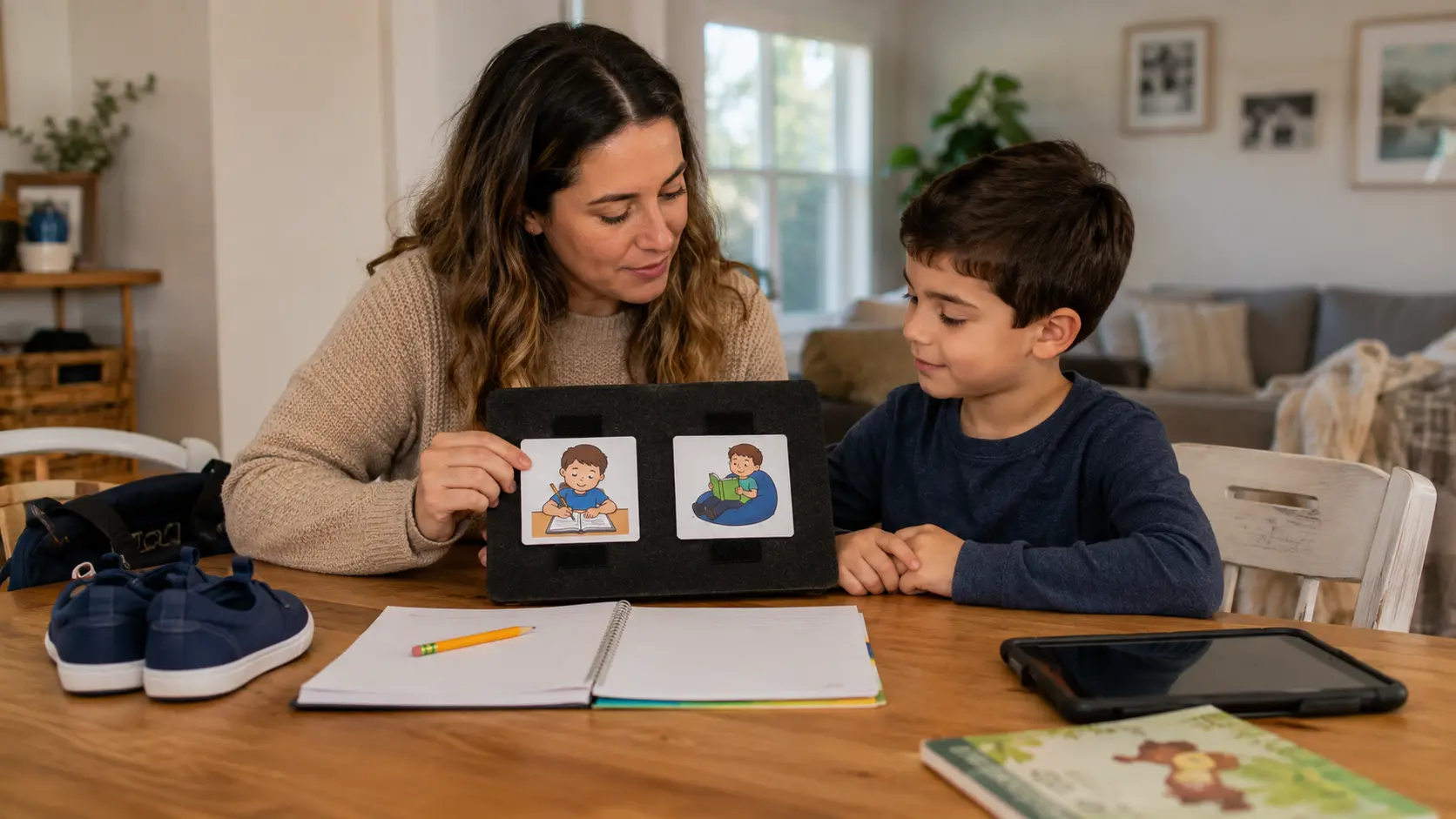
- Use a First/Then plan linked to a preferred activity afterward
Sensory-Friendly Swim Lessons
Many families find that adaptive or sensory-aware swim lessons work better than jumping into general family swim sessions. A good instructor can adjust pacing, communication, and exposure so the child builds comfort gradually.
When evaluating sensory-friendly swim lessons, ask:
- Does the instructor have experience with autistic or sensory-sensitive children?
- Will the first lesson allow time for observation and familiarization?
- Is the lesson private, small-group, or in a busy public setting?
- Can it be scheduled during a quieter time of day?
These answers usually tell you more than an “inclusive” label alone.
Fear of Water Can Become Comfort — With the Right Plan
Progress with water fear usually comes from moving at the child’s pace, not from pushing harder. The goal is to start where your child is, reduce stress, and build comfort step by step.
Water-related autism sensory issues are real and often inconsistent. A child may enjoy puddles but fear baths, or tolerate home water play but panic at a pool. That is not failure — it reflects how sensory regulation works.
If bath time, showers, or pool fear are disrupting daily life, hygiene, or summer activities, professional support can help identify the barriers and build a plan that fits your child.
Contact AtlasCare to learn about a specialized sensory-behavior analysis consultation for water-related distress.










.webp)


.webp)
.webp)
.webp)
.webp)







.jpg)

.webp)


.webp)
.webp)








%20During%20Play%20in%20the%20Home.webp)