Every morning starts with the same struggle: the shirt is rejected, the shorts come halfway on, or your toddler insists on wearing the same favorite outfit again. For many families, getting dressed becomes one of the most stressful parts of the day.
Autism clothing sensitivity is real and usually has much more to do with discomfort than stubbornness. Seams, tags, tight waistbands, and certain textures can feel overwhelming, and dressing also requires sequencing, planning, and motor coordination that are not simple for every child.
The good news is that summer is often the easiest season to make progress. Lighter fabrics, fewer layers, elastic waistbands, and simple pull-on shorts and T-shirts reduce both the sensory and physical demands of dressing.
Why Dressing is a Complex Cognitive and Sensory Task
Getting dressed looks simple from the outside, but for a toddler it involves several skills at once — and for an autistic toddler, that combination can be especially hard.
- Sequencing and planning: Dressing has an order, and the child has to understand what comes first and what comes next.
- Body awareness and orientation: Shirts, sleeves, waistbands, and pant legs all require the child to understand where their body is in space.
- Fine and gross motor coordination: Pulling clothes on, balancing, and managing waistbands or fasteners all take physical control that is still developing.
- Sensory tolerance: Tags, seams, tight waistbands, and certain fabrics can feel intensely uncomfortable for some children.
- Tolerance for help: Dressing often involves a parent guiding or assisting, which can be hard for a child with tactile sensitivity or strong independence needs.
Dressing is not one skill. It is several skills happening at the same time, on top of whatever sensory experience the clothing itself creates.
How to Tell the Difference Between Clothing Refusal and Clothing Sensitivity
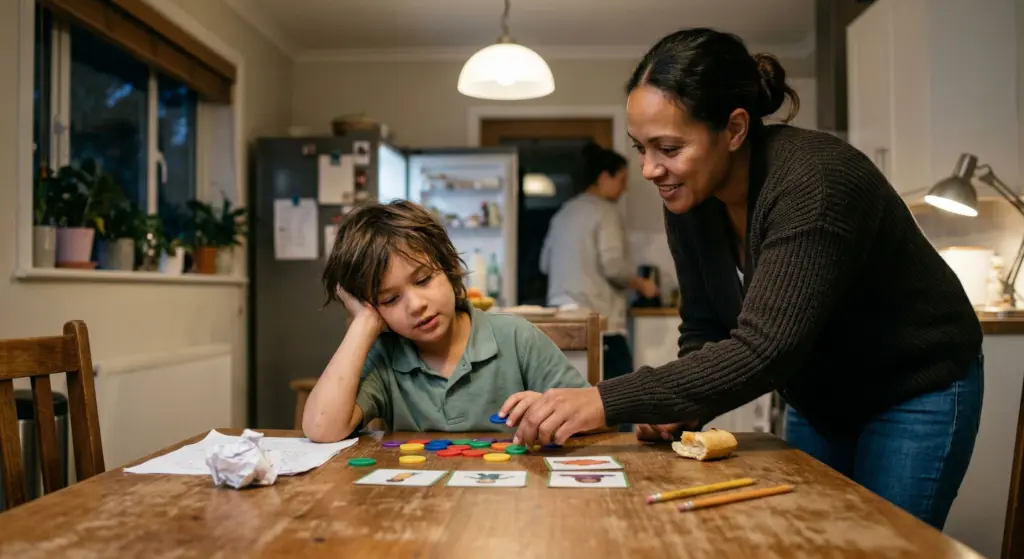
One of the most helpful things a parent can notice is whether the problem is mainly sensory, mainly behavioral, or both. Often, the two overlap.
A few useful questions:
- Does the child resist only certain fabrics, seams, waistbands, or tags?
- Do they calm down once the clothing is on, or keep trying to remove it?
- Is the struggle consistent with the same clothing items, or does it depend more on mood and regulation?
Resistance to specific clothing features points more strongly to sensory sensitivity. More general refusal across many items may involve routine, behavior, or mood as well — though sensory factors are often still part of the picture.
Stripping Away the Triggers: Choosing a Sensory-Friendly Summer Wardrobe
Before teaching dressing steps, it helps to reduce the sensory triggers that make dressing harder in the first place. A summer wardrobe can do that naturally.
Why Shorts and T-Shirts Make Summer a Better Teaching Window
Summer clothes are usually easier to manage than winter clothes. There are fewer layers, fewer fasteners, and less bulky fabric. Elastic waistbands replace buttons and zippers. Short sleeves are easier to orient than long ones. Lighter fabrics also tend to feel less restrictive. All of that lowers the total task demand, which makes summer a useful time to build dressing independence.
What to Look For
- Tag-less or tag-removed clothing: Tags at the neck or waistband are a common trigger for discomfort.
- Soft, pre-washed fabrics: Softer clothing is often better tolerated than stiff or rough material.
- Elastic waistbands: Pull-on shorts or pants remove extra fine motor demands.
- Looser fits: Less pressure on the skin can make clothes easier to tolerate.
- Minimal seams: Seamless socks and less restrictive shirt seams can reduce common irritation points.
Identify Your Child's Specific Triggers — Don't Assume It's Everything
It is easy to assume all clothing is the problem, but many children react to specific features rather than to everything. Watch which items are tolerated and which cause resistance. A simple log of what was worn and how it went can help reveal patterns that are much easier to address than a general “my child hates getting dressed’.
Chaining Strategies: The ABA Secret to Teaching Self-Care
A helpful ABA-based strategy for dressing is task analysis — breaking the skill into small, teachable steps instead of expecting the whole routine at once. Putting on shorts, for example, is not one action but several: picking them up, finding the front, opening the waistband, stepping in, and pulling them up.
Forward Chaining vs. Backward Chaining for Dressing Skills
Once the task is broken down, the next step is choosing where the child starts.
Teach Each Clothing Item as Its Own Routine
“Getting dressed” is not one skill. Shorts, shirts, socks, and shoes each involve different motor demands, body awareness, and sensory tolerance. Teaching them separately helps you find the easiest starting point and build success from there.
Prompting and Prompt Fading
Most toddlers will need prompts at first — physical guidance, a touch cue, a verbal reminder, or a visual prompt. The goal is to use the least help needed and then reduce that help over time. Prompt fading is what helps a supported action become an independent one.
What to Do When Your Toddler Wants the Same Outfit Every Day
A favorite outfit often reflects both sensory comfort and predictability. Instead of turning it into a daily battle, it can help to buy multiples of the preferred item if possible and introduce new clothes gradually. Letting the child touch, hold, or try a new item without pressure can build tolerance more successfully than forcing immediate change.
Using Visual Prompts in the Bedroom
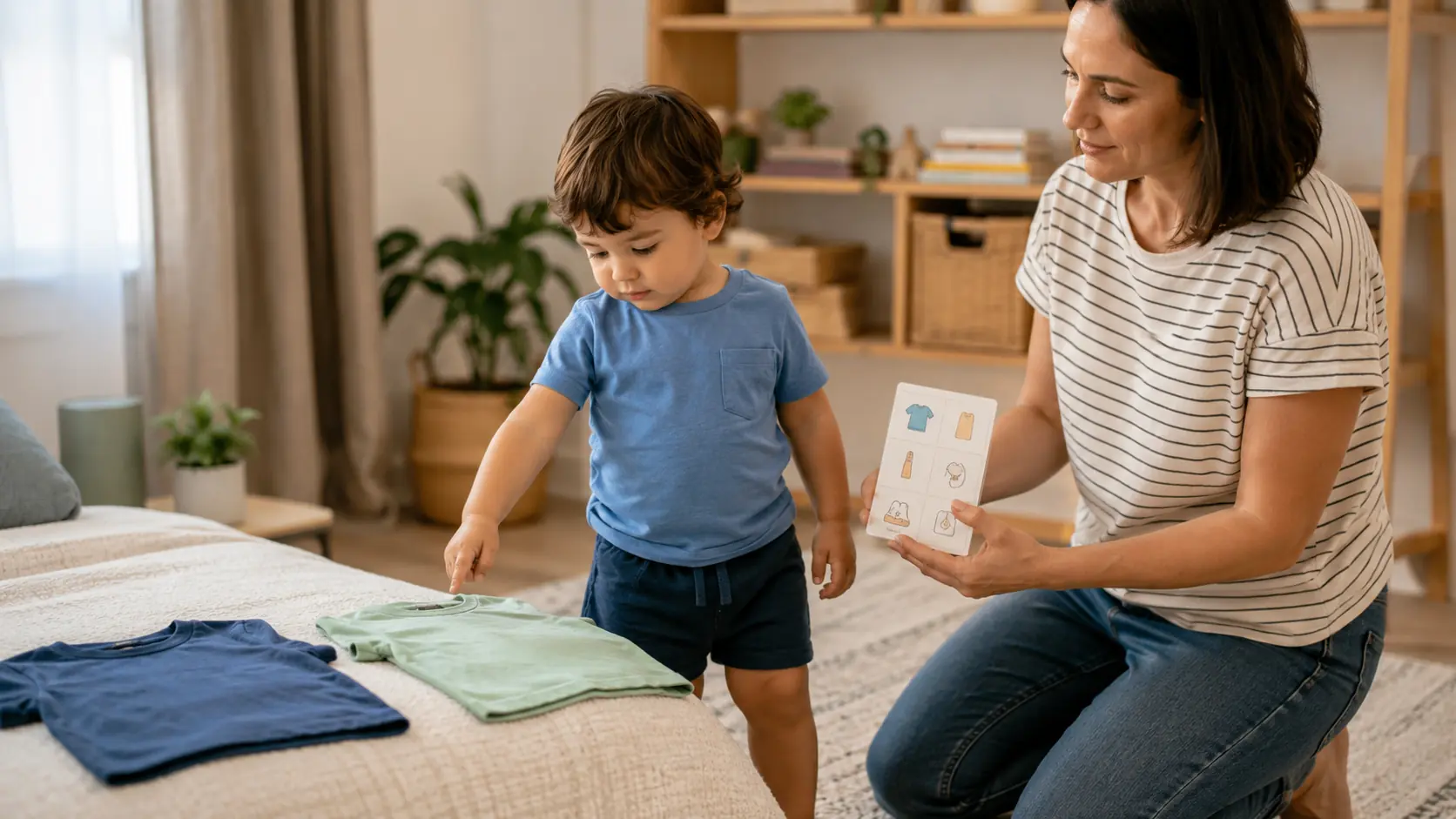
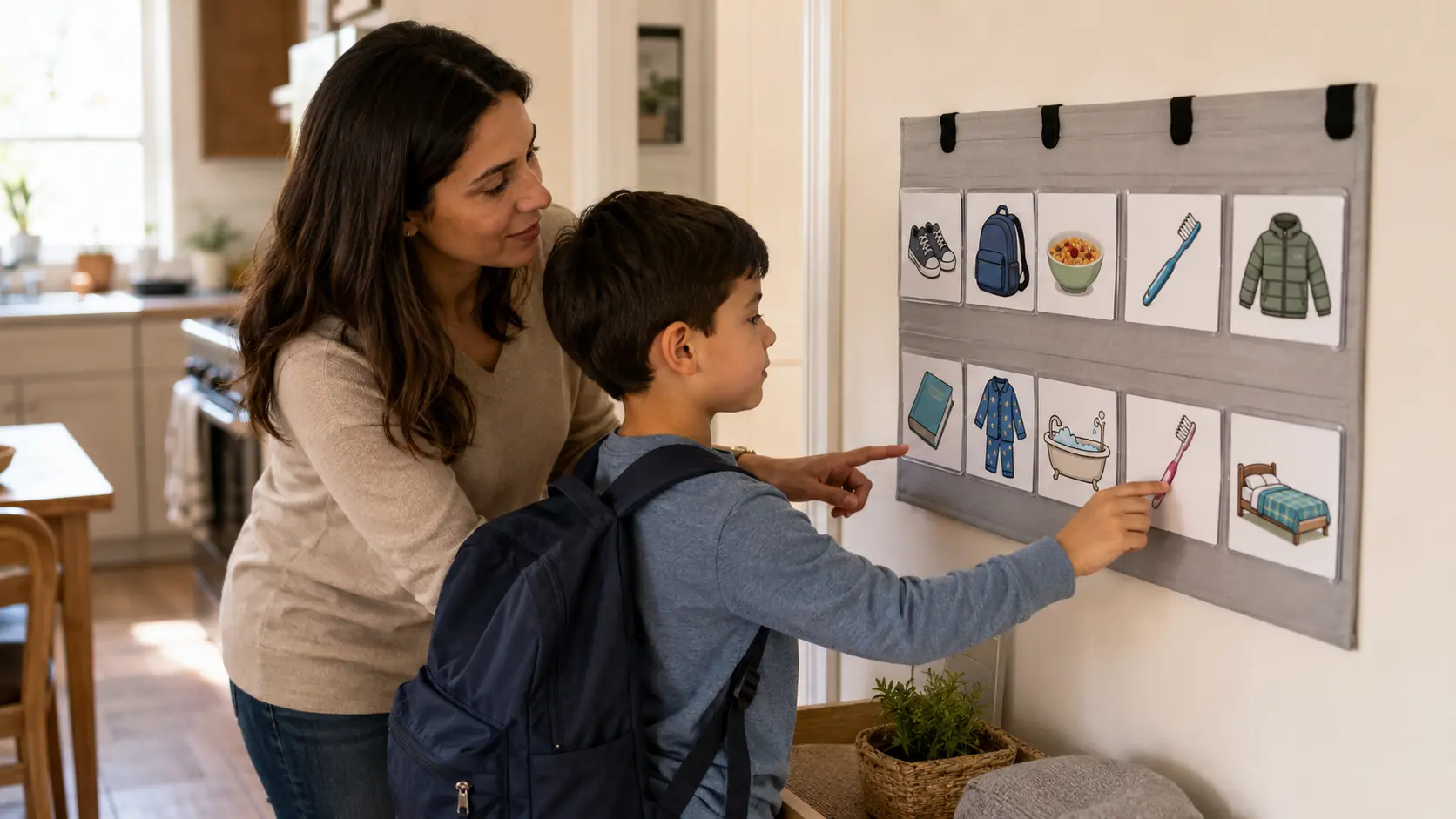
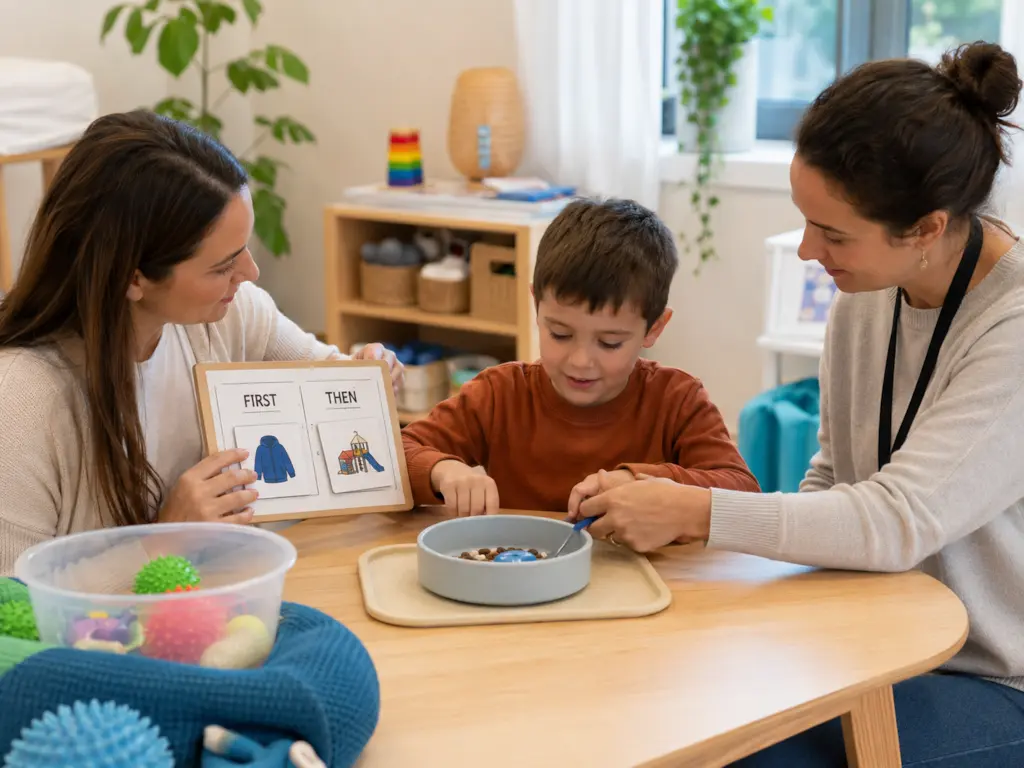
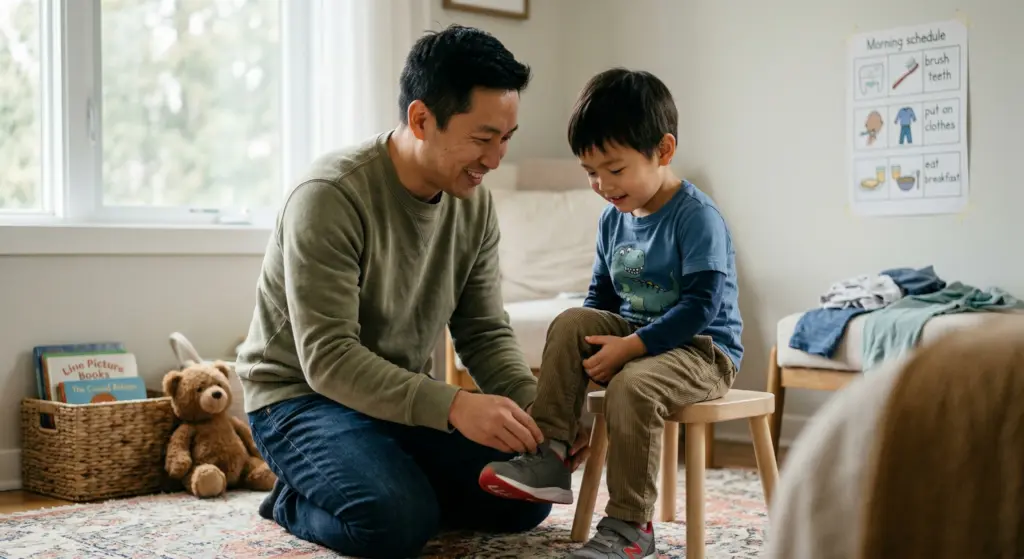
Visual prompts make dressing easier by taking some of the memory and planning load off the child. Instead of holding the whole sequence in mind, the child can see what comes next.
How Visual Prompts Reduce Dressing Battles
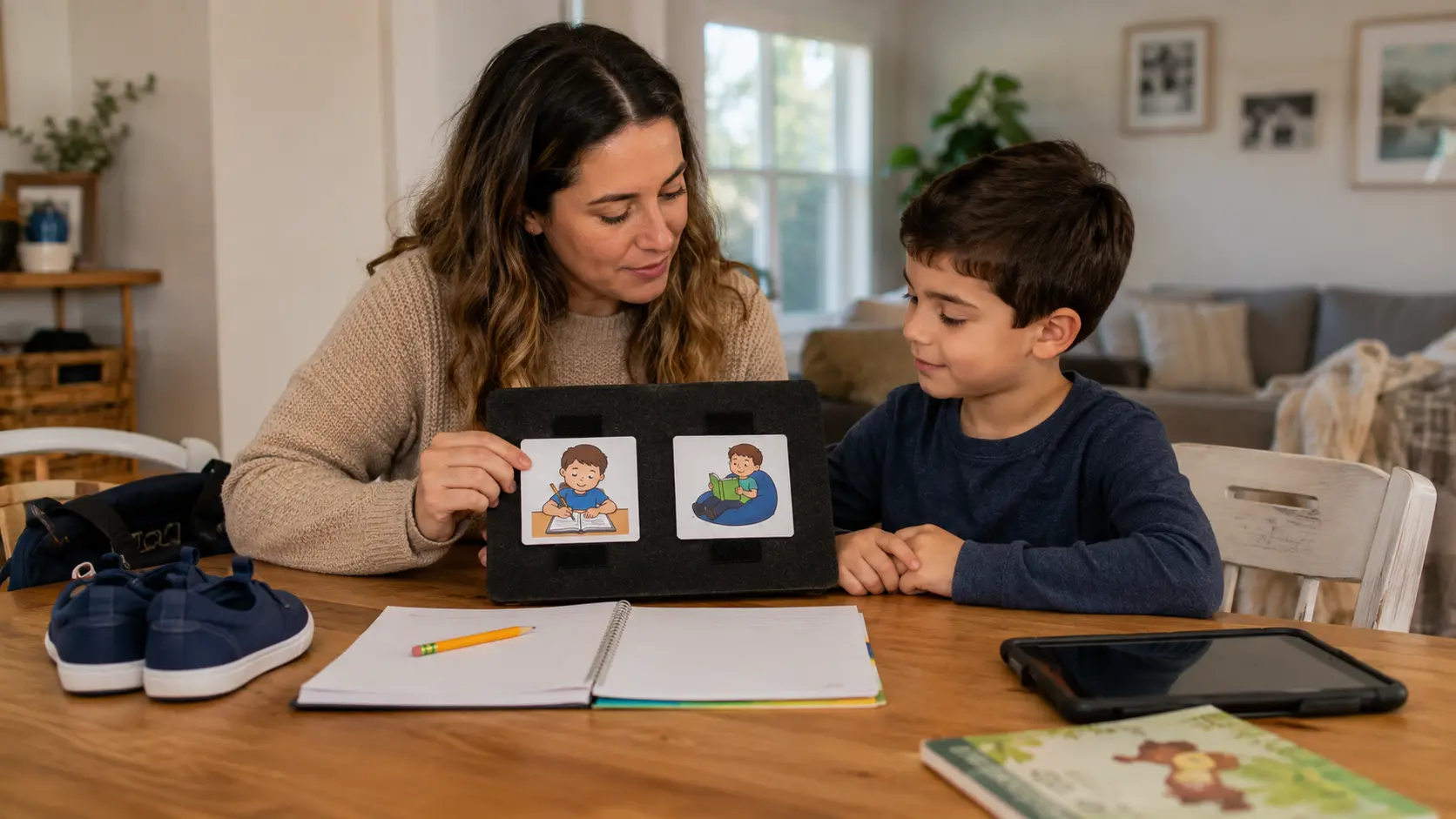
A simple picture schedule or photos of each dressing step can make the process feel more predictable. Laying clothes out in order — underwear, then shorts, then shirt — can do the same thing without any printed materials. Some children also benefit from a mirror, which helps them connect their movements to what they see. Using the same short phrases each day, such as “First shorts, then shirt,” adds another layer of predictability.
Quick Routine: A 5-Step Summer Dressing Sequence You Can Start Today
- Lay clothes out in order: Put underwear, shorts, and shirt in the order they will be used.
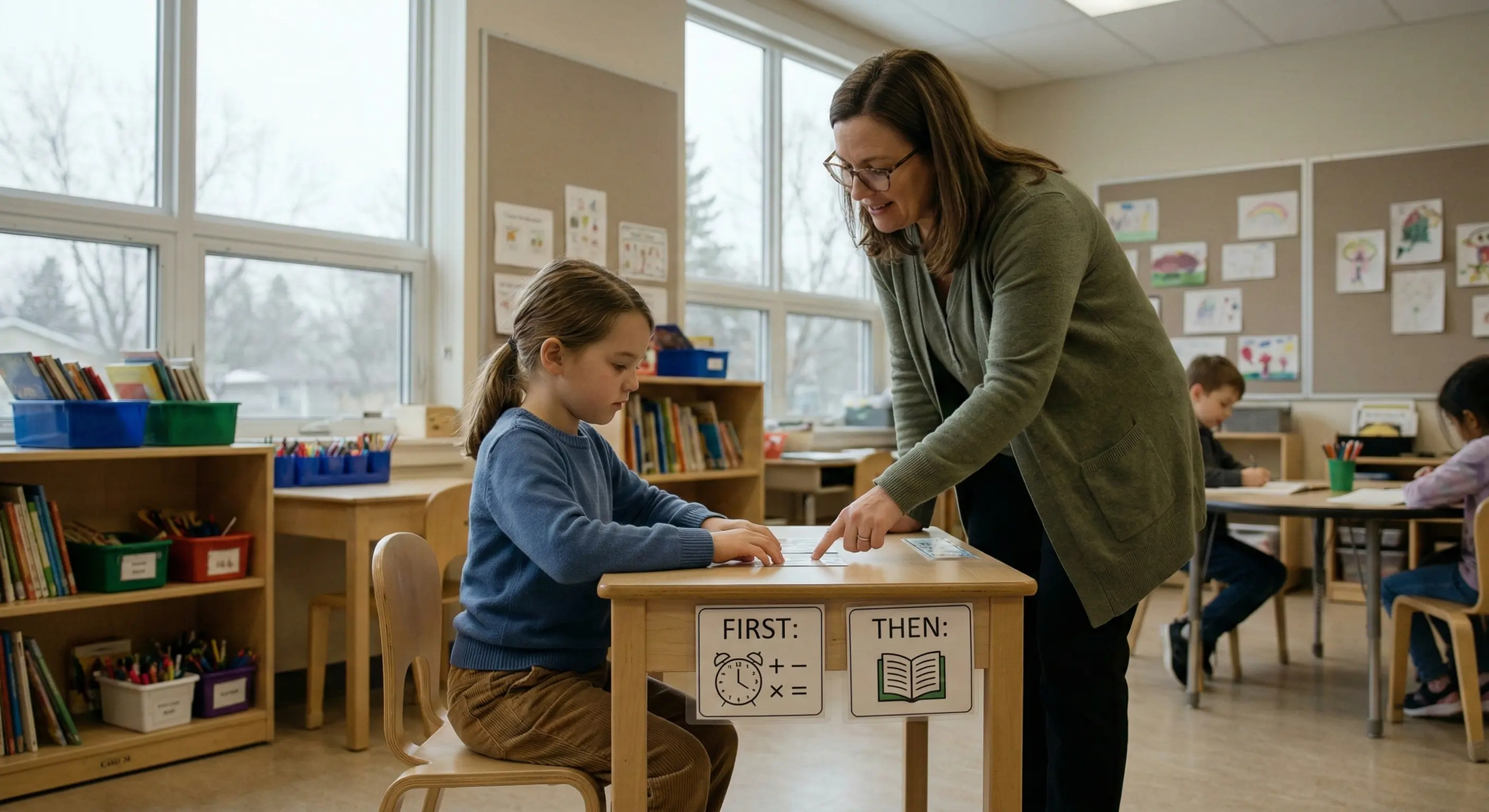
- Use a consistent First/Then statement: Keep the wording the same each day.
- Choose one small step for independence: Focus on just one part of the task this week.
- Prompt only as much as needed: Then reduce the prompt as soon as possible.
- Reinforce immediately and specifically: Praise the exact step the child completed successfully.
When to Seek Extra Support
Many dressing skills can be built at home with consistent practice, sensory-friendly clothing, and simple teaching strategies. But sometimes extra support helps progress happen faster — and asking for help does not mean home efforts have failed.
Consider early intervention, parent training, occupational therapy, or ABA-based behavior support if:
- Dressing resistance is getting worse instead of improving over time
- Dressing leads to major distress, aggression, or self-injury
- You are unsure whether the main barrier is sensory, motor, or behavioral
- Other daily living skills are also delayed, such as feeding, toileting, or grooming
- You want a more structured, individualized plan
OT and ABA often work well together. Occupational therapy can help with sensory tolerance and fine motor barriers, while ABA-based support can turn those gains into more consistent daily routines through step-by-step teaching and reinforcement.
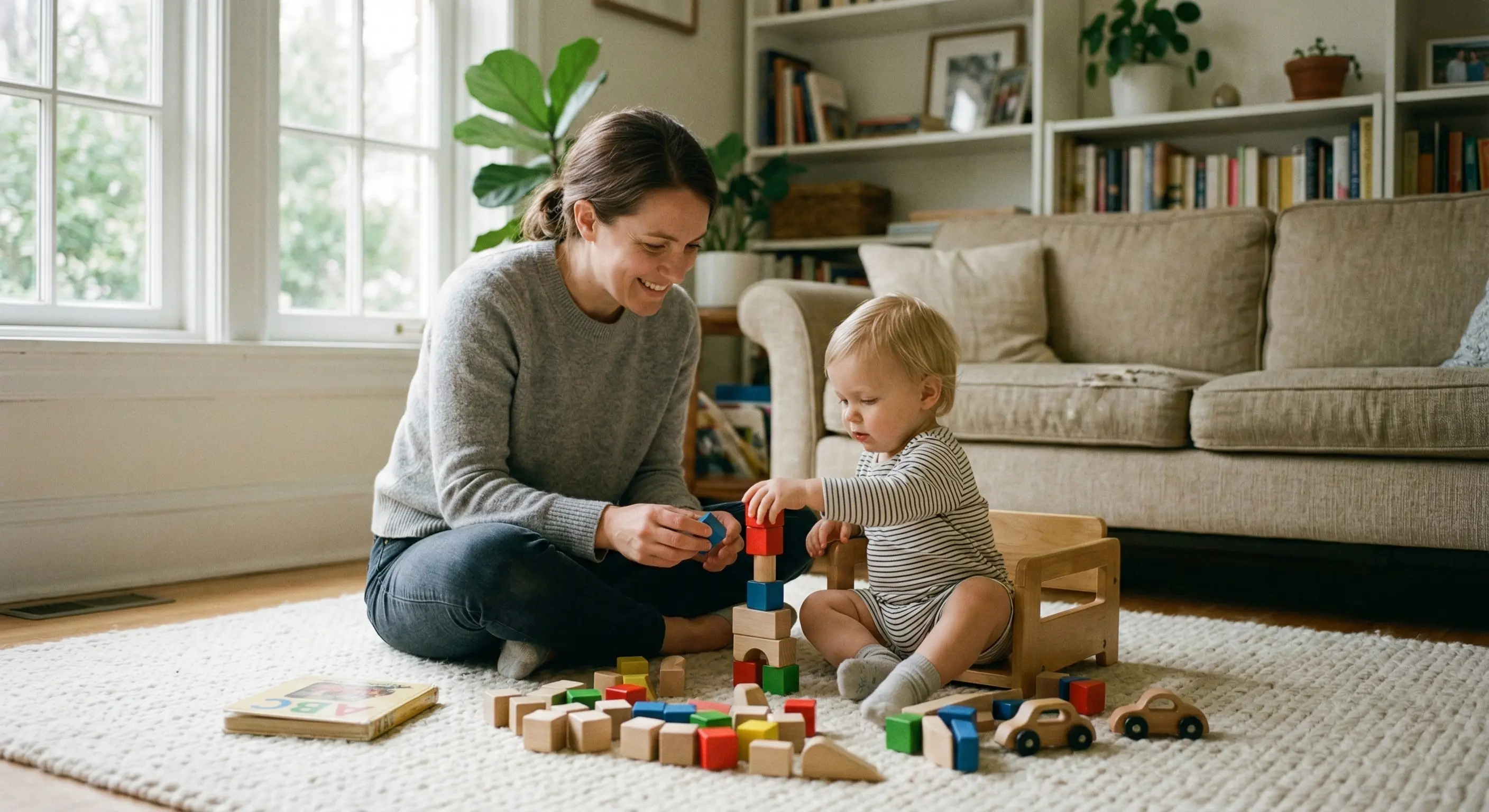
AtlasCare’s early intervention services support toddlers who are building dressing and other daily living skills as part of a broader plan for communication, behavior, and independence. A home assessment can make the plan much more practical because it is based on your child’s actual routine, environment, and morning demands.
Small Steps, Real Progress
Dressing is not one single skill. It involves sequencing, body awareness, motor coordination, and sensory tolerance — and each part can be taught over time. Autism clothing sensitivity is real, and recognizing that can change how the whole process feels for both you and your child.
Summer is often the best season to work on this. Lighter fabrics, elastic waistbands, and simpler clothes make dressing easier to practice. With task analysis, chaining, visual prompts, and gradual prompt fading, dressing can become a more manageable daily routine.
If getting dressed is turning every morning into a struggle, AtlasCare can help. Our early intervention and parent training support can break dressing into teachable steps, address sensory barriers, and build daily living skills that matter at home.
Request an early intervention intake or home assessment today.












.webp)
.webp)
.webp)
.webp)
.webp)






.jpg)

.webp)

.webp)
.webp)








%20During%20Play%20in%20the%20Home.webp)